5. 3. 2021
How to Lay Fortelock Tiles Easily and Correctly?
Read this simple guide that will make installing your new floor easier — a job you can handle with ease and without the help of any tradespeople.
Preparing the Existing Substrate and the Tiles
Once you bring the tiles to the place where they will be laid (whether it is your garage, a utility room or another building), spread them out and let them “rest” for at least 24 hours. This is necessary so that the temperature of the tiles adjusts to that of the room. Doing so prevents additional stress during installation.
In the meantime, prepare the existing surface. Fortelock tiles can be laid on practically any hard surface that is smooth and level. In some places, sweeping and cleaning it is enough; in others you will need to level out unevenness with a self-levelling compound (we recommend Fornivel) and fill cracks and holes with grout (Fortegrout is a suitable product). In the case of potholes, Fortelock will not be damaged (the unevenness will merely show through), so we recommend filling these potholes with cement or another mixture to make using the floor easier.
Laying the New Fortelock Tiles
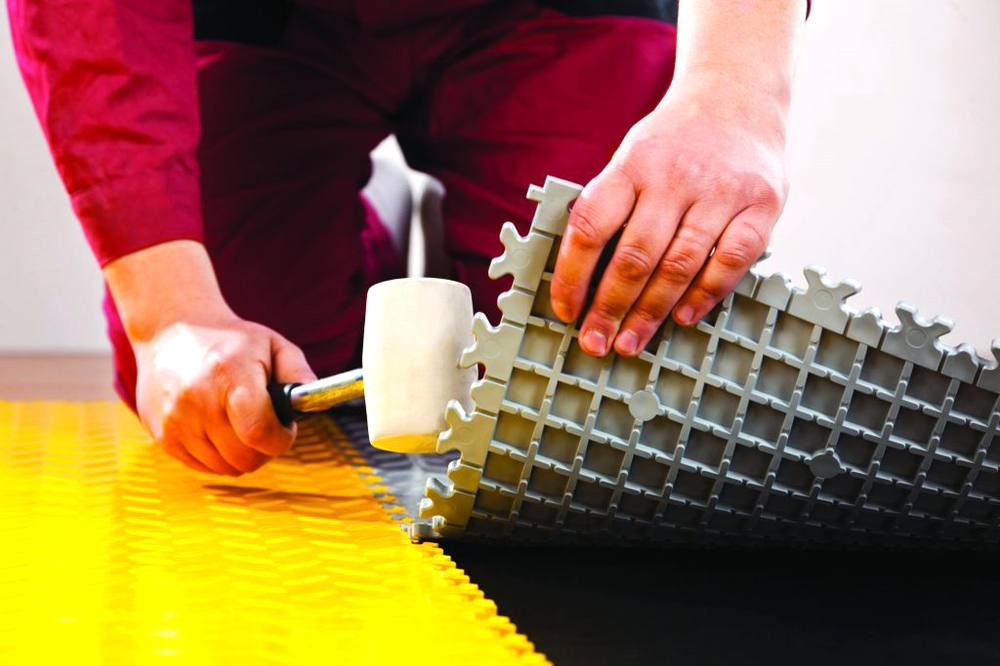
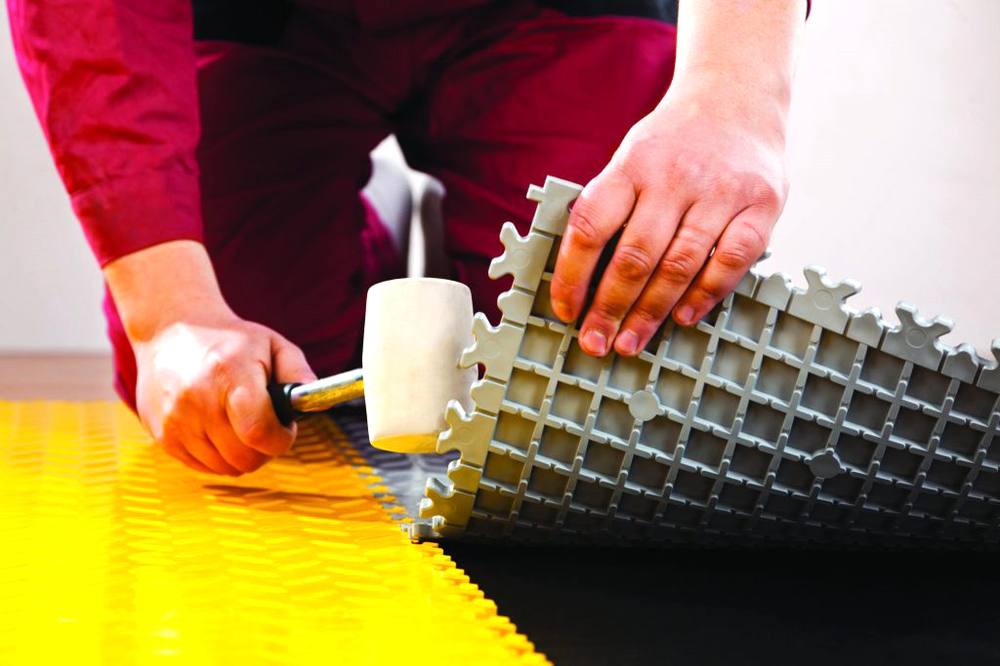
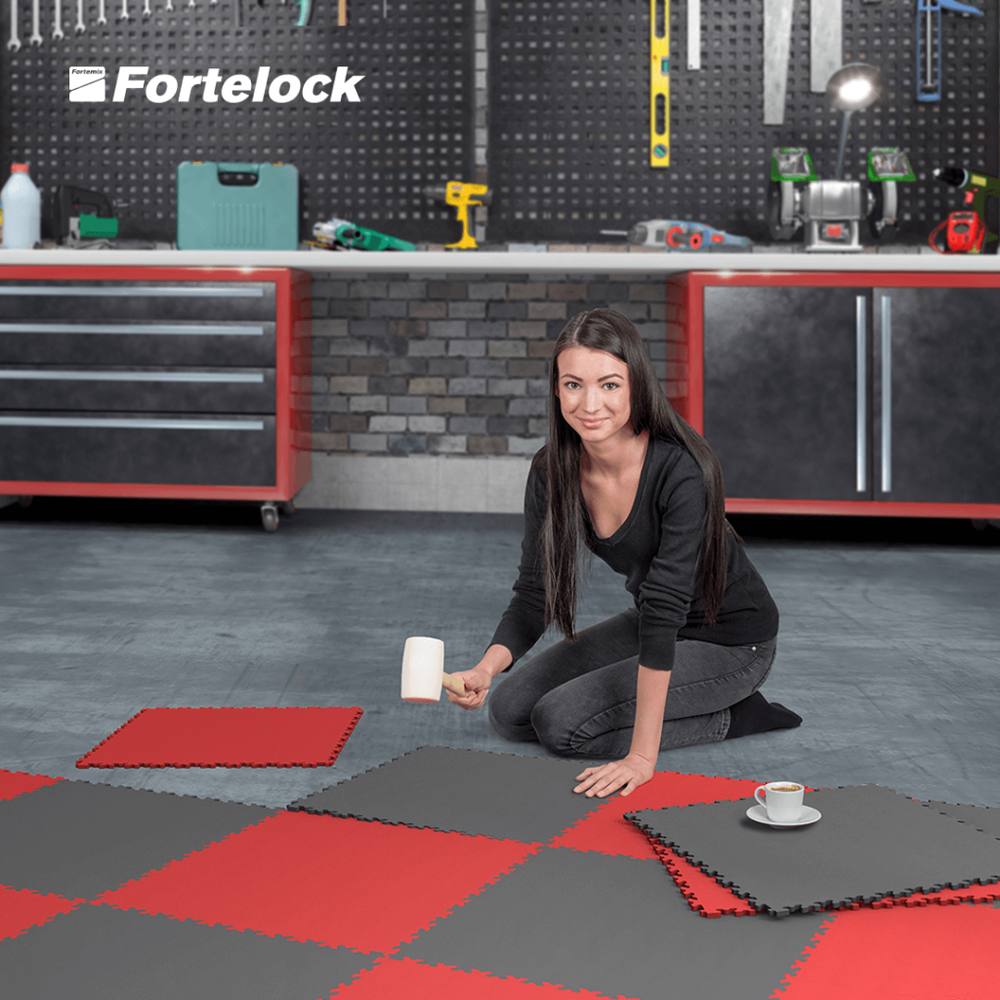
Using chalk, mark out lines across the room both crosswise and lengthwise. It is essential that the tiles are kept at right angles to one another. Start laying from the entrance/driveway and continue into the room. Position the tiles and tap them together with a rubber mallet. Only after you have laid all the whole tiles should you measure the edge tiles for cutting.
Important: lay the whole tiles first and only then the cut tiles. Cut the tiles so that there is a gap of at least 5 mm around columns, shelving and walls. This gap can be filled with a flexible sealant or covered with a trim strip. Fortelock tiles can be cut easily with a saw.
You can walk and drive on the floor immediately after laying.
When Is It Better to Glue Down Part of the Floor?
Under normal conditions there is no need to glue Fortelock tiles to the substrate. The interlocking joints are strong and durable enough to keep the floor from shifting. Exceptions are areas where the floor is exposed to large temperature fluctuations (especially direct sunlight), where forklifts turn, or where the floor will be exposed to moisture and water over the long term. In these areas we recommend gluing the tiles down with adhesive.
Cleaning and Maintenance
No special cleaning products are needed to maintain the floor. The floor is easy to wash with common floor cleaners. For thorough cleaning you can also use cleaning machines with a PVC rotary brush or a mop, which will not harm the floor.
Did You Know?
The tiles can be laid loose in areas where the following are used*:
- Four-wheel forklifts with rubber tyres loaded with no more than 5,000 kg
- Pallet trucks with a total weight, including load, not exceeding 800 kg
*on uneven surfaces the maximum load may be reduced
I WANT A FLOOR SAMPLE