16. 11. 2025
Flooring for Uneven Concrete: A Solution Without Milling
Why an uneven subfloor is a problem for most floors
Unevenness in concrete is not just an aesthetic nuisance. In real-world operation it causes technical, safety and financial problems that only get worse over time. A floor is only as good as the subfloor beneath it. And most traditional surfaces require an almost perfectly level base.
Faster floor wear
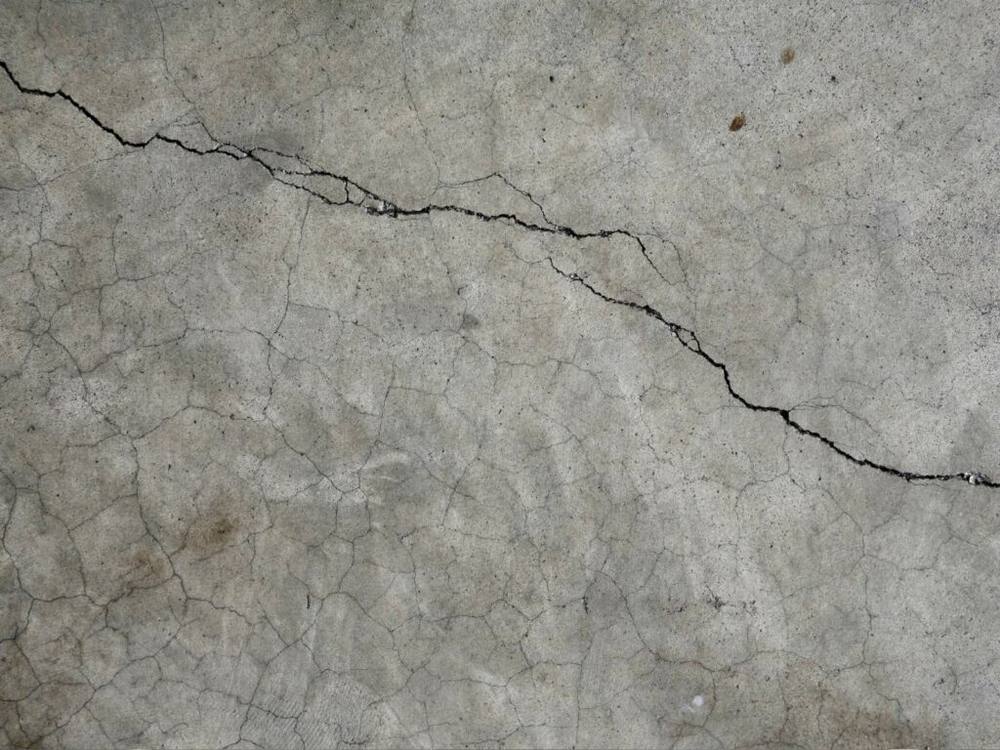
Rigid systems such as epoxy, coatings or ceramic tiles transfer every pressure directly into the subfloor. As soon as the concrete is not level or contains hollow spots, stress builds up and shows itself as cracks, delamination or broken edges. Uneven spots act as “weak points” that cause the entire floor to age prematurely and often make a complete repair necessary.
Instability under moving equipment
In warehouses and workshops, every bump or dip makes itself felt. Forklifts bounce, pallet trucks vibrate and machines are harder to maneuver on the floor. This leads not only to faster wear of equipment but also to a higher risk of damaged goods. On top of that, it increases employee fatigue during long shifts.
Problems with installing conventional floors
Most traditional solutions need a perfectly level surface before installation.
- Coatings and epoxy screeds highlight every imperfection and do not work properly without a leveling layer.
- Vinyl rolls and tiles require an absolutely level subfloor because they are glued over the entire surface. Otherwise they come loose or ripple over time.
- Ceramic tiles are only stable on a firm, level base; otherwise individual tiles or joints start to crack.
What options do you have (and why most of them mean downtime)
When concrete is uneven or damaged, most companies reach for traditional methods. These may level the surface, but they almost always mean dust, noise, high costs and, above all, a long shutdown of operations. For many businesses, that is a problem they simply cannot afford.
Grinding and milling the subfloor
Grinding or milling removes the top layer of concrete and levels the surface, but at the cost of a major disruption to operations. It generates large amounts of dust that gets into equipment and goods, and the work is noisy, making normal operation impossible.
Moreover, it may turn out that the concrete beneath the surface contains voids or weak spots, which leads to further repairs and an even longer shutdown.
Full-surface leveling
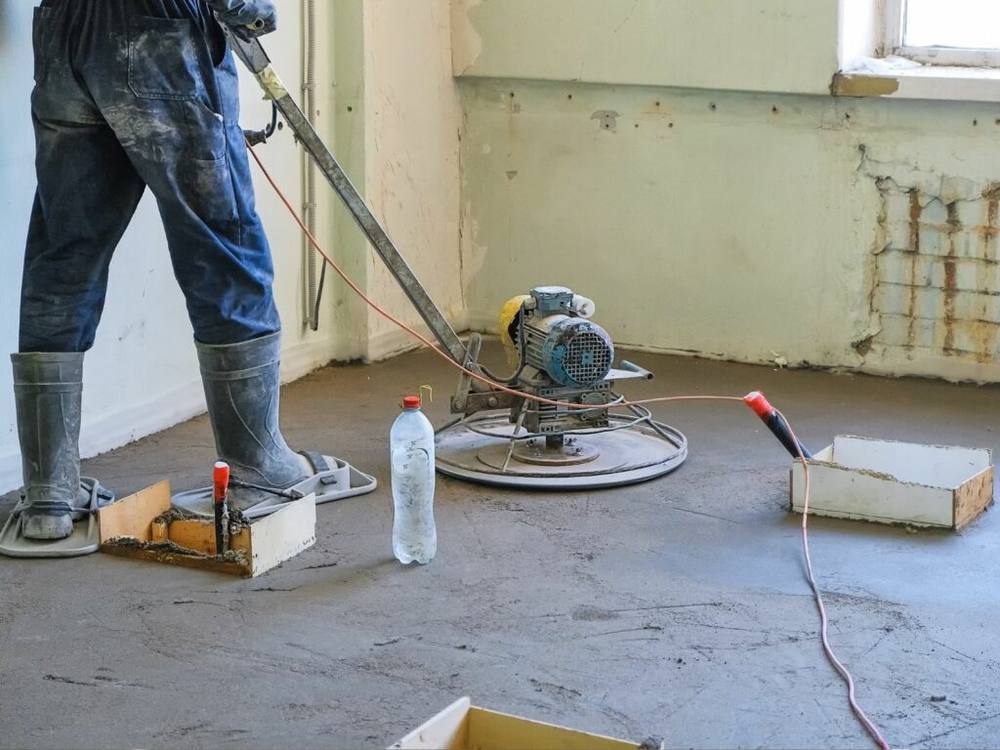
A leveling screed can create a flat surface, but you have to allow for a long curing break. Under normal conditions drying takes several days, and even longer in cold or damp halls. In areas with heavy equipment, a thicker layer is also needed, which is more expensive and carries a higher risk of cracking.
Complete floor reconstruction
If the concrete is severely damaged, a complete reconstruction is often recommended, including removal of the old layer, new reinforcement, new pouring and a final surface. It is the most expensive option and can mean weeks of downtime. For most operations, this solution only makes sense when the subfloor cannot be saved any other way.
The solution without milling: Fortelock interlocking PVC tiles
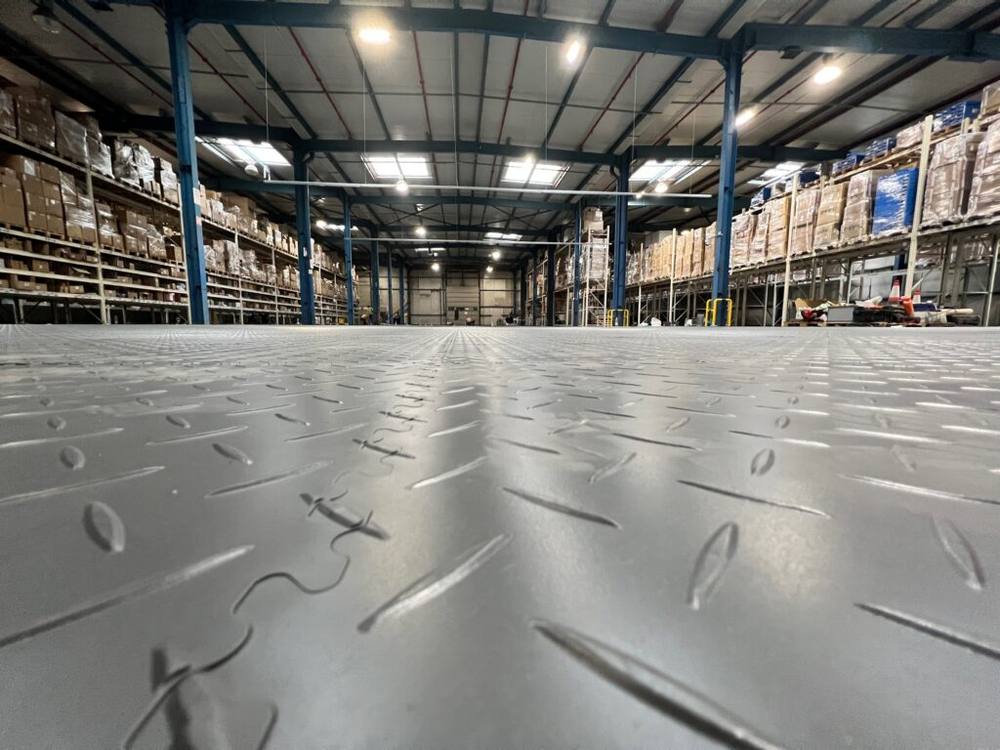
Fortelock interlocking PVC tiles are designed precisely for situations where the subfloor is not perfect and conventional technologies fail or require demanding interventions. Thanks to their construction from flexible yet highly durable PVC, they can tolerate unevenness, compensate for minor concrete defects and cover even surfaces that would otherwise require grinding or leveling.
A floor you can load immediately after installation
Fortelock is installed dry. No adhesives, no grinding and no leveling layers. The tiles click together using a strong interlocking system and create a stable, compact surface that is ready to use right away. As a result, there is no need to stop operations: the floor can be installed gradually, zone by zone, while the rest of the hall keeps running.
Fortelock handles unevenness too
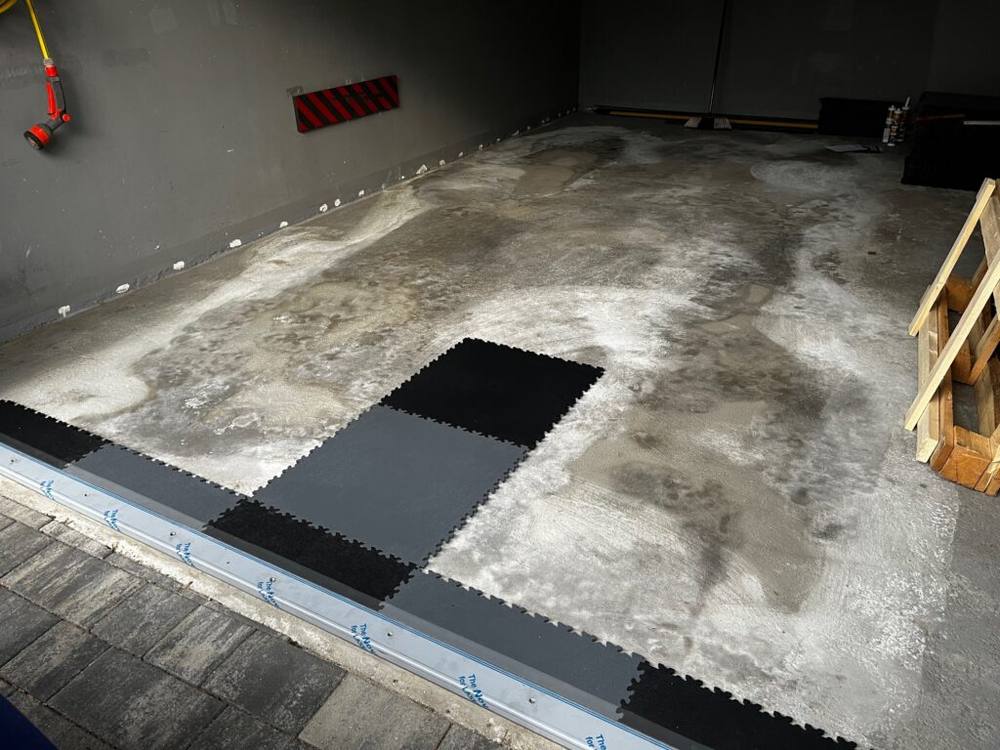
One of the biggest advantages is Fortelock's ability to compensate for minor irregularities such as differences in the concrete, ripples left by machines, local depressions or crumbled sections. Where every irregularity would crack an epoxy or telegraph through a vinyl layer, Fortelock simply conforms and evens out thanks to its construction. The surface does not deform even under the point loads of forklifts or heavy machinery.
Fortelock also works on concrete that is partially damaged or has remnants of old coatings or screeds. Usually, basic sweeping and degreasing is all it takes—no grinding, no other preparation. And if part of the floor gets damaged over time, there is no need to repair the whole area. Just replace a single tile.
It is precisely these properties that make Fortelock a popular solution for warehouses, service centers, production halls, garages and retail spaces that need fast renovation and operation without downtime.
How Fortelock evens out irregularities in practice
Fortelock works differently from conventional flooring systems. Instead of demanding perfect concrete, it adapts to the actual condition of the subfloor. That is the main reason the tiles can be installed even on surfaces that would need milling or leveling with other solutions.
A flexible yet firm construction follows minor irregularities
PVC as a material has a natural ability to absorb local irregularities. You can “seat” the tiles even on a slightly wavy subfloor without them rippling or shifting. This matters most where the concrete, after years of use, is full of small depressions, marks left by machinery or crumbled spots.
The interlocking system keeps the entire surface stable
The locks act as a firm connection that distributes loads across the whole floor. Even if the subfloor is uneven in places, the tiles hold together as a single unit. The floor therefore does not open up, work loose or drift apart, even under vibration or the sharp turns of forklifts.
It evens out spots where the concrete is damaged or hollow
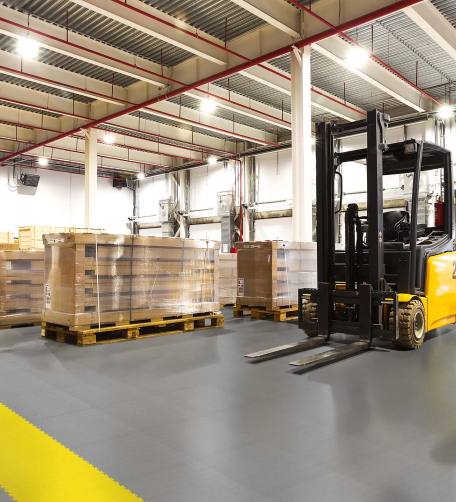
Where epoxy would crack or come loose, Fortelock keeps holding. The tiles cover joints, hairline cracks and minor potholes that would otherwise require repair fillers or laborious grinding. The surface above them is level and usable without any intervention in the subfloor.
No need to grind off remnants of old layers
Fortelock can be laid on concrete with remnants of oil stains, old coatings or fragments of epoxy. With conventional systems everything would have to be laboriously ground off, but with interlocking tiles this is not an issue. The floor behaves as an independent surface.
Installation works zone by zone
In practice, Fortelock tiles are often installed gradually: one part of the hall stays in operation while another is being renovated. This is a huge advantage especially for warehouses, production facilities and service centers where operations must not stop for even a single day.
Which Fortelock tile types are best suited to uneven concrete
When you need to stabilize the subfloor and cover common concrete irregularities, Fortelock tiles are ideal. Thanks to their massive construction, solid PVC and strong locks, the surface holds together and evens out even spots where conventional floor coverings would fail. The individual ranges differ, however, in how much load they can handle and which operations they are optimized for. That lets you choose a solution tailored precisely to the type of irregularities and the planned use.
Fortelock Industry: a safe bet for most operations with an uneven subfloor
The Industry range has a massive construction and high strength, so it easily covers minor potholes, wavy concrete or areas with varying subfloor hardness. It is ideal for workshops, warehouses, garages and production areas where the concrete is worn but the operation is not extremely loaded with heavy machinery.
Fortelock Industry Ultra: the best choice where both the concrete and the operation are extremely demanding
Industry Ultra has reinforced tile walls and a higher load capacity, which allows it to stabilize even significantly damaged or uneven concrete. It performs perfectly in heavy industry, automotive production, steelworks, in warehouses with constant forklift traffic or wherever the subfloor suffers from deeper potholes and more extensive cracks.
Fortelock Invisible: a technically reliable surface with a presentable look
Invisible has the same technical parameters as Industry, so it covers subfloor irregularities without difficulty. Its advantage is its appearance: the special locks are practically invisible once installed. It suits showrooms, shops, service centers and company premises where aesthetics matter just as much as functionality.
Fortelock XL: a large-format variant that unifies even large areas
The XL range features larger tiles and fewer joints, which helps create a compact surface even over wide areas of uneven concrete. It is great for gyms, logistics spaces, large workshops and halls where an old subfloor needs to be covered quickly and efficiently without complicated repairs.