18. 8. 2026
How to Reduce Dust in a Warehouse or Workshop with the Right Flooring
Why dust is such a problem in a working environment
Many people see fine dust as something that simply belongs in a workshop or warehouse. But if dust keeps forming over the long term, this is about far more than aesthetics. Dust significantly worsens the working environment, complicates cleaning, spoils stored goods and can quietly damage expensive handling equipment by getting into its bearings and motors.
The most common mistake is trying to deal only with the consequences. You can sweep, vacuum and mop endlessly, but a few days later you start all over again. If the dust is produced by the constant crumbling and abrasion of the floor itself, even the best cleaning will never be enough.
Where the dust usually comes from
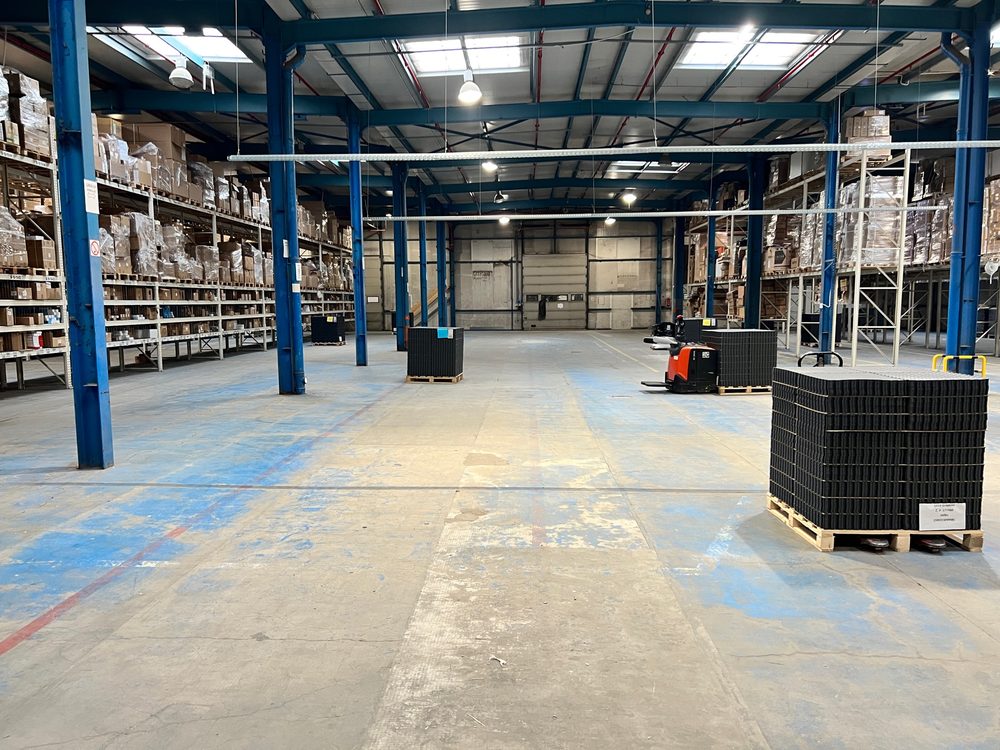
In a warehouse or workshop, dust is caused not only by working with materials, but above all by an old, unprotected concrete subfloor.
Concrete crumbles under load
The original concrete naturally degrades over time. Everyday operation, sliding heavy pallets around or dropping tools all damage the surface. The hard wheels of handling trolleys act like a grinder in particular – under heavy loads they literally crush the concrete into fine dust, which then spreads everywhere. Ordinary sweeping often just whirls it back into the air.
Cracks and potholes hold dirt
Surface irregularities make dust considerably worse. Potholes and cracks trap sand and dirt from footwear, which is released back into the space every time a trolley passes. Deeper potholes also make handling loads in a warehouse unpleasantly difficult.
Cleaning does not address the cause
When the floor itself is the source of the dust, cleaning turns into an endless battle. You vacuum the shelves or wipe down the workbenches, and a few days later they are covered in a grey layer again. The space looks permanently neglected. That is exactly why it makes sense to stop dealing with the consequences and focus on sorting out the floor itself.
What flooring that helps reduce dust should offer
Suitable flooring for a warehouse or workshop does not have to be luxurious. Above all it has to create a strong, sealed and easily maintained surface that does not generate any further dust itself.
Safely covering a dusty subfloor
The goal is to stop the old concrete from crumbling and abrading any further. The most effective approach is to choose a durable covering that simply covers the original dusty surface.
Minor unevenness and crumbling are not a problem, as the floor hides them. If the concrete has deep potholes, however, these need to be repaired locally. A new covering is there to improve operations, but it needs firm support under the wheels of heavy trolleys.
Easy, fast cleaning
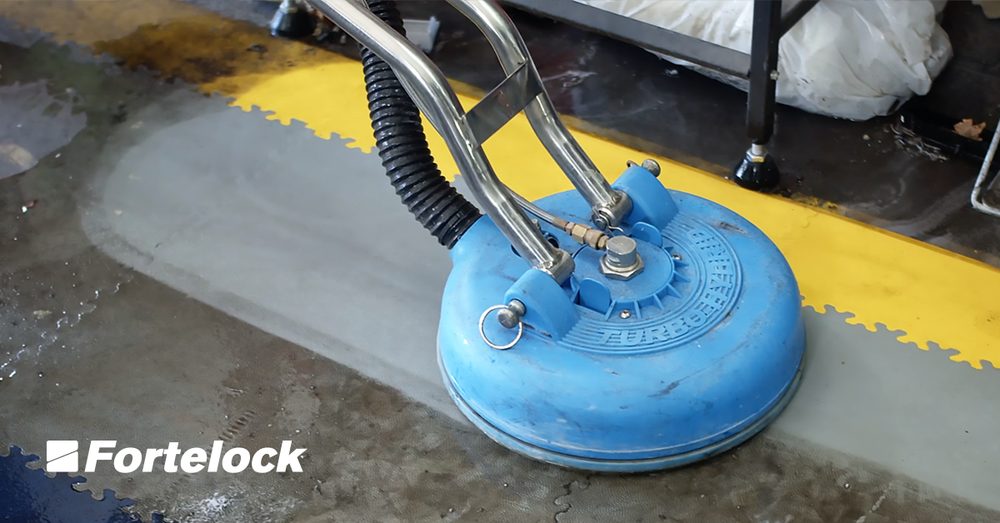
Dirt will always be created in a warehouse or workshop. The difference lies in how quickly you can remove it. A smooth, non-absorbent surface is incomparably easier to clean than old concrete, which holds dust in its pores. Practical flooring has to cope with ordinary sweeping and mopping, and with machine cleaning in larger spaces.
Durability for everyday loads
Working spaces take a beating. Shelving is moved around, heavy crates are handled, tools are dropped and contact with oils or chemicals is common. The floor therefore has to be highly resistant both mechanically and chemically. If you choose a cheap paint that soon peels or cracks under load, dust starts collecting in the damaged spots again and the problem is back.
Your options for a dusty floor
There are usually several ways to tackle dust. Each has its place, but not all of them suit a demanding working environment.
Thorough cleaning of the old concrete
The first step should always be cleaning and inspecting the subfloor. Sometimes the concrete is merely clogged with years of dirt, dust and material residue. In that case thorough deep cleaning, vacuuming with a powerful industrial vacuum and degreasing will help. But if the dust is released by the constant crumbling of the concrete itself, even the most thorough cleaning is only a temporary patch.
Concrete paint
Paint is a quick and affordable way to even out and partly seal the surface. It works excellently only when the original concrete is perfectly sound, dry and properly prepared.
In more intensively used warehouses and workshops, its weak point is durability. Under shelving, where heavier items are dragged around, or along pallet truck routes, the paint may soon start to wear and peel. As soon as the layer is damaged, the dust is back immediately.
Epoxy or polyurethane coating
Coatings can create an extremely durable, continuous and easily maintained surface. They are an excellent fit where the subfloor is of high quality and where demanding construction preparation and the cost of a specialist company are not an issue.
The fundamental drawback is their enormous sensitivity to residual moisture and the condition of the concrete. If the preparation is underestimated, the coating comes away. Any local repairs are then complicated and always visible.
Interlocking PVC floor tiles
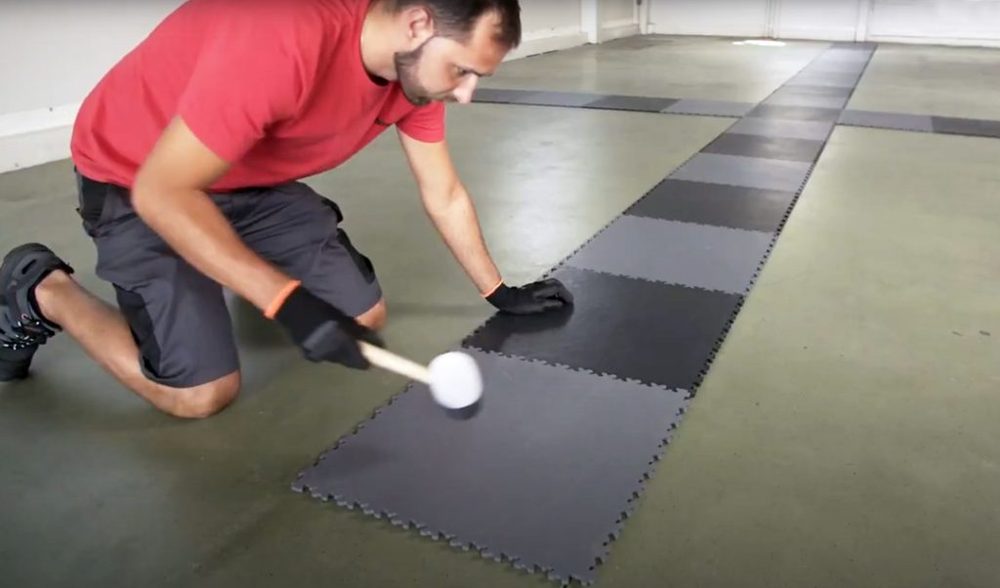
Interlocking PVC floor tiles are exceptionally practical wherever you need to cover dusty concrete quickly and get a highly durable surface without a complicated renovation. The tiles fit together with sturdy interlocks, so they are quick to lay and in most cases need no full-surface adhesive.
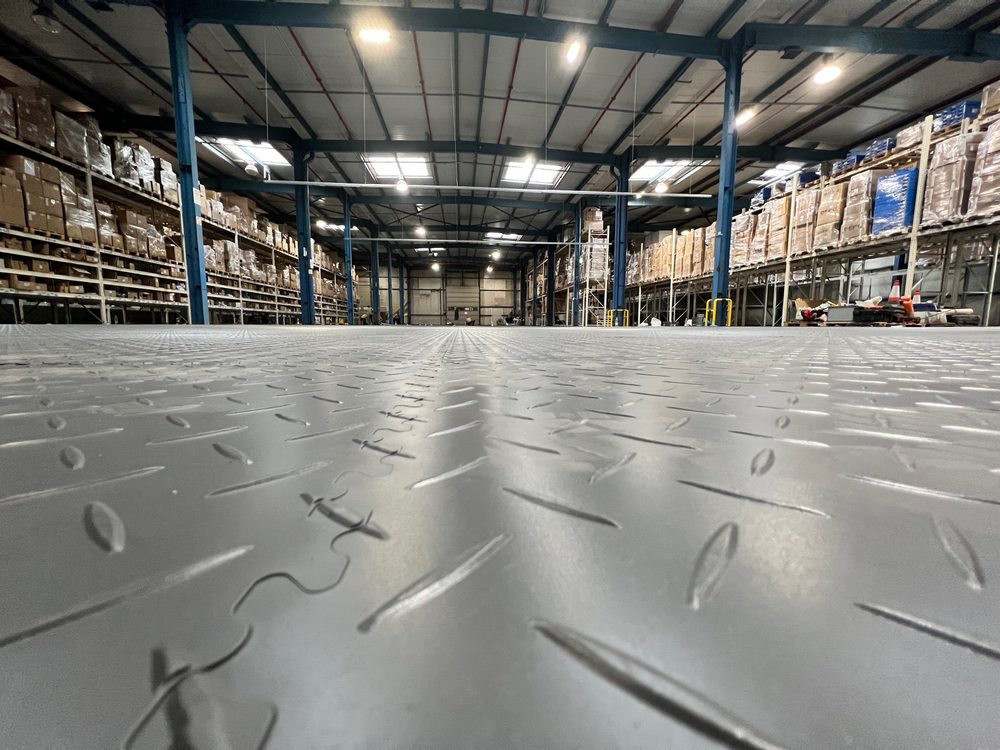
In a warehouse or workshop you will appreciate that the new surface produces no dust at all, is easy to clean and that a damaged tile can be replaced in literally a couple of minutes. A huge advantage over paints and coatings is that, thanks to its ribbed underside, Fortelock can cover even a less cohesive or slightly damp subfloor (though it must not be completely wrecked and has to remain sufficiently load-bearing).
How Fortelock helps reduce dust
Fortelock interlocking PVC floor tiles are ideal for spaces where the original concrete no longer does the job but you do not want to embark on lengthy building work. In warehouses, workshops, garages and smaller operations they bring some fundamental advantages:
Covers old dusty concrete immediately
It creates a new, solid walking layer that stops dust from the subfloor spreading any further. Stored goods, boxes and tools on the workbenches stay clean.
Simplifies everyday cleaning
The problem of dust being whirled up during sweeping disappears completely. The smooth surface does not hold dirt: simply vacuum it, wipe it with a mop and, in larger warehouses, safely use machine cleaning equipment as well.
Withstands demanding everyday operation
The tiles are designed for mechanical loads. They survive dropped heavy tools, crates being pushed around and trolleys driving over them. With point loads under extremely heavy shelving or machinery, all you need to do is spread the pressure using wider feet or pads.
Allows individual tiles to be swapped in a flash
If part of the floor is damaged locally, there is no need to shut down the whole room as you would with coatings or paints. You simply click the ruined tile out and replace it with a new one.
Makes the space clearer and better organised
Mess builds up far more slowly in a logically arranged warehouse. By combining coloured tiles you can easily mark out safe walkways, handling areas and storage zones, which makes keeping order much easier in the long run.
How to reduce dust further in your operation
A new warehouse floor can solve the problem of crumbling concrete, but on its own it will not save a poorly organised operation. If you really want to cut dust to a minimum, it pays to combine a quality surface with a few simple habits:
- Clean the entrance areas regularly. This is where sand, soil and dust from outside are brought in most often. Quality cleaning mats, a consistent separation of clean and dirty zones and more frequent vacuuming around doors and gates all help enormously.
- Do not leave things lying on the ground unnecessarily. Boxes, materials and tools left directly on the floor complicate cleaning and create dead spots where dirt settles. Shelving, storage boxes and clearly defined aisles keep the space far cleaner and better organised.
- Provide extraction for dusty activities. New flooring eliminates dust from the subfloor, but it is no substitute for technical measures during grinding, cutting or milling. Wherever dust is created by the work itself, industrial extraction has to step in.
- Adapt cleaning to the type of operation. In a home workshop an industrial vacuum and a mop are more than enough, while in a larger warehouse it pays to invest in machine cleaning. The key is not to let dirt build up over time in corners, around the feet of shelving and along the main handling routes.
Cleaning routine according to the maintenance sheet
For warehouses and commercial facilities, the Fortelock maintenance sheet recommends daily cleaning with Forteclean Daily Cleaner, which leaves no microfilm or streaks. Twice a year, the floor is deep-cleaned with Forteclean Intense Cleaner. For rotary machines, choose soft brushes with bristles under 0.25 mm and do not use abrasive discs or solvents. Cleaning zones of at least 3–4 steps are recommended at entrances, as sand and grit from footwear can scratch the surface. You will find suitable products among the Fortelock cleaners.
Frequently asked questions
Why does a concrete warehouse floor keep producing dust?


Because the dust comes from the concrete itself. Everyday operation, sliding pallets and above all the hard wheels of trolleys gradually crumble the surface into fine dust. Sand also gets trapped in cracks and potholes and is released again every time something drives over it. Cleaning then only deals with the consequences, not the cause.
Can PVC tiles be laid on crumbling concrete?
Yes, as long as the subfloor is still firm and load-bearing. Deep potholes need to be repaired locally, cracks wider than 4 mm filled and high spots of more than 7 mm over 2 m ground down. The moisture content of the concrete should not exceed 3.5%. A solution for uneven subfloors is described in the article Flooring for Uneven Concrete: A Solution Without Milling.
How do I protect PVC tiles under heavy racking?
Spread the pressure and secure the tiles. The compressive point load must not exceed 520 kg/cm², so wider pads are placed under the feet. If heavy racking or a machine stands permanently on the floor, the technical data sheet recommends gluing or mechanically securing the tiles at that spot. Read more in the article Flooring under racking: What loads it must withstand and why it matters.
Can PVC tiles in a workshop withstand sparks from grinding?
According to a Fortelock test, yes: Industry tiles came through grinding and cutting metal without any burnt spots. However, hot and smouldering objects leave permanent marks on PVC. For dusty activities such as grinding, industrial extraction is also necessary, and the floor cannot replace it. The test is described in the article Floor resistance when grinding and cutting metal.
How quickly can dusty concrete in a warehouse be covered with tiles?
In a matter of hours, not days. The Fortelock website quotes installation speeds of up to 30 m² per hour, and the tiles are laid in sections, so the warehouse does not have to close. Nothing needs to dry, and the finished section can be used straight away. However, the tiles must first acclimatise for 48 hours at 18–26 °C.