25. 6. 2026
How to Choose Flooring for a Utility Room, Cellar or Home Storage Room
Why the floor in utility areas matters
Spaces such as cellars, utility rooms and home storage rooms often tempt you into thinking that something basic on the floor will do. In terms of wear and tear, however, these are actually among the most heavily used parts of the house, where the floor has to cope daily with spilled laundry gels, soil from the garden, heavy boxes being dragged around and ever-present moisture.
If you underestimate your choice of flooring, the surface will soon start to generate dust, crumble and absorb dirt. What's more, in these smaller and often poorly ventilated rooms, every problem with trapped moisture or absorbed odours shows up far more aggressively.
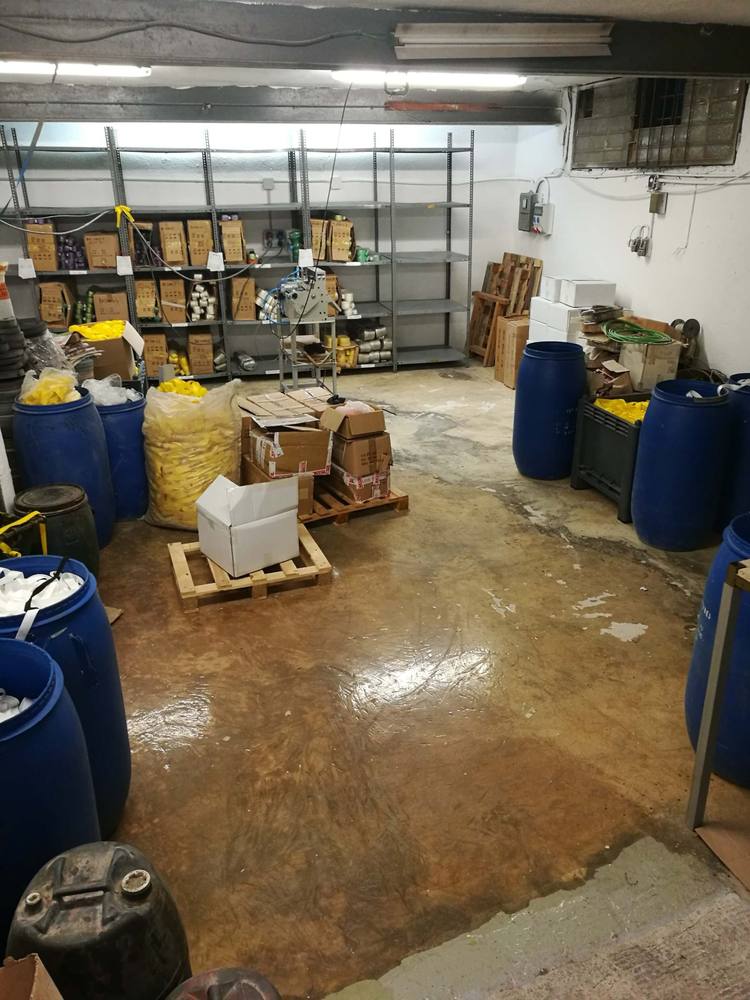
What a utility room floor must deliver
In this space, heavy appliances and the risk of water leaks play the main role. First and foremost, the floor must safely withstand the extreme point load of a boiler or heat pump, while also dampening the constant vibrations of a washing machine and tumble dryer.
Since spills of aggressive laundry gels or fabric softeners are a common risk here, the flooring must not be porous. A completely non-absorbent surface is essential — one you can simply wipe chemicals off and won't slip on even when water ends up on the floor.
The ideal cellar floor
The greatest enemies of every cellar are moisture, cold and the ever-present dust from crumbling old concrete. You need a flooring that at least partially insulates the space from the cold subfloor, resists mould and isn't fazed by soil deposits from shoes or garden tools.
It is also worth thinking about breathability – the floor should not hermetically seal in any moisture from below, otherwise the surrounding walls may start to get damp. In terms of maintenance, you will appreciate a surface that only needs a quick sweep or a wipe with a mop.
What to consider for a home storage room
In pantries and storage rooms, everything revolves around load-bearing capacity and mechanical resistance. Plastic boxes are constantly being slid across the floor, heavy sports equipment leans against the walls and the occasional tool hits the ground. The floor therefore must not be brittle or prone to scratching and chipping.
At the same time, you absolutely need a firm and stable base for tall shelving units, which must not budge an inch once stacked with heavy supplies. A smooth, dust-free surface also ensures that dust from the floor won't get needlessly stirred up and settle on your stored belongings.
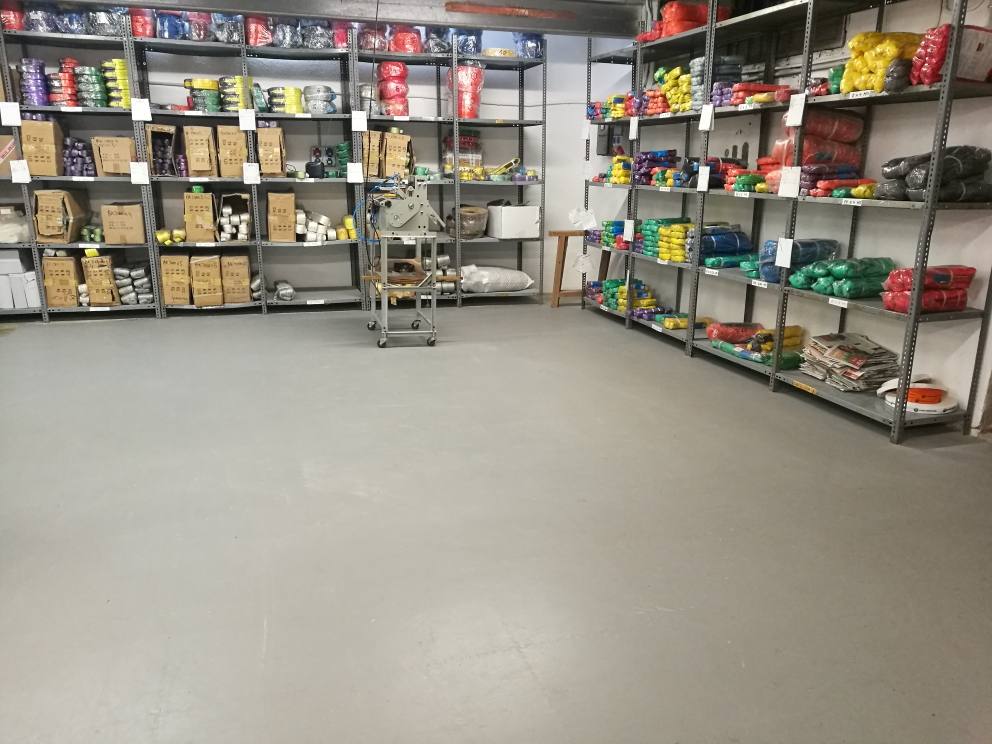
How to choose flooring for a utility room, cellar or storage room
Your choice of flooring should always be based on how the space is actually used. A dry cellar for storing seasonal items needs a different floor than a utility room with a washer and dryer, or a home workshop combined with tool storage.
Start with what actually happens in the room
The biggest mistake is choosing a floor based on price or looks alone. First, be clear about how you use the room today and how you might use it in the future.
Ask yourself:
- Is there a washing machine, dryer, boiler, water heater or other equipment in the room?
- Is there a risk of occasional spills of water, detergent or cleaning chemicals?
- Will you be moving shelving units, crates or a trolley across the floor?
- Is the room dry, or does moisture linger in it?
- Do you need to mop or disinfect the floor frequently?
- Will you be storing heavier items in the space?
- Is a presentable appearance more important, or mainly durability?
- Will you be installing the floor yourself?
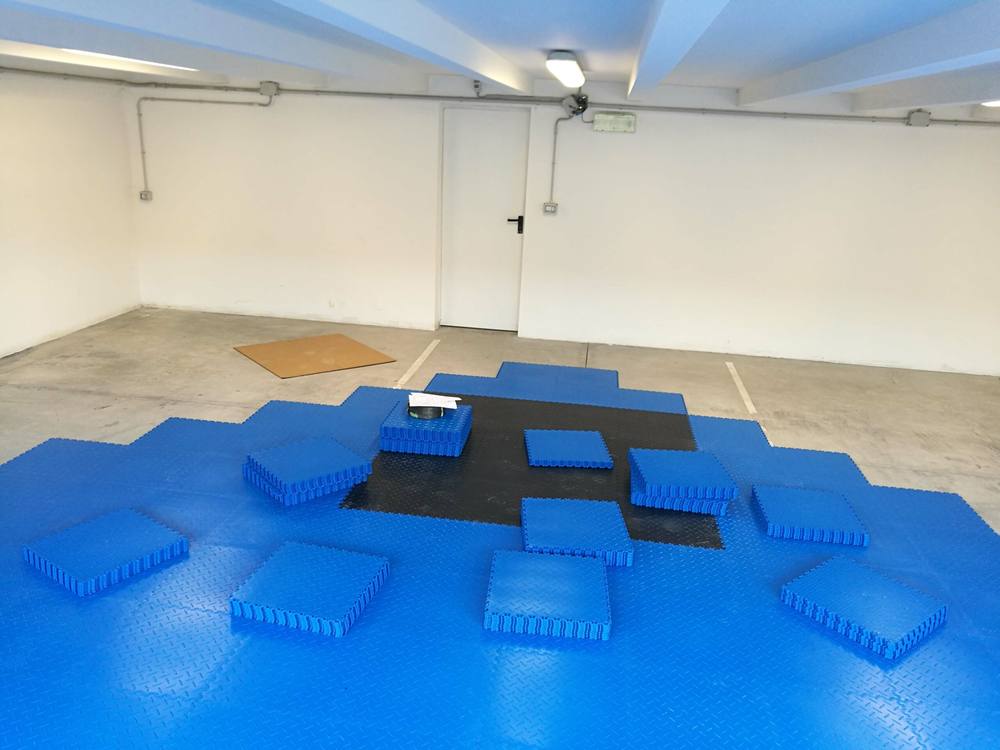
Watch out for persistent moisture and the true condition of the concrete
With cellars and utility rooms, moisture is a perennial topic. But there is a huge difference between an ordinarily cool space and a room that actually lets water in. If puddles form on the concrete after rain, if it stays wet for long periods, shows damp patches or mould is thriving, you must solve the structural problem first.
No floor covering can act as a substitute for missing waterproofing. That applies to interlocking PVC floor tiles too, of course. They will firm up the surface, make it more welcoming and radically simplify cleaning, but they cannot stop actively rising water or rescue a flooded cellar. So before you start choosing and installing, make sure your subfloor is firm, sound and free of persistent structural moisture. If in doubt, it is always better to consult an expert.
Extreme point loads from shelving and appliances
A cellar, storage room or utility room is no empty showcase. The floor here has to bear fully loaded shelving, heavy appliances, barrels and boxes of tools over the long term. The toughest test for any flooring is the so-called point load. The feet of a heavy washing machine, dryer or metal shelving unit concentrate all of the weight onto just a few square centimetres. Soft or brittle materials quickly get dented or crack under this pressure. With extremely heavy pieces of equipment, it therefore always pays to spread the weight using wider pads.
Easy cleaning without scrubbing pores and joints
Nobody wants to spend hours needlessly scrubbing in a utility area. So make a point of avoiding uneven surfaces, porous materials and deep joints. In a home storage room they instantly collect dust, in a cellar they readily draw in moisture, and in a utility room they mercilessly soak up spilled laundry gels.
The ideal choice is a completely non-absorbent surface that you can simply sweep, vacuum or wipe with a mop and an ordinary cleaner as needed.
A sure and safe step even with your hands full
We often dash down to the cellar or pantry in a hurry, in house slippers and frequently with a bulky box in our arms. A stable, slip-resistant surface is an absolute must at such moments, especially in places where water can easily escape onto the floor or fine dust tends to settle.
Safety, however, also lies in a perfectly even surface without treacherous potholes and cracks you could trip over. And if you are setting up a larger home storage room, you can also use different floor colours to cleverly and safely separate walkways from storage zones.
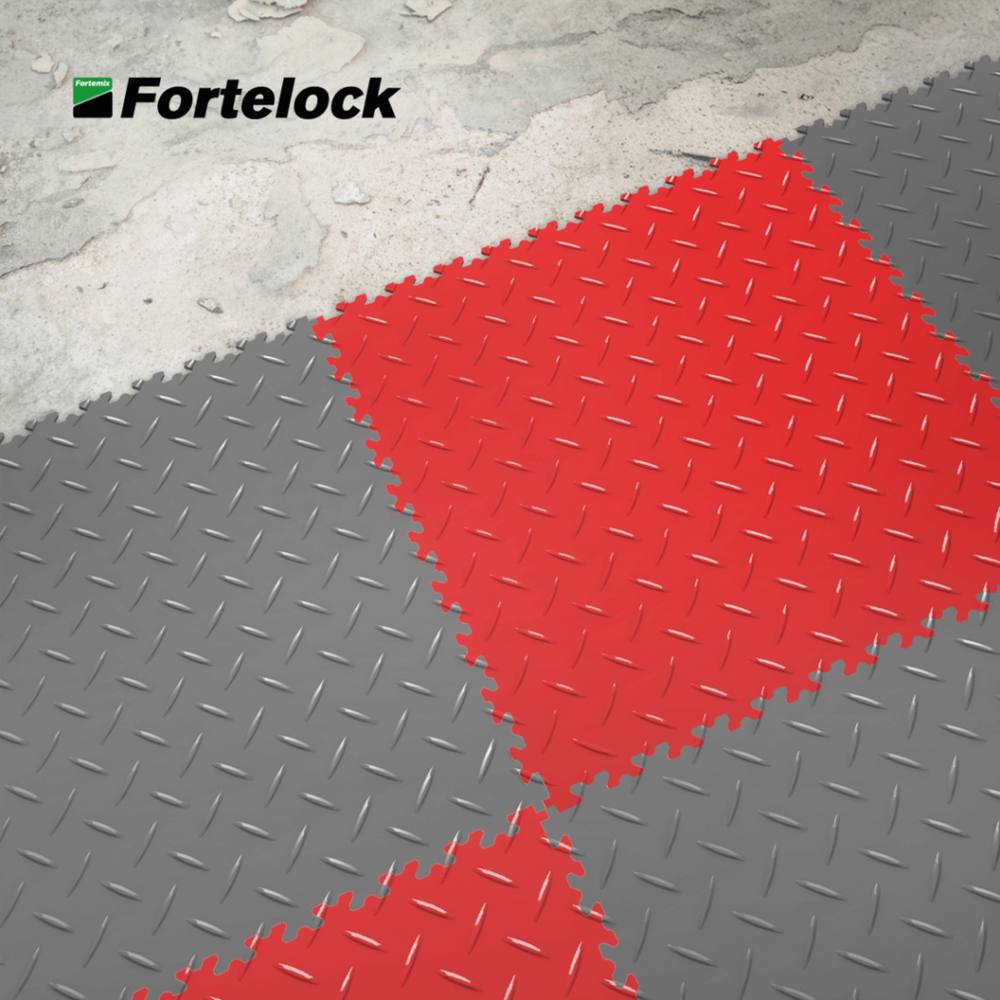
What types of flooring come into consideration
Several solutions offer themselves for a utility room, cellar or home storage room. Each has undeniable advantages but also weak points. There is no single universal floor for everyone; it always depends on the specific conditions of your space.
Bare concrete is a cheap base that often falls short
Leaving bare concrete is the cheapest and quickest option. If it is new, smooth, dust-free and the room is not under heavy use, it can serve temporarily. In older houses, however, the original surface tends to be crumbly, porous and very impractical when it comes to cleaning.
In a cellar it constantly draws in moisture and dust, in a home storage room it soils stored items, and in a utility room it instantly soaks up every spilled liquid. For a regularly used space, it is more of a stopgap than a long-term functional solution.
Concrete paint promises a quick facelift with a limited lifespan
Paint can unify old concrete, partly reduce dusting and visually brighten the space. It is a fairly inexpensive route, but it comes with one strict condition – the subfloor must be absolutely perfectly prepared. The concrete needs to be thoroughly cleaned, degreased, dried and stripped of all loose parts.
If you apply paint to a damp or crumbling surface, it will soon start to peel. Paint may suffice for less frequented rooms, but it won't cope in the long run with a demanding routine of washing machines, boxes being dragged around and frequent mopping.
Ceramic tiles are a traditional choice with the risk of dirty grout lines
Ceramics are a classic for utility rooms. They look good and, provided you choose the right type (with regard to slip resistance and, for cold spaces, frost resistance), they are very durable. Their main stumbling block, however, is the grout lines. Dirt, laundry gel residue and dust settle into them very easily, so the floor starts to look grubby over time.
In storage rooms there is also a risk of a tile cracking when a heavy object falls. Replacing a single piece is possible, but it can't be done without chiselling, dust and fresh grouting.
Residential vinyl pleases the eye but doesn't belong in utility areas
Vinyl floors (in rolls or planks) are popular mainly in living areas. In a utility room they may look and feel pleasant, but they are not always ideal for utility spaces. Softer types of vinyl are extremely sensitive to point loads – heavy shelving or washing machine feet can press permanent dents into them. Installation also requires a perfectly level screed, and in areas with elevated humidity there is a risk of adhesive problems.
Interlocking PVC floor tiles excel in durability and practicality
Interlocking PVC floor tiles are the ideal solution wherever you need an extremely durable and easy-to-maintain surface but don't want to embark on a lengthy, messy renovation. The individual tiles fit precisely together thanks to a system of sturdy interlocks, so in most cases you can do entirely without full-surface gluing.
In a utility room, cellar or home storage room, you will appreciate this flooring above all for its ability to withstand long-term point pressure from heavy shelving, dampen appliance vibrations and take falling tools in its stride. In terms of cleaning, it offers a non-absorbent surface from which you can wipe dust and spilled chemicals in a flash.
And should the surface ever suffer irreversible damage, all it takes is to click out and replace a single tile, which is out of the question with poured concrete or ceramics. It is important to stress again, though, that PVC tiles do not serve as waterproofing – the subfloor beneath them must be stable and free of active water ingress or rising damp.
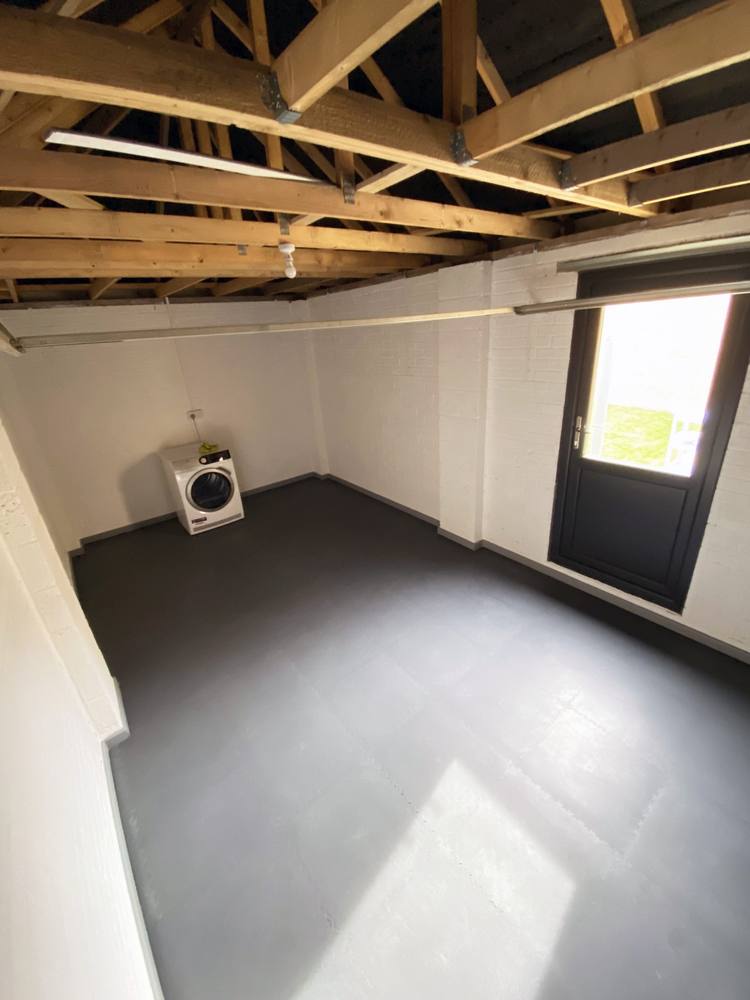
The main advantages of interlocking PVC floor tiles for utility areas
- Lightning-fast installation without demolition and dust – You simply click the tiles together directly on the original, prepared subfloor. No lengthy drying, no mixing adhesive and no complicated post-construction clean-up.
- Extreme load-bearing capacity and mechanical resistance – The surface easily handles the weight of fully loaded storage shelving, the vibrations of a washer and dryer, and the rough shuffling of boxes and sports equipment.
- No joints and a non-absorbent surface – Spilled laundry gels, mud from shoes and settled dust have nowhere to work their way in. Everything just needs a quick wipe with a mop or a pass with the vacuum.
- Thermal and acoustic insulation – The flexible material naturally dampens noise and vibrations from technical appliances. It also takes the perceived chill out of the foundation slab, which you will appreciate especially in cellar storage bays.
- Resistance to common chemicals – Drips from the lawnmower, harsher cleaning agents and spilled liquids won't harm the tile surface or leave irremovable stains on it.
- Quick repair in case of damage – If a tile does get damaged beyond repair, you simply unclick it from the interlocks and replace it with a new one. The space thus stays visually uniform and fully functional for good.
Laying tiles in a cold cellar
Cellars and unheated rooms tend to be cold, and with PVC tiles this needs to be taken into account right from installation. The Fortelock technical data sheet requires the tiles to acclimatise in the room for at least 48 hours at 18–26 °C. The subfloor temperature must not drop below +15 °C, and the temperature should stay constant during installation and for 24 hours afterwards. A loose-laid floor is designed for use at air temperatures of +15 to +27 °C; with a wider range, the tiles are glued with PU adhesive. The relative humidity of the air should not exceed 75% over the long term. If you cannot ensure these conditions in your cellar, discuss the solution in advance with the Fortelock sales department.
How to tell it's time to replace the floor
Sometimes cleaning or painting the original floor is enough. Other times a more fundamental change pays off. The signs that the original floor is no longer up to the job are usually fairly clear.
Start dealing with the floor especially when:
- the concrete gives off a lot of dust and soils stored items
- the surface is crumbling or flaking
- there are cracks and uneven spots in the floor
- stains from chemicals, oil or moisture can't be cleaned off
- the space feels musty and neglected
- the floor is slippery or unpleasant to walk on
- you are planning new appliances or shelving in the room
- you want to use the cellar or utility room more often
- you need a quick renovation without complicated construction work
If you recognise yourself in several of these points, the original surface is probably no longer doing its job. Replacing or covering the floor is then not just a cosmetic upgrade but a practical improvement of the entire space.
Frequently asked questions
What flooring is suitable for a dry cellar?


A non-absorbent interlocking PVC floor tile is a good fit for a dry cellar, as it can be laid on the original solid subfloor, usually without glue. PVC acts as a thermal insulator with a conductivity similar to laminate, so the floor does not feel cold, and it also dampens noise. If water leaks into the cellar or rises from below, the waterproofing must be dealt with first. You will find the specifications in the Fortelock Industry range.
Is a poured resin floor or PVC tiles better for a cellar?
It depends on the condition of the subfloor and how quickly you need the job done. A poured epoxy floor requires a dry and carefully prepared subfloor and, according to the comparison on the Fortelock website, can take 3 to 7 days to cure, whereas Fortelock tiles are done in 3 to 4 hours. A damaged tile can also be taken out and replaced. The comparison is summarised in the article Epoxy or PVC tiles? The pros and cons of both solutions.
Can PVC tiles carry a washing machine, a boiler and fully loaded shelving?
Yes. The compressive strength of all Fortelock ranges is 520 kg/cm², so the tiles can withstand the point load from appliance feet and shelving. With very heavy items it makes sense to spread the weight with wider pads. Use PVC or PE protectors on furniture legs rather than rubber caps, because dark rubber can discolour the tiles with long-term contact.
Can I lay the tiles in a utility room myself?
Yes. Fortelock tiles click together, are usually laid without glue and the work can be split into sections. The important thing is to have a solid subfloor, leave a 10 mm gap from walls and fixed points, and make the edge cuts wider than a third of a tile. The whole procedure is described in the article How to lay Fortelock tiles easily and correctly.
How do you clean a PVC floor in a cellar or utility room?
Water and an ordinary detergent are enough, as dirt does not soak into the material. For a perfect appearance, the manufacturer recommends ForteClean cleaners; in a household, the maintenance sheet recommends Forteclean Daily Cleaner once or twice a week. Do not use abrasive pads or solvents, which damage resilient floor coverings.