1. 2. 2026
What is point load on a floor and why you shouldn't underestimate it
How point load on a floor works
Point load describes how much weight a floor has to withstand on a very small area. So it's not about how many tonnes are in the room in total, but about how the weight is distributed.
Typical examples include:
- the wheel of a forklift
- the foot of a heavy machine
- a dumbbell rack
- the support foot of a shelving rack
- the tyre of a car parked in one spot for a long time
Even relatively light equipment can create extreme pressure if its weight is concentrated on a small contact area. And this is exactly where many floors fail.
Why point load destroys floors faster than total weight
A floor can easily carry several tonnes as long as the load is spread evenly across the whole surface. But as soon as the same weight is concentrated in a small spot (for example under the wheel of handling equipment, the foot of a machine or a rack), the situation changes dramatically. The flooring material is simply unable to absorb such high localised pressure over the long term.
How excessive point load shows itself
In practice, the most common sign is that the surface gradually starts to dent or deform in specific places. Harder floors develop hairline cracks that widen over time, while coatings and screeds crack or peel in layers. Softer materials get permanently compressed and never return to their original shape.
Once the surface is damaged, the problem usually doesn't stop by itself. The damage gradually spreads to the surrounding area, the stress on neighbouring spots increases and the floor's overall lifespan is significantly shortened. Repairs then often can't be handled locally and require work on a larger area than it originally seemed.
Where you encounter point load most often
Point load is not exclusive to heavy industry. It occurs wherever weight is transferred to a small contact area with the floor, whether long-term or repeatedly. And that is the toughest strain a floor covering can face.
Warehouses and logistics
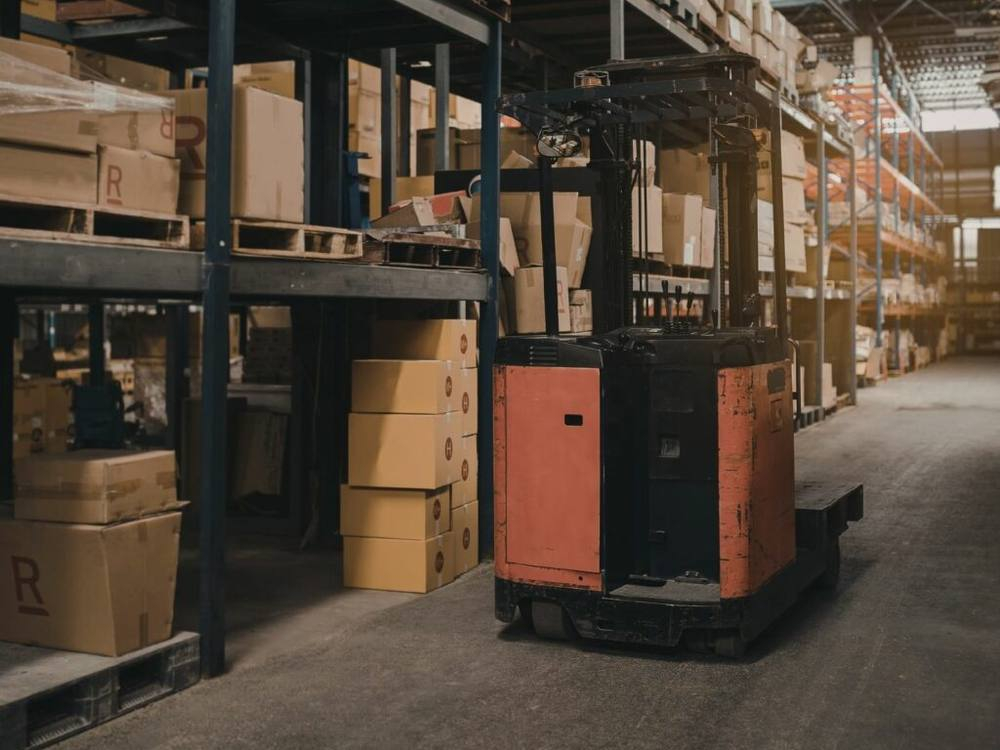
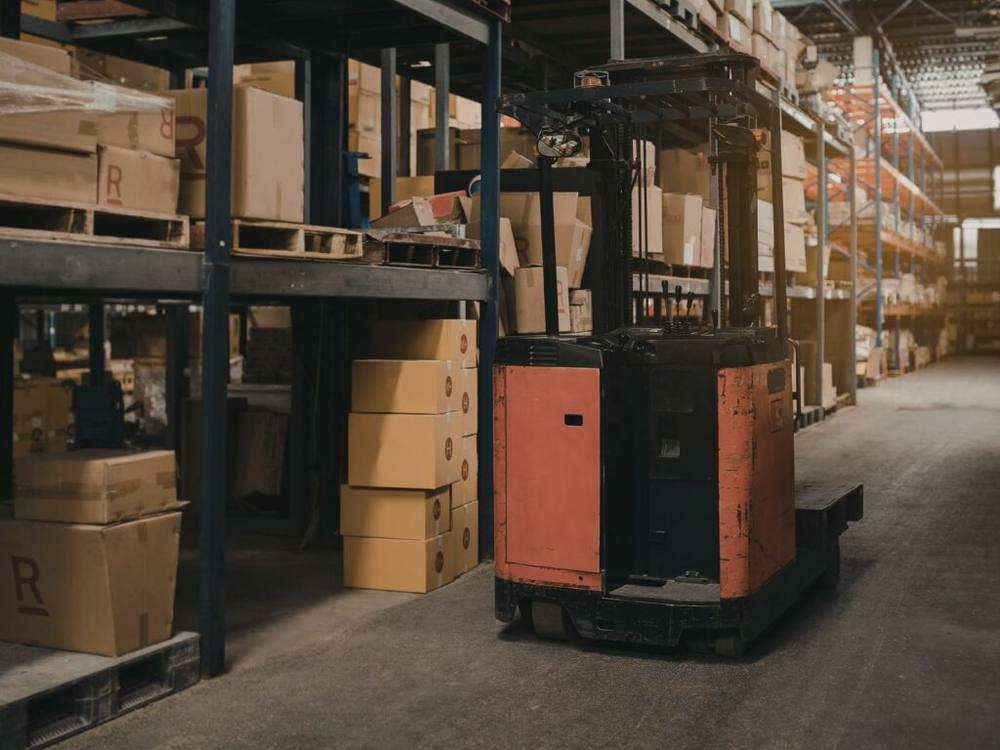
In warehouses, point load acts mainly under the wheels of forklifts and pallet trucks. The weight of the machine itself and its load is concentrated on a very small area, often while turning or braking. That is a combination that quickly destroys ordinary floors.
Production halls and industrial facilities
In production, the floor is stressed above all by the feet of machines, technological units and production lines. These stand in one place for years and create constant localised pressure, which eventually shows up as dents or surface cracking.
Car workshops and garages
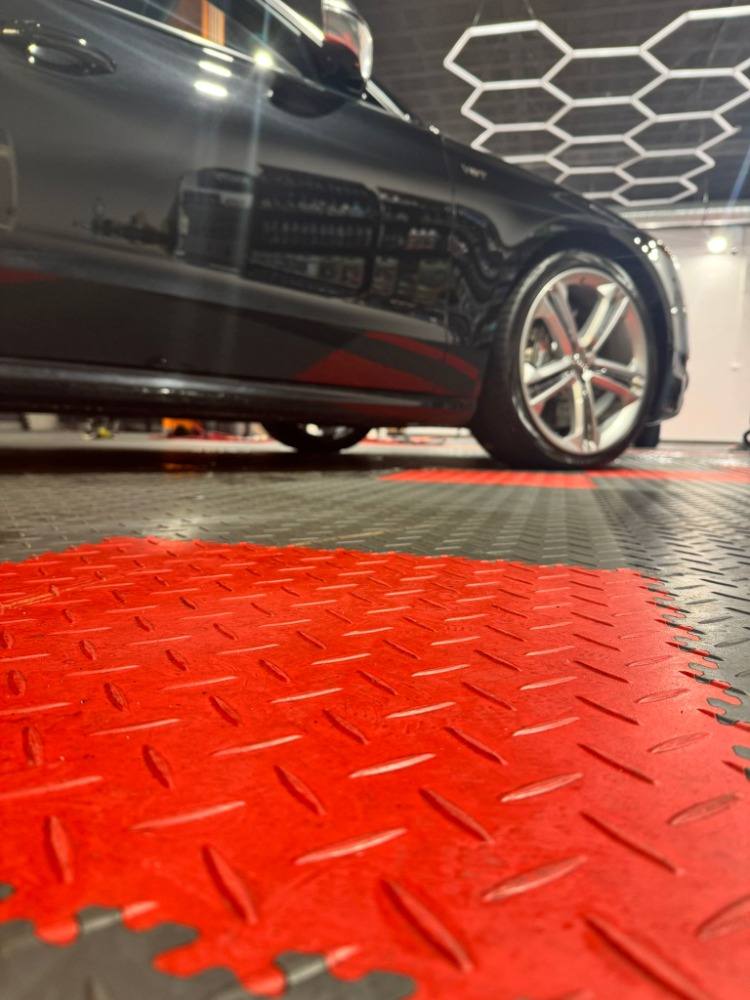
In garages and workshops, point load occurs under car tyres, especially during long-term parking or when the wheels are turned on the spot. The load is transferred to a narrow contact area, and less resistant floors soon show indentations or damage.
Fitness centres and sports facilities
In fitness centres, point load acts under dumbbell racks, power cages and heavy cardio machines. Here the floor has to handle not only the weight of the equipment, but also vibrations and impacts during workouts.

Shops and showrooms
In shops and showrooms, the floor is loaded by shelving, display cases and heavy fixtures standing on relatively small contact points. Even though this is no "heavy-duty operation", the pressure on the floor can be surprisingly high.
Which floor types fail most often under point load
Not every floor with a high load capacity is automatically suitable for point loads. The difference between evenly distributed weight and pressure concentrated in one small spot is fundamental. And this is exactly where the limits of individual materials become clear.
Epoxy and other poured floors
Epoxy screeds are very hard and look sturdy, which can give the impression of high durability. Their problem, however, is their rigidity. As soon as the load concentrates in a single point, the epoxy has nowhere to "give" and starts to crack.
This typically happens under forklift wheels, under stationary equipment or in places where vehicles frequently turn. Once a crack appears, it spreads quickly and the repair usually means working on a much larger area.
Coated concrete
Concrete itself can take a lot, but the coating on its surface is the weak link of the whole system. Under point load, the coating starts to crumble, peel off or develop patchy marks. On top of that, concrete keeps moving slightly, and even minor movements immediately show on the surface layer. The result is a floor that still holds together, but degrades quickly both visually and functionally.
Flat-glued vinyl floors
Vinyl is soft and pleasant to look at, but under point load that is exactly the problem. Under the wheels of handling equipment, machine feet or long-standing fixtures, the vinyl gets permanently dented. The adhesive also transfers pressure directly into the subfloor, so any unevenness or movement of the concrete shows on the surface. A damaged spot cannot simply be replaced without affecting the surrounding area.
Ceramic tiles
Ceramic looks hard and durable, but point load is critical for it. The tiles are unable to distribute localised pressure, so under heavier loads they crack or their edges break off. Another weak spot is the grout joints, which crumble over time. Once one tile cracks, the repair tends to be visible and often can't be done without dismantling a larger part of the floor.
How to tell that a floor can't handle point load
Problems with point load usually don't show up right after the floor is laid. On the contrary, everything may look fine for the first weeks or months. The warning signs come gradually and are often played down until it's too late. Here are the most common signs that a floor can't cope with localised pressure.
- Visible dents or indentation marks appear where equipment, racks or heavy machines stand.
- Hairline cracks form on the surface and widen over time, especially where equipment turns or the load is repeated.
- The surface starts to peel, crumble or develop patchy marks, typically with coatings and poured floors.
- When a forklift or pallet truck drives across, you can feel vibrations, unevenness or instability.
- The wear is uneven. Some spots are heavily damaged while others look almost untouched.
- Repairs have to be repeated and the damage keeps moving to other stressed areas.
What point load a floor must handle depending on the type of operation
With floors, you need to look at specific numbers, not vague phrases like "high load capacity". In real operation, completely different values matter than most people think.
Point load up to 150 kg/cm²
This level is typical for:
- standard vinyl floors
- light commercial coverings
- floors intended rather for offices and shops
Point load 150–300 kg/cm²
This category includes:
- better industrial vinyl systems
- some poured floors under ideal conditions
- floors suitable for lighter warehouses, hand pallet trucks and medium mechanical loads
Point load 300–400 kg/cm²
Here we are talking about:
- truly industrial floors
- facilities with handling equipment, racking and trucks
Point load 400–520 kg/cm² and more
This is the category for:
- round-the-clock operation
- heavy machinery
- frequent forklift turning
- extreme point loads
This is where our highly durable modular PVC systems belong, engineered specifically for point pressure, not just total load capacity.
Why Fortelock flooring handles point load so well
The difference between a floor that "can take something" and a floor that handles point load in the long term lies not in marketing promises, but in the design. And this is exactly where Fortelock has a decisive edge.
Solid construction instead of a thin layer
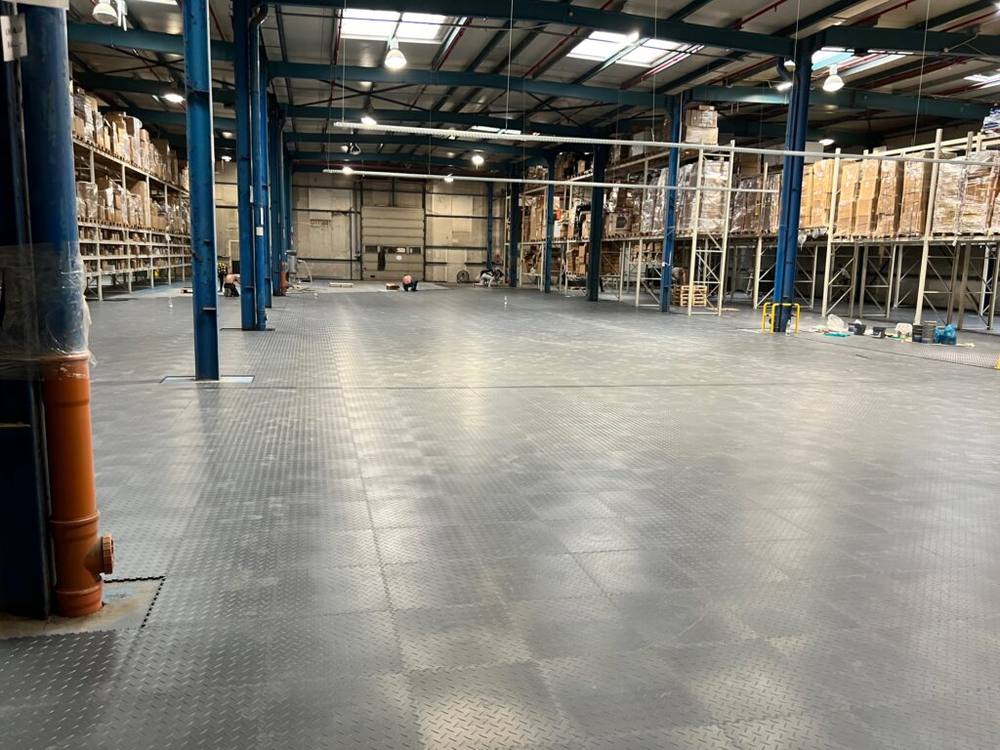
Fortelock is not a coating or a thin covering laid on concrete. Each tile is a solid PVC unit that distributes pressure across its entire surface. Point load is therefore not concentrated in a single spot but spread into the surrounding area, which significantly reduces the risk of denting or cracking.
Working with the pressure, not against it
Hard systems such as epoxy try to resist pressure, but cannot absorb it. Fortelock, by contrast, is partially flexible, so instead of fighting the pressure of forklift wheels, parked tyres or machine feet, it accepts and distributes it in a controlled way. As a result, no cracks or hairline fractures appear.
A stable interlocking system
The individual tiles are not laid loose. They are connected by strong interlocks that work as a single unit. When point pressure acts on one tile, the surrounding tiles help carry it. The floor therefore behaves like one continuous surface, not a set of separate pieces.
Material thickness and density
Fortelock tiles have sufficient thickness and high material density, which is crucial precisely with point loads. It's not just about how much the floor can carry on paper, but whether it resists deformation under pressure over time. And that is exactly why Fortelock is used in facilities with forklifts, racking and heavy machinery.
No dependence on a perfect concrete base
Because Fortelock doesn't sit as a thin layer glued to the concrete, it is far less sensitive to minor unevenness or micro-cracks in the subfloor. The concrete can keep moving, but the pressure is not transferred directly into the floor surface (which is a common reason why other systems fail).
What this means for your operation
In real operation this means:
- No indentation marks under equipment wheels
- No marks left by parked cars
- No cracks in turning areas
- No gradually worsening damage
- And if a local problem does appear after years of use, you replace just one tile, not the whole floor.