16. 11. 2025
Epoxy cracks. What to use instead?
Why epoxy floors crack
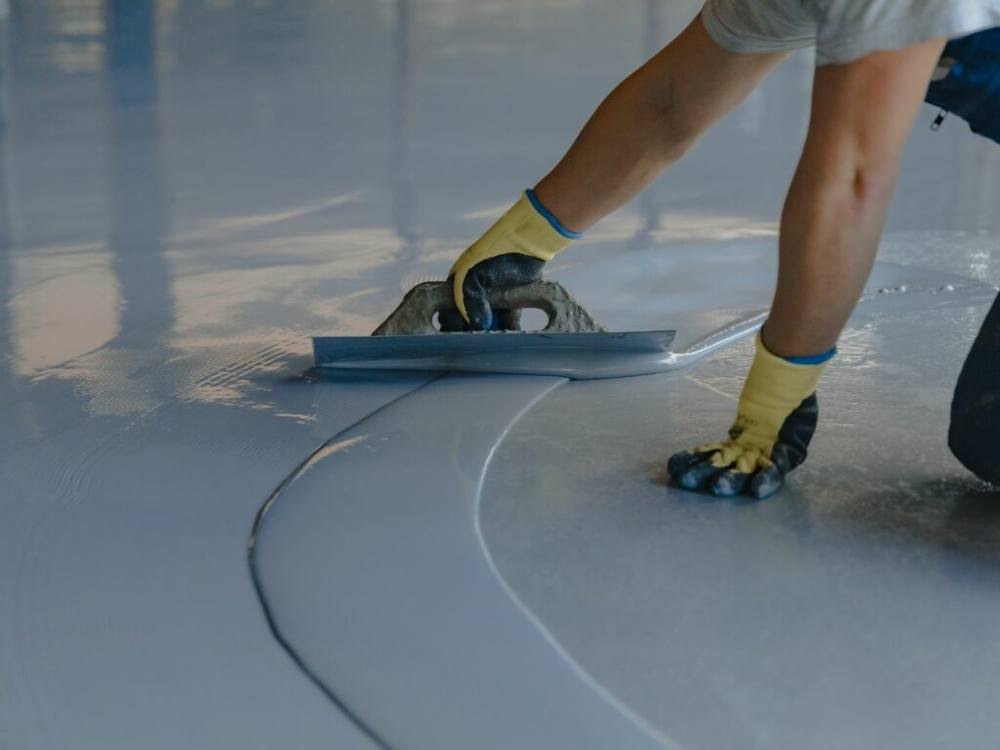
Epoxy floors look elegant and promise high durability. In practice, however, they often hit a fundamental limitation: they are hard and rigid, so any change in the subfloor shows up on them immediately. If the concrete beneath the epoxy moves, dries out or contains residual moisture, the epoxy does not compensate for it and simply cracks. That is why cracks, „blisters“ or flaking spots appear even on relatively new epoxy floors.
Moisture and concrete movement
Epoxy requires a perfectly dry and stable subfloor. As soon as even a small amount of moisture appears beneath the concrete, stress begins to build up and is then transferred to the surface. The floor then bulges, flakes off or develops patches and bubbles. Moreover, the moisture has nowhere to escape and the epoxy seals the surface completely, so the problem gradually spreads further.
You also have to keep in mind that every concrete, even high-quality concrete, naturally works. It changes volume, expands and contracts, settles and gradually dries out. Rigid epoxy does not absorb this movement, so hairline cracks or fissures often start to appear on it and gradually widen.
Temperature differences and expansion joints
Another common problem is temperature fluctuation. Concrete reacts to temperature changes by expanding and contracting, while the epoxy stays rigid. As soon as the sun heats part of the floor through the windows, for example, or when temperatures in the hall alternate between night and day, stress starts to act. If the floor is not properly prepared and the expansion joints are not treated, visible cracks appear along them and later even flaking of the edges. Epoxy is not flexible enough to follow changes in the subfloor, and once the stress shows itself, the surface starts to crack or separate.
Overloading and mechanical damage
Even though epoxy feels solid, it cannot withstand impacts or long-term point loads without being damaged. The moment a forklift operates on it, frequently turning on the spot, or when a pallet, a metal part or a heavy tool drops onto the floor, extreme pressure is created on the surface. Epoxy, which does not absorb the energy, simply cracks.
Long-term standing of equipment with a small contact area can be just as problematic. Under pressure the surface starts to deform or tear, because the material has no flexibility whatsoever. And once the damage appears, it usually keeps growing, because epoxy cannot be repaired locally so that it holds and is not visible.
Why epoxy is difficult to repair
Unlike modular floors (such as the Fortelock floor), epoxy cannot be repaired locally in a way that is invisible.
- The repaired spot has a different shade or texture.
- Often the entire area has to be ground down, even because of a single crack.
- After the repair there is once again a long technological pause.
- And the risk of the problem recurring is very high, because the cause remains in the subfloor.
That is precisely why warehouse owners, repair shops, garages and production plants often reach a single conclusion: There is no point in repairing something that will crack again. It is better to replace the floor with a different system.
What alternatives to epoxy are there
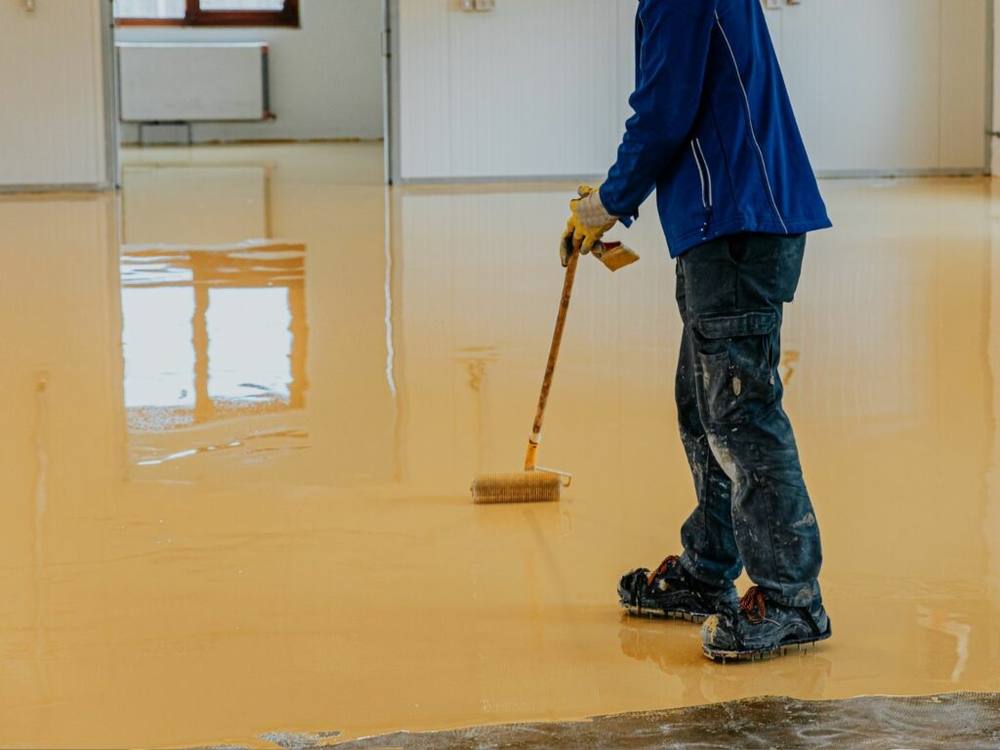
At first glance there seem to be several options, but when it comes to real load, installation speed and long-term reliability, most traditional solutions run into their limits.
Coated concrete
Concrete with a protective coating is a common choice, mainly because of its low cost and simple appearance. But it is still concrete. That means a material that works and cracks, especially in older halls or wherever heavy machinery is moved around.
The coating is usually quite thin and quickly wears off, soaks up oil or chemicals and develops stains. With concrete you therefore have to expect regular repairs, further downtime and rising costs.
Vinyl or PVC rolls
Rolled PVC or vinyl feels pleasant, is easy to clean and works well in smaller operations. The problem arises with higher loads: heavy machines, racking or turning forklifts easily damage, tear or gradually deform the surface.
Installation also requires full-surface gluing, so once again there is downtime, often even the need to completely clear the space. And once the vinyl is damaged, a local repair is almost impossible, so you face the same process as the original installation.
Ceramic tiles
Ceramics look aesthetic and on paper seem like a durable solution. But in operation you quickly hit reality: the tiles crack under point loads, the joints get clogged and tear, and the floor requires careful and lengthy installation. For operations where downtime would mean economic losses, it is an impractical and time-consuming choice that is hard to maintain in the long run.
Fortelock: the most common alternative to epoxy that doesn't crack
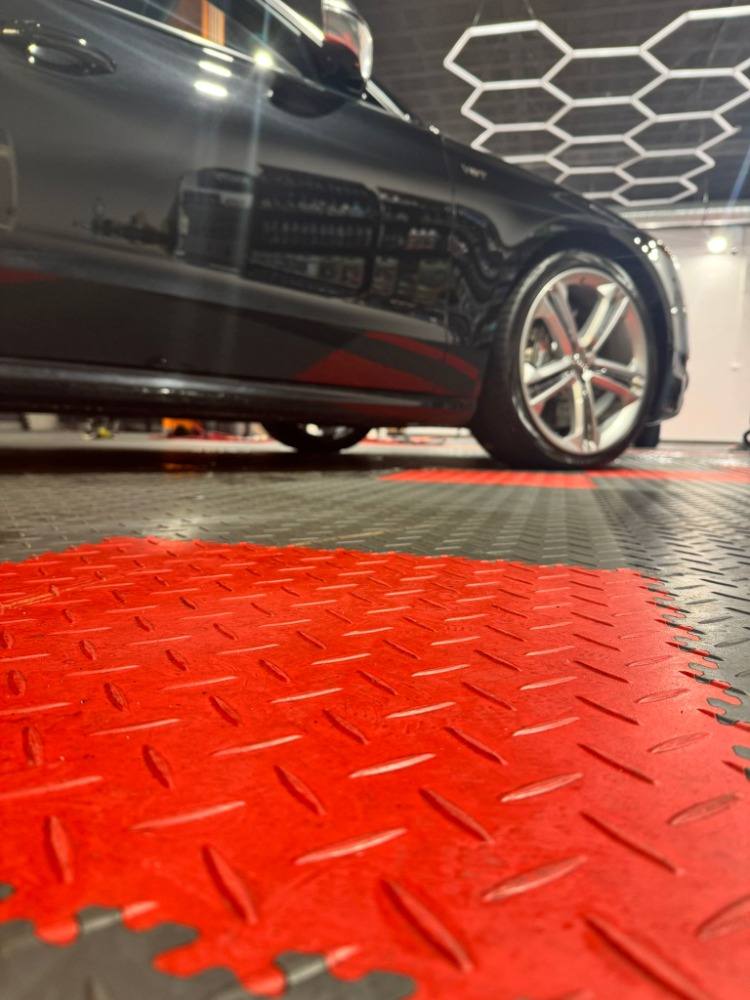
Fortelock interlocking PVC tiles offer a solution that responds exactly to the problems we most often encounter with epoxy. Unlike a hard screed, Fortelock is partly flexible, so it can follow the movement of the concrete, absorb impacts and level out minor unevenness in the subfloor. Thanks to this it does not crack, even when the floor works, changes temperature or is exposed to point impacts and heavy machinery.
Installation without operational downtime
Another key advantage is the installation itself. Fortelock is not glued, requires no technological breaks and can be laid directly onto the original surface, whether that is old concrete, damaged screed or an existing floor that is well past its best years. The tiles simply click together and the surface is immediately ready for use. In practice this means fast installation without downtime, no chemical odour and the option to lay the floor even during normal operation.
Servicing is another big plus. If epoxy gets damaged, you face grinding, filling or completely re-screeding the entire area. With Fortelock you just replace a single piece. No gluing, no grinding. For companies that need the certainty of a quick response and minimal costs, this is a crucial benefit.
Types of Fortelock floors
And because every operation has different requirements, Fortelock offers several ranges that differ in load capacity, appearance and format:
Fortelock Industry: heavy load, forklifts, workshops, service centres
A robust construction designed to withstand the daily movement of forklifts, the point load of machines and dropped tools. The ideal choice everywhere epoxy usually cracks.
Fortelock Industry Ultra: extreme load and heavy machinery
A reinforced version with even higher load capacity. Suitable for operations where heavy metal parts or large pallets are handled, or where machinery creates extreme rotational forces.
Fortelock Invisible: the same resistance, but a cleaner look
Thanks to the invisible interlocks it looks like a seamless surface, while retaining all the technical parameters of the Industry range. Ideal for showrooms, workshops, representative premises or service centres where aesthetics matter alongside functionality.
Fortelock XL: fast installation of large areas
A larger format intended for halls, sports centres, warehouses or workshops where fast progress and a minimum of joints are needed. Often used for renovating old epoxy floors as well.
It is precisely the combination of flexibility, resistance, immediate usability and the option of zone-by-zone installation that makes Fortelock the solution for operations that cannot or do not want to close for a renovation. And where epoxy repeatedly fails, Fortelock holds up over the long term.
When it makes sense to switch from epoxy to Fortelock
- Fortelock is suitable where the subfloor works or is older. Rigid epoxy would crack here quickly.
- It makes sense in operations with heavy or vibrating machinery that damages epoxy screeds over time.
- It is ideal for halls with significant temperature fluctuations, where stress in the concrete tears epoxy, while Fortelock tolerates it.
- It suits businesses that cannot stop operations, because Fortelock is usable immediately after laying.
- It comes into its own wherever heavy objects frequently fall, because any damage is dealt with by replacing a single tile.
- It is also a good choice for operations with high hygiene requirements, because it is non-porous and easy to clean.
When tiles are glued instead of laid loose
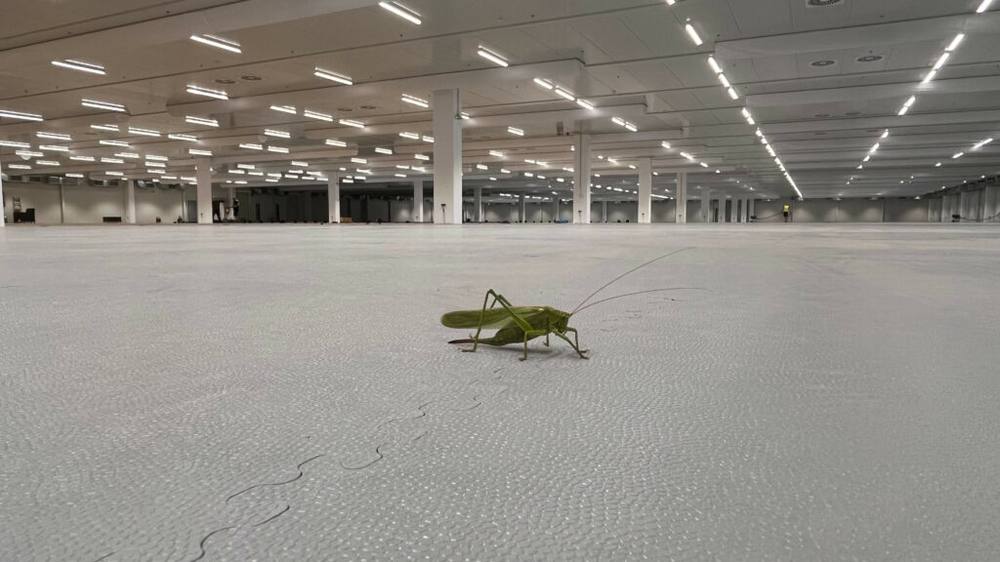
According to the technical data sheet, a loose-laid Fortelock floor can be used at air temperatures of +15 to +27 °C. Where the indoor temperature changes by more than 15 °C, where direct sunlight falls through glazed areas or where there is a heat source, the tiles are glued with PU adhesive. For heavy electric trucks with small wheels, the manufacturer recommends testing the tiles first and fixing or gluing them for permanent use. Fixing with a water-removable coating or double-sided tape is reversible, while gluing with PU adhesive is permanent. Halls with large temperature fluctuations should therefore not be treated as suitable for purely loose laying.
Frequently asked questions
Why does an epoxy floor crack?


Because epoxy is hard and inflexible. The concrete beneath it naturally moves, dries out and reacts to temperature changes, and epoxy cannot follow these movements. Cracks also form due to residual moisture in the subfloor, untreated expansion joints and point impacts, for example when a forklift turns on the spot.
Is it worth repairing joints and potholes in an epoxy floor?
Often not. A local epoxy repair tends to be visible because the repaired spot has a different shade or texture, and the entire area often has to be ground down because of a single crack. The repair is followed by another curing break. Yet the cause in the subfloor remains, so the damage can return. That is why many operations switch to a different flooring system.
Can PVC tiles be laid directly on an old epoxy screed?
Yes, as long as the epoxy is solid and cohesive. For epoxy, PVC and linoleum subfloors, the technical data sheet recommends testing compatibility with the tiles first. Removing the epoxy screed or grinding the entire area is then usually unnecessary, because Fortelock tiles are laid dry directly onto the original surface.
How quickly is a Fortelock floor finished compared with epoxy?
Much faster. According to the manufacturer, an epoxy floor can take 3 to 7 days to dry, whereas with Fortelock the job is done in 3 to 4 hours. Installation rates reach up to 30 m² per hour, and the floor can be laid in sections even during operation, so there is no need to close the entire space.
Can PVC tiles used instead of epoxy carry forklifts too?
Yes, if you choose the right range. When laid loose, Industry and Industry Ultra can withstand forklifts on pneumatic tyres of up to 6,600 kg including the weight of the truck. Even when laid loose, Industry Ultra can also carry an electric forklift with PU wheels of up to 2,900 kg. The technical data sheet states these values for a test at 23 °C and a speed of 5 km/h.
How do you repair a damaged spot on a Fortelock floor?
Only the damaged tile is replaced. It can be lifted out and replaced even in the middle of the room, without dismantling the whole floor, without gluing and without grinding. According to the manufacturer, replacement takes a few minutes, so operations do not have to stop for a repair, as is common with an epoxy screed.