28. 2. 2026
Warehouse Flooring: How to Prevent Concrete Cracking Under Forklifts
Why concrete cracks under forklifts
At first glance, concrete seems like the ideal base for a warehouse. It is strong, massive and can carry heavy loads. But warehouse operations stress concrete in a completely different way than ordinary foot traffic or passenger cars. And the difference between "can carry it" and "can withstand it long term" is crucial.
Point loads from the wheels
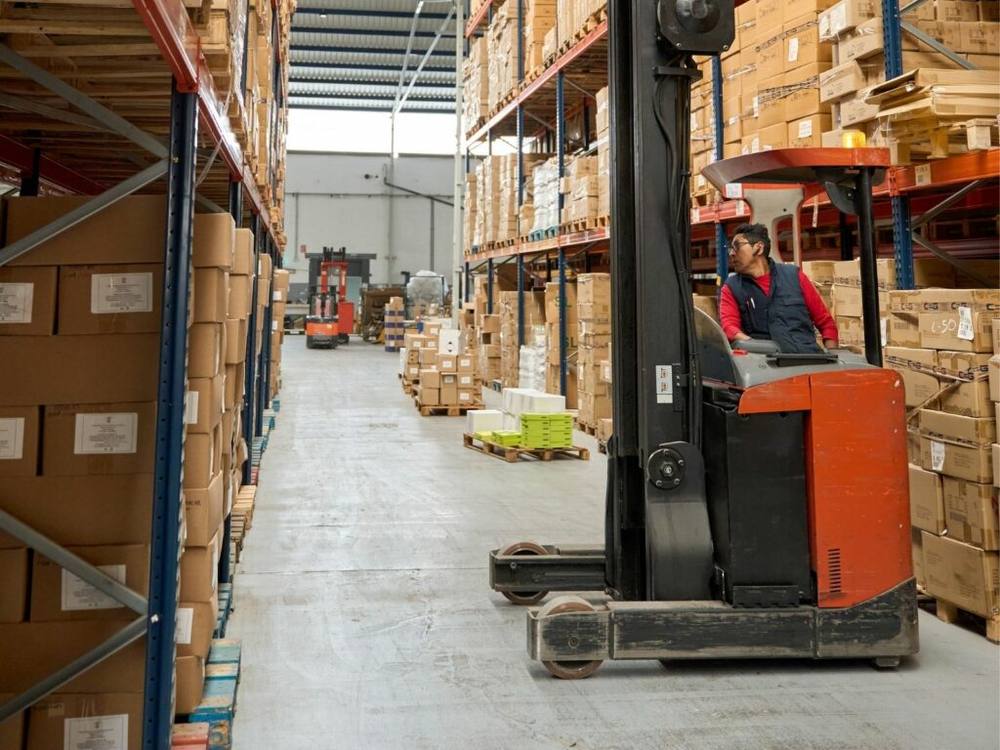
Forklift wheels have a relatively small contact area. The entire weight of the truck and its load is therefore transferred through just a few square centimetres. When a forklift weighs several tonnes and carries a fully loaded pallet, it creates extreme pressure concentrated in a very small area.
The biggest problems occur where the forklift stops, lifts a load or stands for longer periods. Concrete is strong in compression, but repeated long-term stress at the limit of its load capacity leads to material fatigue. At first, tiny micro-cracks form that are invisible to the naked eye. Over time, however, they join together and develop into larger cracks.
Dynamic stress
The loads in a warehouse are not only static. Every braking manoeuvre, start or sudden change of direction creates additional forces that stress the concrete in a different way than simply standing still. This produces impacts and short-term load peaks that can be significantly higher than the weight of the forklift itself.
Repeated dynamic stress gradually weakens the top layer of the concrete. It starts to crumble, generate dust and lose cohesion. Once the surface is damaged, loads are transferred unevenly and the degradation process accelerates.
Turning on the spot
Areas where forklifts frequently turn are especially problematic. Here the wheels do not only press downwards, they also generate lateral shear friction. Concrete is highly resistant to compression, but it is much more sensitive to tension and shear.
The combination of pressure and lateral friction leads to the top layer peeling off, cracks forming along the travel paths and the surface gradually being ground away. Typical signs are "worn-in" tracks or a network of cracks in areas with frequent manoeuvring.
The result is a floor that can carry the forklift, but without a protective layer or a suitable system it degrades over time. That is exactly why, in warehouse and production facilities, you need to consider not only the weight of the equipment, but also the way it moves across the floor.
What cracking concrete means in practice
Cracked concrete is not just a cosmetic defect you can ignore indefinitely. In day-to-day operations, it very quickly affects the functionality of the entire hall, working comfort and maintenance costs.
Uneven surfaces and vibration while driving
As soon as cracks and local depressions appear on the surface, small irregularities develop. Forklifts drive over them on every pass, causing vibration and impacts. These are unpleasant for the operators and at the same time increase the stress on the floor itself. Every pass widens the crack further and accelerates the degradation of the surrounding concrete.
Increased wear on forklift wheels and chassis
An uneven surface does not damage only the concrete – the vibrations are transferred to the equipment as well. Forklift wheels, bearings and chassis components are exposed to higher loads, which increases their wear. In practice, this means more frequent servicing and higher maintenance costs for handling equipment.
Dust from degraded concrete
Once the top layer of concrete starts to crumble, fine dust is created. It spreads throughout the hall, settles on goods, racking and machinery and can negatively affect sensitive operations. In logistics, manufacturing or the food industry, this is not only an aesthetic problem, but a hygiene issue as well.
Cracks spreading under racking
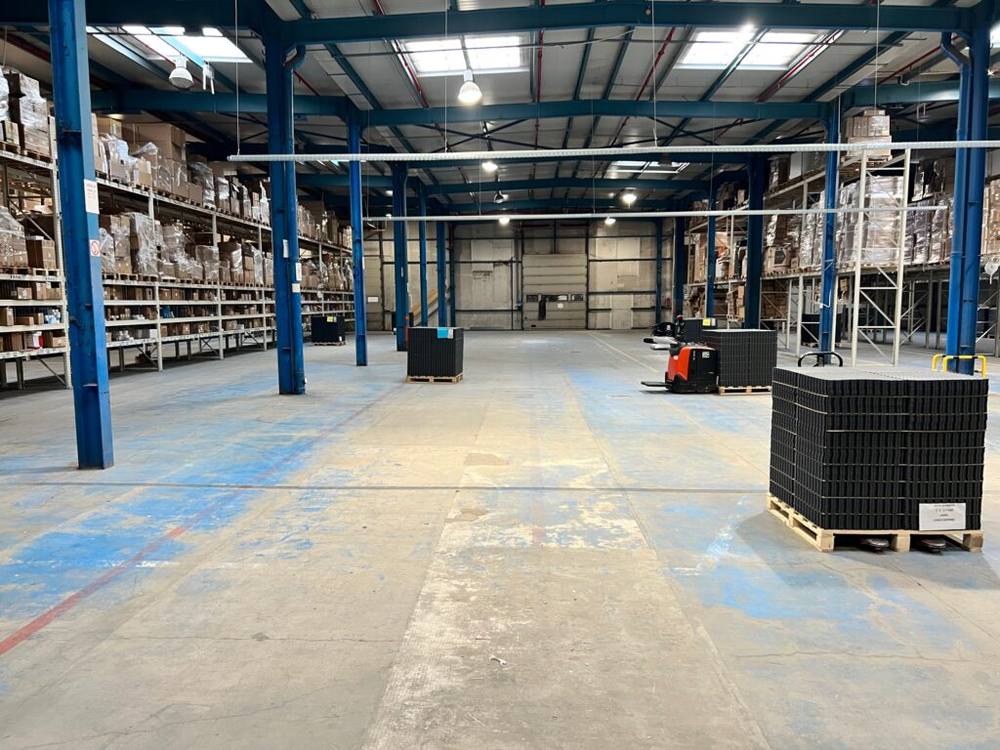
Cracks often appear precisely in areas of high point loads, for example under racking uprights. If the base gradually loosens, loads are transferred unevenly. This can lead to further crack propagation and local deformations that affect the stability of the entire structure.
And the longer the situation goes unaddressed, the more demanding and expensive the subsequent repair tends to be. A small crack can turn into a widespread problem requiring remediation of the base or a complete floor renovation. That is why it pays to address the first signs of degradation early, before they grow into a technical and financial problem.
How to prevent concrete cracking without demolishing the entire floor
Even if the concrete is already starting to crack (or you know it is exposed to heavy long-term forklift loads), it does not automatically mean demolishing the whole floor and a warehouse shutdown lasting several weeks. In many cases, you can choose a solution that stabilises and protects the existing base without having to interfere with the entire structure.
Modular concrete protection in warehouses
In practice, many facilities today choose a simpler route. Instead of an expensive repair or a complete concrete renovation, they simply cover it with a system that takes over part of the load. Such a layer helps distribute the pressure of forklift wheels or racking uprights over a larger area, so the force is not concentrated in a single spot. At the same time, it limits direct contact between equipment and the damaged concrete, slowing further crumbling and crack propagation.
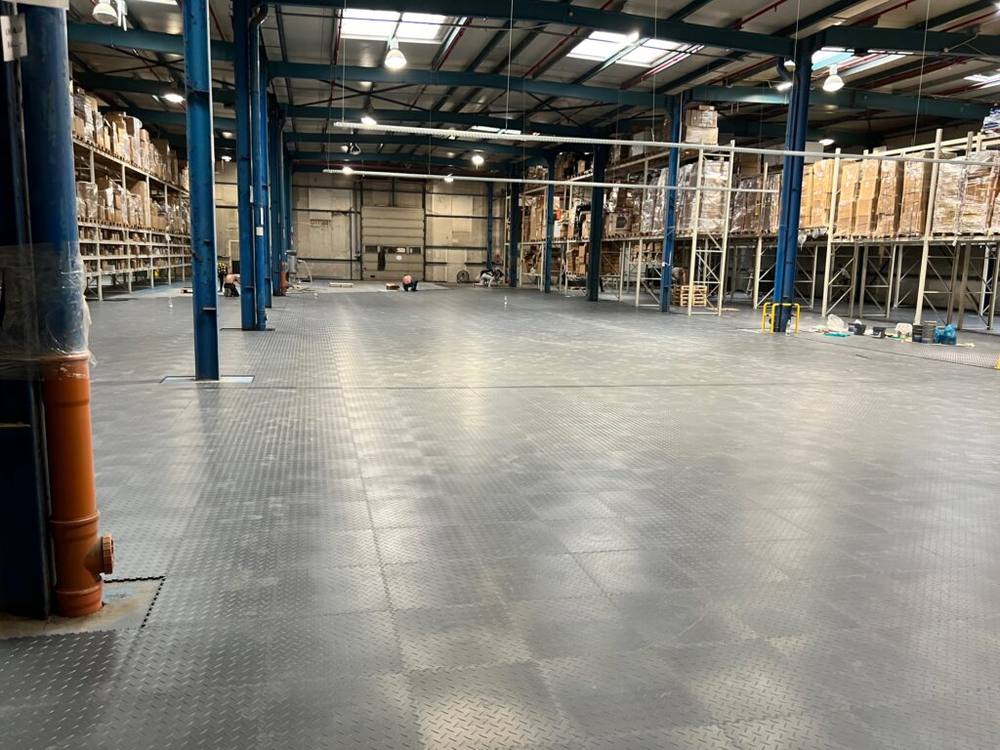
This is exactly where a modular PVC tile system makes sense. It works as a protective "buffer" between the operation and the concrete. It does not transfer impacts or point pressure as harshly and locally as a poured surface, but partially disperses them. The concrete is therefore not exposed to the full force of the load every time a forklift accelerates, brakes or turns.
How Fortelock PVC tiles help protect concrete under forklifts
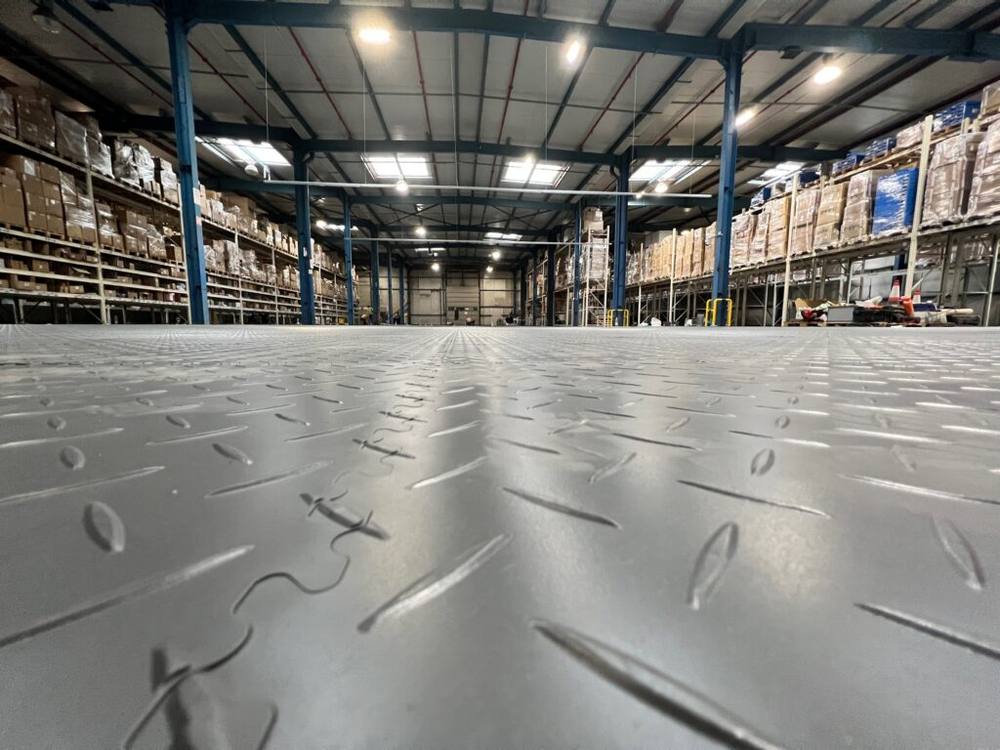
Fortelock industrial PVC tiles do not act as a thin layer firmly bonded to the concrete. They are not glued across the entire surface and do not transfer loads directly into the base at a single point. Instead, they create a separate, robust intermediate layer between the operation and the concrete that takes over part of the stress.
Their design allows them to:
- take over point loads from forklift wheels
- distribute pressure over a larger area through the tile itself and the neighbouring tiles
- partially absorb vibrations during acceleration, braking and turning
- protect the concrete from direct contact with damaged wheels or sharp edges of the load
As a result, forces are not transferred as harshly and locally into one specific spot. The concrete is not exposed to every impact at full intensity, which significantly reduces the risk of new cracks forming and slows the propagation of existing ones.
In practice, this means one thing: instead of the concrete continuing to crumble and crack, it is protected by a layer designed with the operation in mind. And all this without demolition, milling or a long warehouse shutdown.
Which Fortelock types are suitable for forklift traffic
Forklift operations place completely different demands on a floor than ordinary pedestrian traffic or passenger cars. It is not just the total weight of the truck, but above all the combination of point loads from the wheels, dynamic forces during braking and acceleration, and shear stress when turning on the spot. That is why it is important to choose a range that is genuinely built for these conditions.
Fortelock Industry
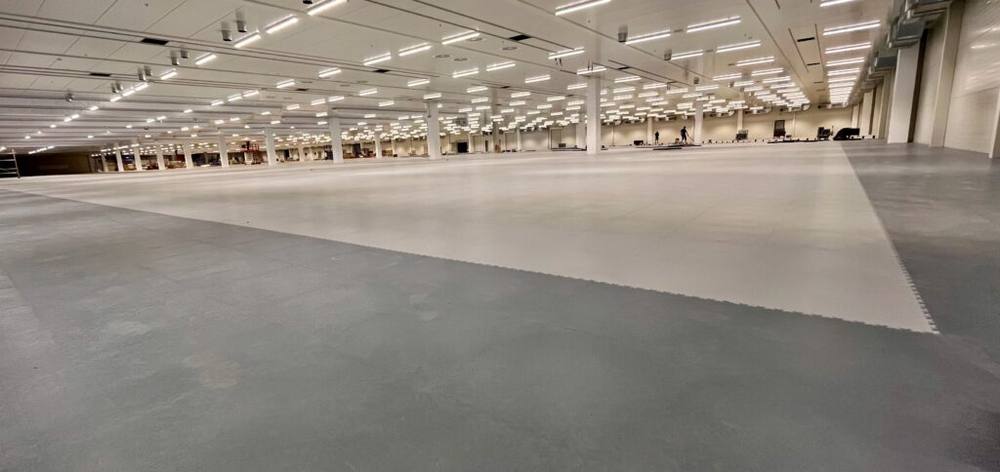
This range is suitable for standard logistics warehouses, distribution centres and production halls with daily forklift traffic. It handles high point loads, repeated passes and pallet handling without surface deformation. It is ideal where the operation is intensive, but continuous extreme loading is not the norm.
Fortelock Industry Ultra
The Industry Ultra variant is designed for truly demanding environments. It is suited to operations with heavier equipment, higher load weights, frequent forklift turning on the spot and long-term loading of specific zones. Thanks to its reinforced construction, it withstands even higher point loads and is suitable wherever the floor is practically under constant pressure.
Both ranges are designed to handle not only the static weight of standing equipment, but also the dynamic stress typical of warehouse operations. The difference lies mainly in the load intensity and the type of operation the floor is intended for.
Specific load limits for trucks
The Fortelock technical data sheet states the maximum dynamic load including the weight of the truck, tested at 23 °C and a speed of 5 km/h. When loose-laid, Industry can carry a pallet truck with PU wheels of up to 500 kg and an electric pallet truck of up to 700 kg. Industry Ultra can handle a pallet truck of up to 1,300 kg, an electric pallet truck of up to 1,700 kg, an electric forklift with PU wheels of up to 2,900 kg and an electric reach truck with rubber wheels of up to 5,100 kg. Higher values apply after gluing or fixing. Tiles made from recycled material (ECO) are not recommended for loading with electric trucks over 2,500 kg total weight. Avoid spinning the wheels on the spot and braking sharply. You can check how the floor behaves with your own trucks through our tile loan service.
An advantage that neither concrete nor epoxy can offer
A major difference lies in the installation itself. PVC tiles are laid dry, without adhesive and without complex base preparation. There is no need to mill the entire surface or wait several days for the material to cure. The installation can also be carried out in stages, for example aisle by aisle between the racking, so there is no need to close the entire warehouse.
Another practical advantage is easy repairability. If local damage occurs over time, only a single tile is replaced. No cutting out, no new pouring and no long downtime.
Frequently asked questions
How can I stop a concrete floor cracking under forklifts?


The simplest way is to cover the concrete with a layer that spreads the wheel pressure over a larger area, such as interlocking PVC tiles. They are laid dry without milling or demolition and protect the concrete from direct contact with the wheels. Cracks wider than 4 mm must be filled before installation.
Do PVC tiles under forklifts need to be glued?
Not always; the technical data sheet gives its own load limits for loose-laid installation. It recommends fixing or gluing for heavy trucks with small wheels, especially electric trucks with the battery above the driven axle, after prior testing. For maximum dynamic load capacity, the tiles are also fixed or glued at temperatures above 27 °C.
Which Fortelock tiles are the most durable for a warehouse with forklifts?
The most durable is Industry Ultra, 10 mm thick, which according to the manufacturer is the most massive tile in the range. It is designed for warehouses with forklifts, production halls and non-stop operation, and is ready for full load immediately after laying. Details are given in the article New: Industry Ultra.
Why does concrete crack where forklifts turn?
When turning on the spot, the wheels do not only press downwards but also create lateral friction and shear stress. Concrete is very resistant to compression but more sensitive to tension and shear, so the top layer peels off and a network of cracks forms in manoeuvring areas. Spinning the wheels on the spot and braking sharply also harm PVC tiles.
Will a PVC floor reduce dust in a warehouse?
Yes, covering degraded concrete limits direct contact between equipment and the surface and slows its further crumbling, which is what produces cement dust. Dirt does not soak into PVC and can be removed by routine cleaning, including with machines. The topic is covered in more detail in the article How to reduce dust in a warehouse or workshop.