25. 6. 2026
Flooring for a classic car or motorcycle: what to consider when a vehicle stands for months
Why long-term vehicle storage places different demands on the floor
When a car or motorcycle essentially just spends the night in the garage, the floor faces a completely different load than during a lay-up lasting several months. With classic cars, convertibles, motorcycles or seasonal vehicles, the machine often stays motionless for the whole winter. The tyres, the motorcycle stand or the support points therefore exert permanent pressure on the same spots. It is exactly this constant load that reveals weaknesses in the surface you would never notice with everyday parking.
Why unprotected concrete is a problem during winter storage
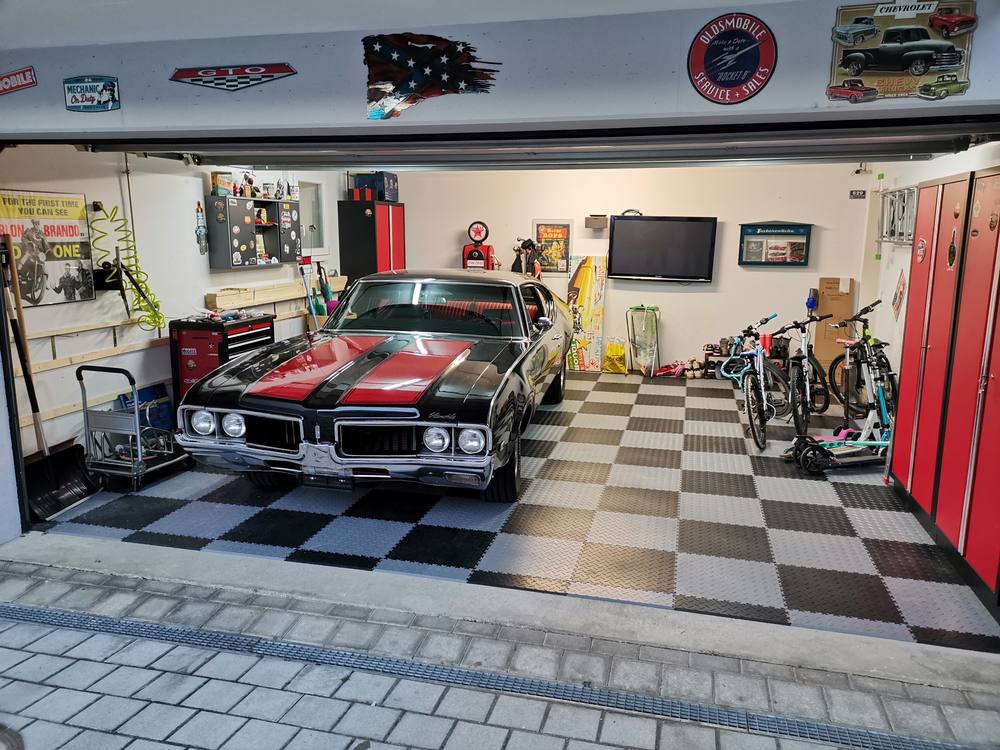
The most common stumbling block is bare old concrete. Over time it starts to release dust and crumble, and its cracks trap moisture and dirt. If you also carry out maintenance in the garage, the base takes even more punishment. Dropped tools, sliding a jack around or moving a service trolley gradually damage the surface.
Hand in hand with maintenance come the inevitable drips of operating fluids such as engine oil, brake fluid, fuel or coolant. The problem with plain concrete is that it absorbs liquids quickly, leaving dark, hard-to-remove stains. A quality garage floor helps mainly by not letting fluids penetrate the base so easily, which makes cleaning simpler and keeps the garage looking tidy in the long run.
The most common problems of an old garage floor
The original concrete in the garage may be good enough as a base for storage. But as soon as a motorcycle or classic car is parked inside long term, its shortcomings become fully apparent.
Dusty concrete undoes the care you give your vehicle
Old concrete constantly abrades and crumbles. The airborne dust then settles on polished paintwork, chrome parts and protective covers. A crumbling surface is also hard to maintain – sweeping only stirs the dust up again and ordinary mopping leaves dirty streaks.
Absorbed fluids create permanent stains
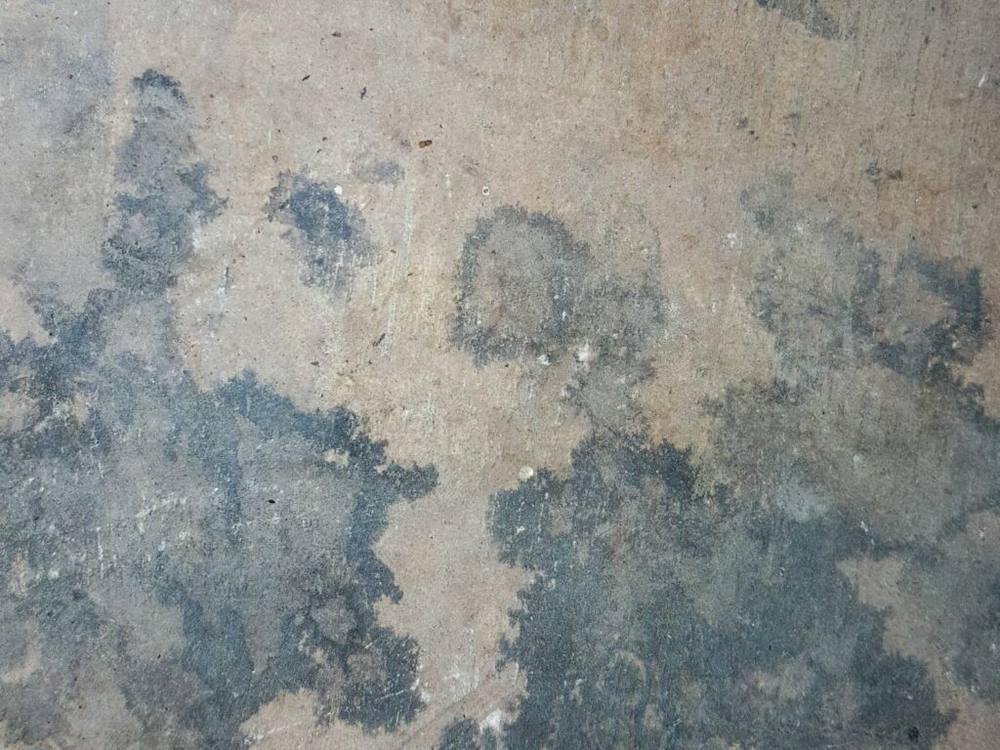
Older machines occasionally let slip a drop of oil, fuel or grease. Unprotected concrete soaks the liquid up immediately, creating irremovable and often smelly stains. Dark patches on the floor also make it harder to spot new fluid leaks in time.
Cracks and uneven spots complicate handling
Dirt and small stones easily lodge in cracks. Uneven areas get in the way of safely handling a jack or a service trolley. With motorcycles, a crumbling surface also threatens the stability of the stand, which requires absolutely firm support.
A porous surface retains moisture
Absorbent concrete draws in and holds moisture from temperature swings right underneath the parked machine. It thus contributes to unpleasant odours and creates an unsuitable microclimate for a vehicle parked long term.
What a floor under a classic car or seasonal vehicle must handle
The floor should always match how you actually use the garage. If you not only park vehicles in it but also store them over winter and service them regularly, the demands on surface quality rise steeply.
Extreme point loads and stability
During winter storage, both a car and a motorcycle stand on the same spots for months. The floor must withstand the long-term pressure of the tyres without developing indentations. A perfectly level, stable surface with no crumbling areas is also essential for the safe use of a jack and a service trolley.
Tyres and long-term parking: the risk of discolouration
With a vehicle that stands in one spot for months, it is not just about pressure. The Fortelock technical data sheet points out that vehicles with tyres should not stand on the tiles for long periods, because dye migration from the tyres into the surface may occur. Some tyres create brown stains through a reaction of the antioxidant 6PPD with the PVC plasticiser. Discolouration caused by rubber and tyres is not covered by the warranty. A two-component PU lacquer, such as Dr. Schutz PU Anticolor, is recommended as protection, and it may only be applied by a trained installer. Fortemix offers the application of a protective PU coating as a service.
Resistance to dirt and operating fluids
Even the few rides per season bring dust, water and small stones into the garage. With older cars and motorcycles you also need to expect minor leaks of oil, fuel or coolant. A quality non-absorbent surface ensures that aggressive chemicals do not reach the base and you can easily wipe them away before they leave a permanent mark.
Specifics of a motorcycle garage
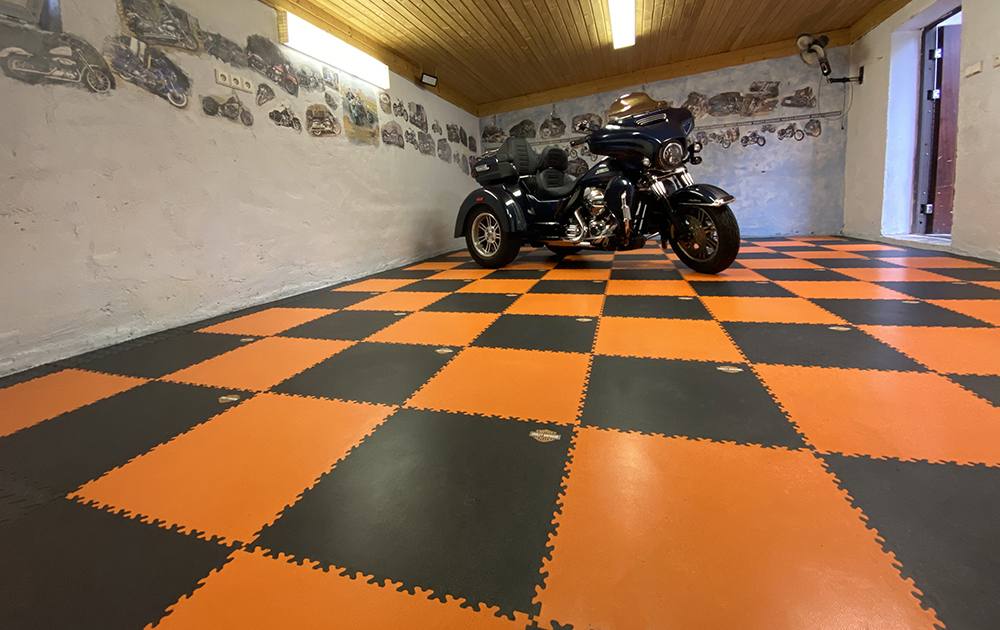
A motorcycle takes up less space, but it is far more sensitive to the quality and evenness of the base. What matters most?
- Stand pressure – Both the side and centre stand create enormous point pressure on a small area. A poor-quality surface is easily damaged. With heavier machines it pays to use a solid pad even on a quality floor, to spread the weight and ensure stability.
- Safe manoeuvring – Turning or reversing a heavy machine in a tight space is made harder by every crack and slippery spot. The floor must provide sure footing.
- A clean space for servicing – Chain maintenance or an oil change calls for a floor from which grease wipes off easily. On a uniform surface you will also find a dropped bolt much faster.
What to keep in mind for a classic car garage
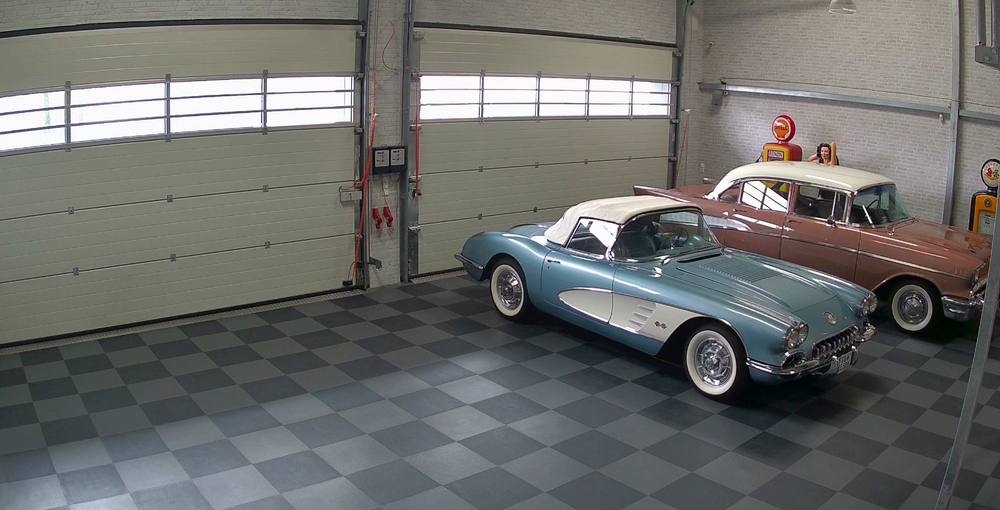
Collector cars spend most of the year in the garage. The microclimate and cleanliness of the space therefore play a key role in preserving their value.
- Protection against dust and moisture – Delicate paintwork, chrome details and ageing seals suffer in a damp, dusty environment. A dust-free, well-insulating floor is the foundation for keeping dust, dirt and damp grime away from the car.
- Quick detection of leaks – On a clean, uniform floor with no old dark patches you will immediately spot every new drop of oil. Any problem can then be addressed in time.
- A dignified presentation – Owners invest enormous effort and money into restoring a classic. A clean, presentable floor simply underlines the value of the car and the care you devote to it.
Which types of garage flooring come into consideration
When renovating a garage floor, five options usually present themselves – leaving the bare concrete, paint, epoxy screed, ceramic tiles or interlocking PVC floor tiles. Each solution has its pros and cons. It depends above all on the original condition of the base, your budget and the overall use of the garage.
The original concrete is the cheapest, but impractical
Leaving the original concrete is the easiest route. If it is brand new, smooth and dust-free, it can serve for a while. With older concrete, however, its weaknesses show up fully once a vehicle stands on it long term. It tends to be absorbent, cracked and hard to maintain. If you also service your motorcycle or classic regularly, you end up constantly battling dust and uncleanable oil stains.
Concrete paint improves the look, but peeling looms
Paint can visually unify the floor and reduce its dustiness. Its lifespan, however, depends entirely on meticulous preparation. The base must be perfectly clean, dry and degreased, otherwise the paint soon starts to peel – typically right where the tyres stand. For undemanding use paint is enough, but in an actively used garage expect the need for regular touch-ups.
Epoxy screed offers durability at the cost of complicated installation
A well-executed poured epoxy floor looks professional, is highly durable and easy to maintain. Its main drawback, though, is the technically demanding installation. The base must be completely dry and perfectly prepared, otherwise the screed will not bond and will crack. You cannot do without a specialist company, and a big minus is also the more complicated, usually visible repair of local damage.
Ceramic tiles tempt with their design, but suffer at the joints
Ceramics look great, but they require careful selection (sufficient frost resistance, slip resistance, load class) and flawless installation. Their biggest weakness is the grout joints, where grease and dirt settle permanently. With motorcycles and classics the risk is point loading or a heavy wrench being dropped – a brittle tile cracks easily. Replacing it then means chiselling, dust and fresh grouting.
Interlocking PVC floor tiles deliver a fast renovation with no building work
Interlocking PVC floor tiles are a smart choice wherever you want maximum durability and a presentable look without messy construction work. The tiles simply click together with their locks, so gluing is often unnecessary. In a relatively short time you can turn an unsightly, dusty garage into a clean, functional space. With classics and motorcycles you will also appreciate the resistance to chemicals, easy maintenance and the fact that if a tile gets damaged, you simply replace that one specific piece.
Why Fortelock interlocking PVC floor tiles are ideal under a classic car or motorcycle
Old concrete often no longer measures up, yet owners are reluctant to embark on complicated building work. Fortelock tiles, made in the Czech Republic, are therefore the logical solution for anyone seeking a balance between top-class properties, quick installation and a perfect look. They create a durable surface that withstands rough treatment while serving as a dignified home for your beloved machine.
A lightning-fast garage makeover without lengthy demolition
Interlocking PVC tiles fit together like a puzzle, so you do not have to empty the garage and take it out of service for days. You can lay the floor in stages, without the ever-present dust from cutting ceramics and without waiting for a screed to cure. The tiles go down on the original base, which only needs to be rid of major unevenness.
Extreme durability for everyday loads and servicing
A garage for a classic car or motorcycle is not a living room but an active workshop. The floor must withstand rolling tyres, the strong point pressure of motorcycle stands, dropped heavy tools and the effects of automotive chemicals. Fortelock excels in high mechanical and chemical resistance. It easily handles a vehicle standing for months as well as the busy preparation of the machine for a new season, when paint is polished and fluids are changed.
An end to dust and effortless maintenance
While old concrete constantly sheds dust and soaks up dirt, the non-absorbent surface of PVC tiles radically simplifies cleaning. Dust and sand are easily vacuumed up, wet marks wiped away with a mop, and greasy stains dealt with using an ordinary cleaner. On a clean, regularly maintained surface it is also easier to inspect the space under the vehicle, and any new fluid leaks do not disappear among old stains in the concrete.
Simple replacement of a damaged piece
Even with the utmost care, the floor can take a hit that leaves permanent marks. Whether a heavy metal part falls or the surface gets extremely soiled in one spot, with Fortelock you do not have to laboriously repair the whole area. You simply click the damaged tile out and replace it with a new one. For a space where real work gets done, this flexibility is priceless.
A design that underlines the character of your machine
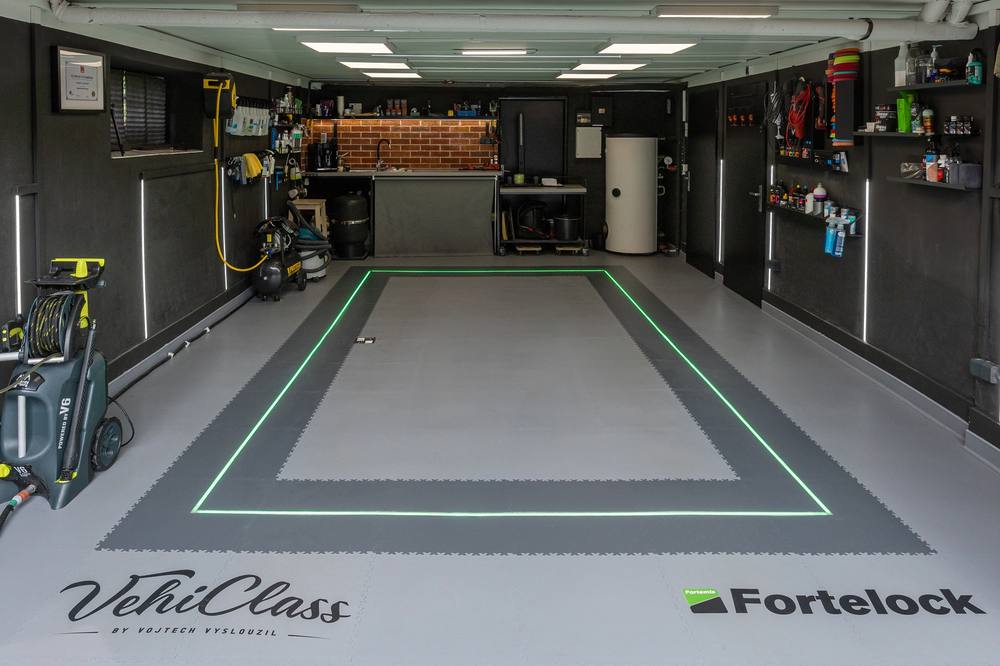
The atmosphere of the garage matters a great deal to many owners. The space should look well kept, but not needlessly sterile. With Fortelock tiles you can combine colours, visually separate the parking zone from the work area or create a contrasting safety strip by the door. Whether you choose elegant dark shades for a classic or a dynamic colour for a sports car, the floor will tastefully complete the overall impression without visually competing with the vehicle.
Frequently asked questions
How heavy a car can Fortelock garage tiles carry?


It depends on the range. When loose-laid, Industry and Industry Ultra can take vehicles with tyres of up to 6,600 kg, and Invisible and Business 3,500 kg. When loose-laid, the XL range is designed only for a pallet truck of up to 400 kg. The compressive strength of all ranges is 520 kg/cm². What to bear in mind in a garage is summarised in the article Garage flooring: what withstands a car and oil.
Will oil or brake fluid dripping from a classic car harm PVC tiles?
Brief contact will not; the surface is highly resistant to oils, petrol and common chemicals, and liquids do not soak into it. The Industry range is also resistant to brake fluid and engine oil. Wipe up any leaks as soon as possible, though, because the technical data sheet warns that petroleum-based substances left on the floor can cause discolouration and deformation.
Does a motorcycle stand need a pad on PVC tiles?
With heavier machines, yes. The stand concentrates the weight on a small area, and the technical data sheet specifies that the point compressive load on the floor must not exceed 520 kg/cm². A solid pad spreads the weight and the motorcycle stands more stably. Do not choose a dark rubber pad, though, as with long-term contact it can permanently discolour the tiles.
Can a garage floor cope with heat from the exhaust and catalytic converter?
Yes, but where the catalytic converter stands, the tiles are glued according to the technical data sheet. The catalytic converter of a parked car is listed there as an external heat source, and the tiles in its area are glued with PU adhesive because PVC expands with heat. Hot and smouldering objects leave indelible marks on the surface. You will find suitable adhesives in the range of Fortelock adhesives.
How can I separate the parking space from the workshop area with colour in my garage?
By combining coloured tiles and marking strips. For the Industry, Industry Ultra and XL ranges there are narrow and wide strips that together make up the size of one standard tile, so the marking fits into the grid without cutting. The marking can be changed at any time by swapping tiles. For inspiration, see the article Mark out zones with the floor.