11. 8. 2025
Garage flooring: What withstands a car and oil
What matters most in a garage floor
A garage floor isn't about looks - or at least not only about looks. It must withstand specific stresses over the long term that you won't find in other rooms of the house, including the weight of a car, chemicals, moisture and temperature swings. Before you start choosing a specific solution, it's worth knowing which properties a quality garage floor should meet so that it serves you trouble-free for years.
Resistance to the point load of tyres
When a car stands in one place for a longer time, its weight is concentrated into an area of just a few square centimetres beneath the tyres. With ordinary concrete this can lead to micro-cracks and, over time, to larger cracks, especially if the base has a defect or is not properly cured. Softer surfaces, on the other hand, can gradually get pressed in and deform, which not only spoils the appearance but can also shorten the lifespan of the entire floor. That's why it is essential for a garage floor to have high compressive strength and to remain stable even under long-term loading of specific points.
Protection against oils, chemicals and salt
In a garage you'll never fully avoid oil dripping onto the floor, a bit of petrol, brake fluid, or salt and melted snow getting in during winter from the tyres and the car's undercarriage. These substances can irreversibly damage absorbent surfaces.
They create stains that can't be removed, or even disrupt the structure of the material. A good garage floor must therefore be resistant to chemicals and must not absorb liquids.
Easy maintenance and a safe surface
A garage is a space where you work with tools, park a car and often walk in with shoes from outside. The surface must therefore be quick to wipe down and keep clean without special products. At the same time, the safety aspect matters too.
The ideal choice is therefore a smooth yet anti-slip finish that minimises the risk of slipping when the floor is wet. In practice you'll appreciate this in the rain, when you pull into the garage with a wet car, or in winter, when water mixed with snow and salt runs off the undercarriage.
What garage flooring options are there
When it comes to choosing a garage floor, at first glance you have several options - from classic concrete and epoxy coatings to ceramic or PVC tiles. Each type has different properties, installation and maintenance demands, and suits different conditions.
Concrete
A concrete slab is the most common base. It is cheap and strong, but without a protective layer it quickly soaks up oil and starts to get dirty. Over time it also produces dust and under heavier loads or temperature changes it can crack. If you choose concrete for a garage, it will require a coating or impregnation, otherwise maintenance becomes difficult.
Epoxy coating
An epoxy floor creates a seamless, smooth surface without joints. It cleans well and resists chemicals, provided it is well designed and the base is perfectly prepared. In garages, however, there can be problems with moisture in the base, curing breaks during application and more complicated repairs when damaged. It performs well in new builds with an ideal base, but for renovations and home garages it is not always the most practical.
Ceramic tiles
An aesthetic solution that looks good in a clean garage or showroom. Operational durability, however, depends on the quality of the tiles and the installation. The joints get dirty quickly and individual pieces can crack under point load or from a heavy object being dropped. Ceramics are more of a decorative than a genuinely functional option.
Fortelock interlocking PVC floor tiles
Modular PVC tiles are designed specifically for demanding environments. Thanks to the interlocking system you lay them dry, without glue, and the surface is immediately ready for use.
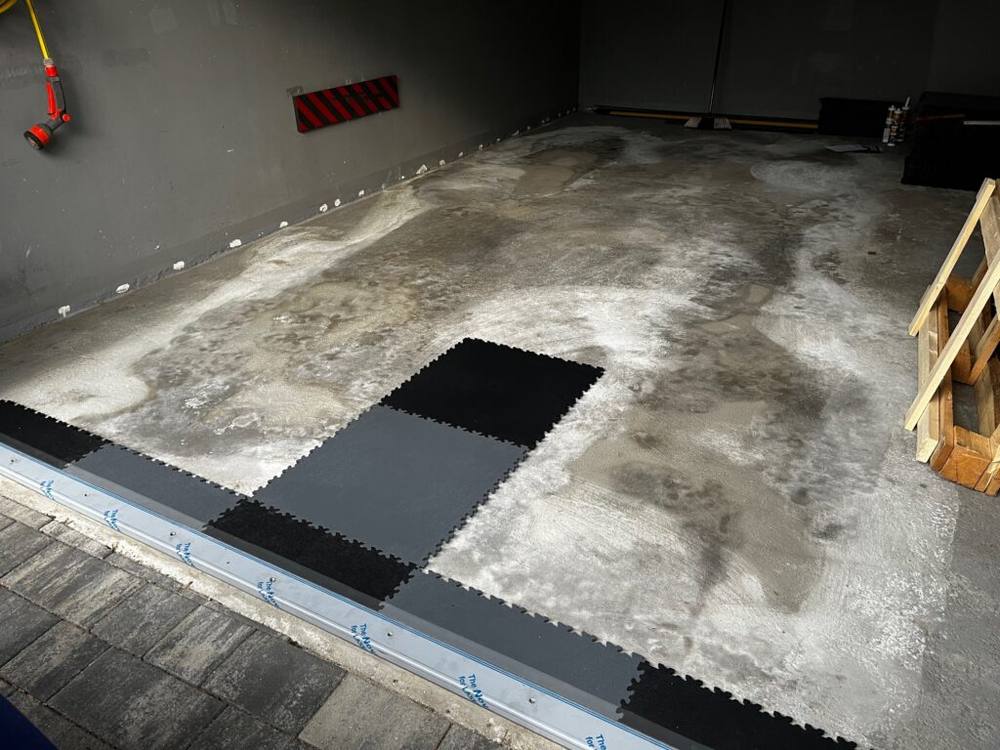
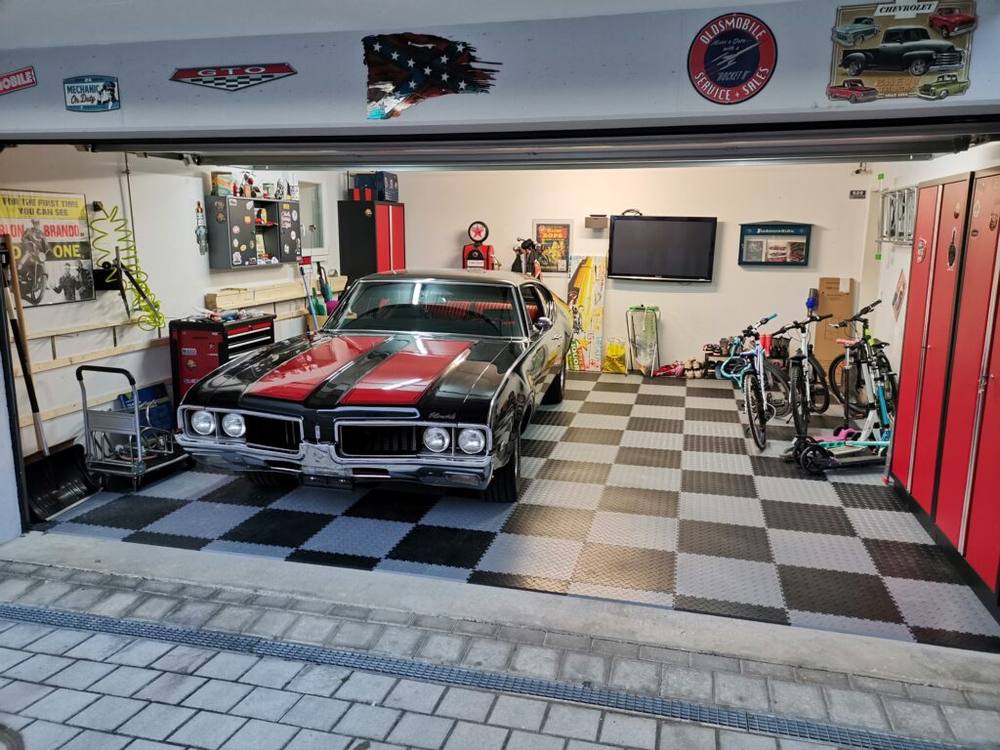
Fortelock PVC floors are resistant to point load, oils, chemicals and salt, they are easy to clean, and in case of damage you only need to replace a single piece. That is why they have become a frequent choice for home and professional garages alike.
The most suitable Fortelock tile types for a garage
Not all interlocking tiles can handle the load that a garage floor demands. That's why Fortelock offers special ranges designed precisely for spaces where cars are parked, machinery is used and the surface faces oils, chemicals and the point load of tyres.
Fortelock Industry: maximum durability for demanding environments
The Industry range is designed for spaces where the floor is exposed to the greatest load. Thanks to its thicker material and robust construction it handles long-term point load from tyres, frequent wheel turning and the regular movement of heavier machinery. The surface is resistant to oils, fuels and chemicals, which is essential in a garage. Industry is therefore the choice for those who want a floor that lasts for decades, without the need for complicated repairs or compromises.
Key benefits of Fortelock Industry for a garage:
- The tiles easily bear the weight of cars, vans and heavier machinery.
- The massive construction resists frequent wheel turning as well as point loading when a vehicle stands for a long time.
- The surface is resistant to oils, brake fluids, petrol and road salt and is easy to keep clean.
- It is also suitable for semi-professional and workshop garages with intensive use.
- It is designed as the ideal solution wherever you want a floor for many years without worries.
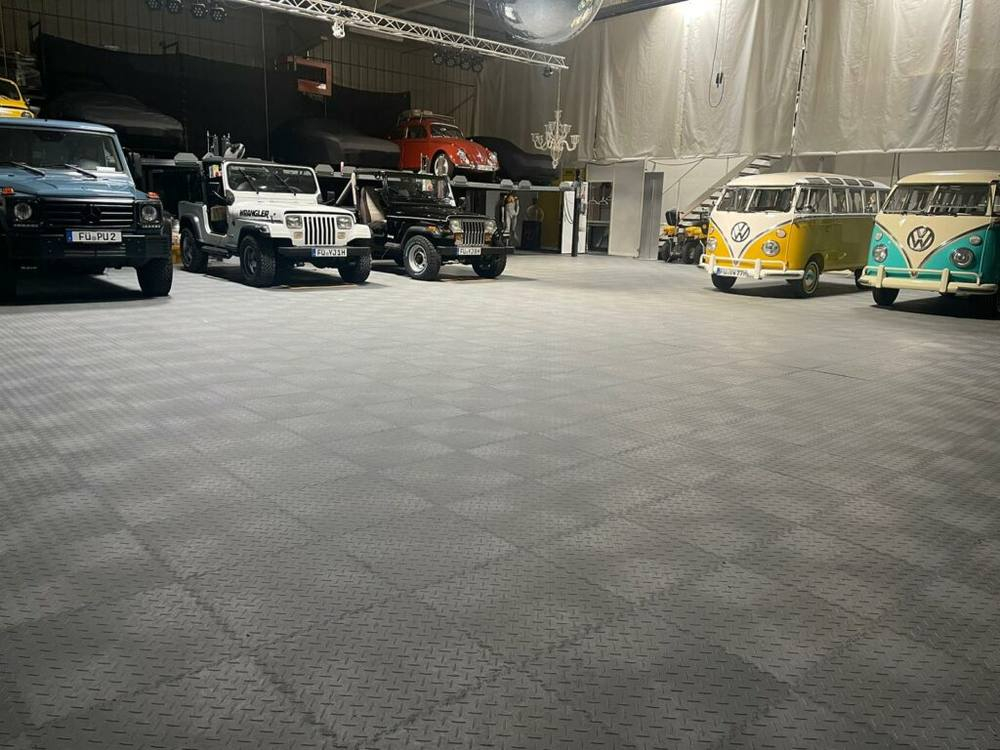
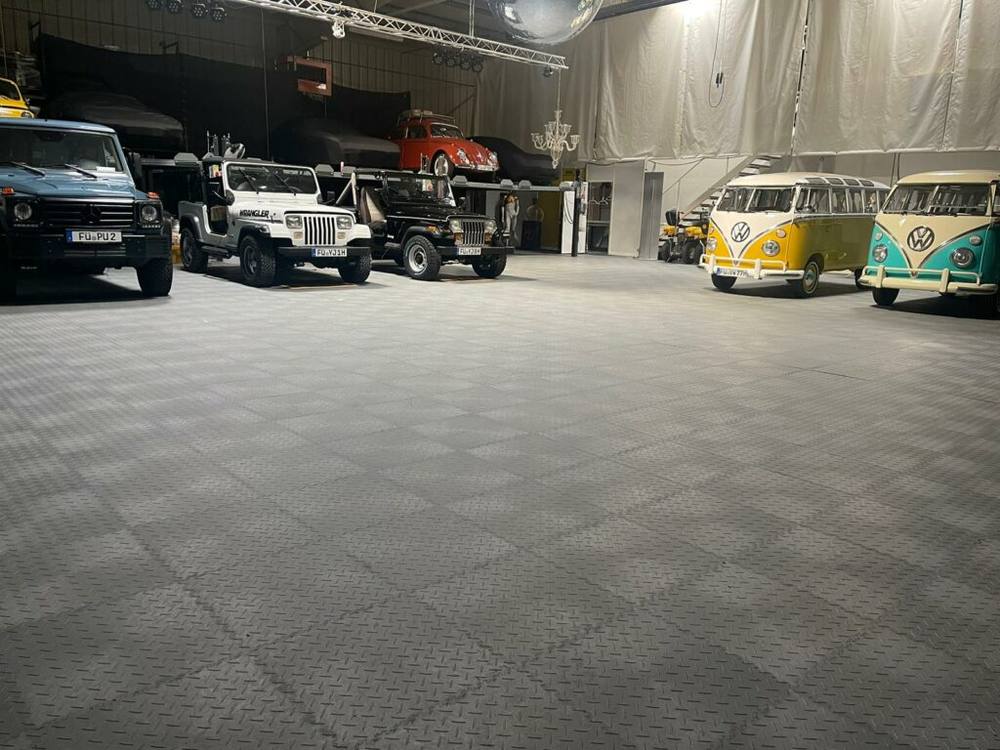
Fortelock Invisible: a clean look without visible joints
Invisible combines the technical parameters of the Industry range with aesthetics suitable even for more representative garages. The special design of the interlocks ensures that once laid the joints are almost invisible, so the result is a more uniform and cleaner look. This will be appreciated by owners of home garages, where not only functionality but also the visual side matters.
Key benefits of Fortelock Invisible for a garage:
- It has the same durability as the Industry range, so it handles high loads and contact with chemicals.
- The joints are almost invisible after installation and the floor looks compact and elegant.
- It is suitable for home and semi-professional garages where aesthetics play a role.
- The smoother surface makes cleaning and mopping even easier.
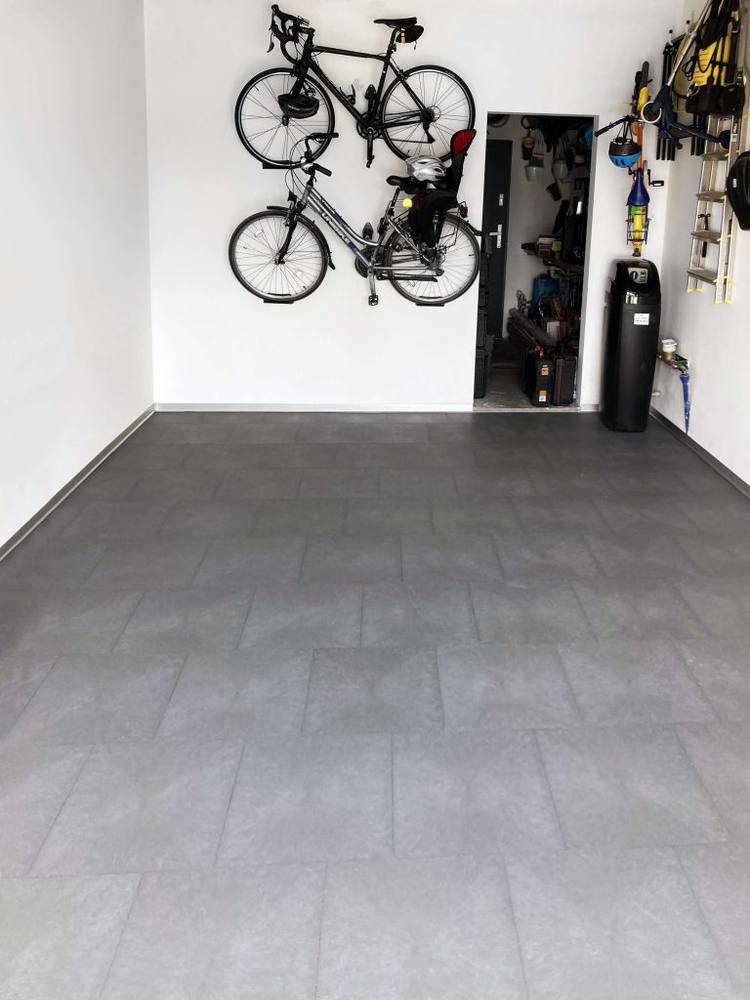
Fortelock XL: large format for fast installation
XL tiles are larger in size than the classic Fortelock panels, which means fewer joints and faster installation over large areas. They retain the same properties, including durability, easy maintenance and chemical stability, but thanks to the format they are practical for spacious garages, workshops or smaller commercial spaces where you want the job done as quickly as possible.
Key benefits of Fortelock XL for a garage:
- The larger format speeds up installation and reduces the number of joints over a large area.
- It has the same resistance to load, oils and chemicals as the other Fortelock ranges.
- XL tiles are ideal for spacious home garages or workshops where you want to combine technical properties and speed of installation.
- Fewer joints mean a more compact look and even easier maintenance.
Why interlocking PVC floor tiles for a garage
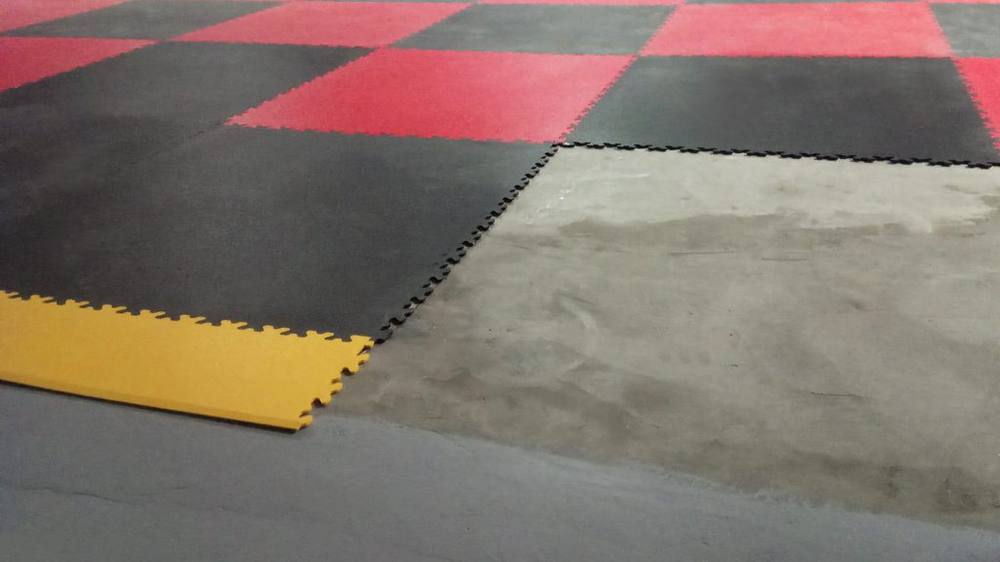
Interlocking PVC floor tiles are popular for garages mainly thanks to their fast installation and practicality. They are laid dry without glue, so the new floor is done within a few hours and immediately ready for use.
A big advantage is also their easy repairability. When damaged, you only need to replace a single tile instead of the whole area. Fortelock also offers variants designed specifically for garage loads, which withstand the point load of tyres, resist oils and salt, and have a surface that is easy to clean. Thanks to the modular system you can choose the type according to load and appearance, and thus have a floor that lasts for years without complicated maintenance.