14. 12. 2025
Plastic garage flooring: Does it really look good?
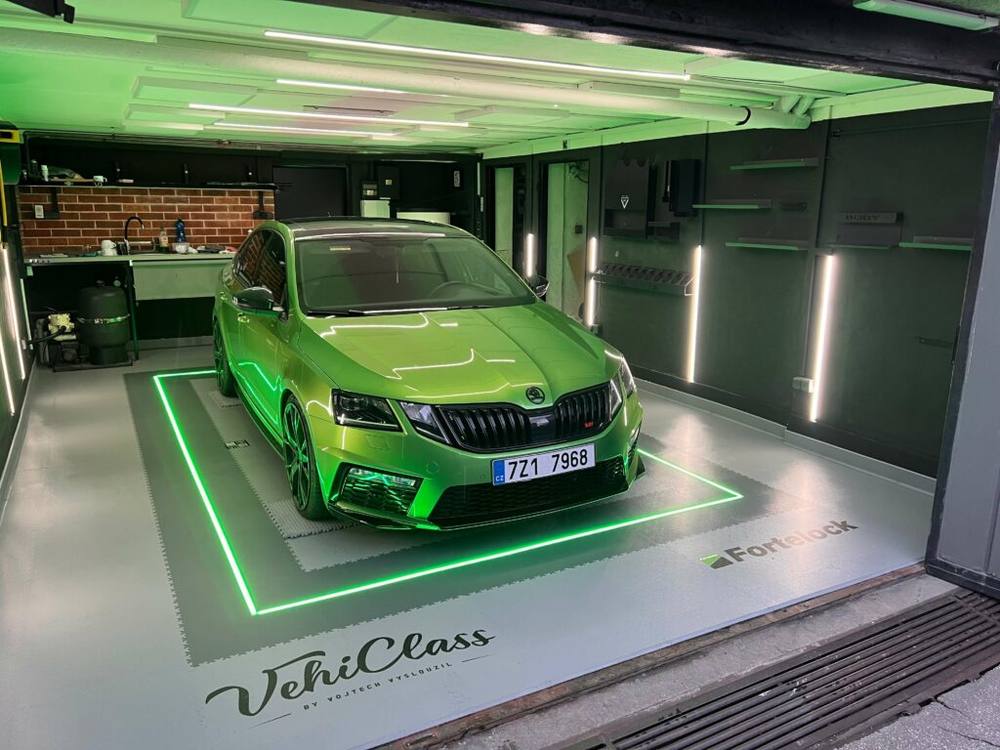
You might think plastic flooring can't look “really good”. But today's systems have such sophisticated décors and surfaces that they resemble a professional showroom rather than an ordinary home garage.
Let's take a look at how they actually look, how the individual types differ, and why people choose them not just for durability but for their appearance too.
What do most people picture when they hear “plastic flooring”?
When people hear plastic garage flooring, many automatically imagine cheap, soft tiles from DIY stores that fade after a few months, buckle under the weight of a car or crack where the wheels stand most often. But this image no longer matches what modern flooring systems offer today.
Compact PVC tiles designed for garages are manufactured to industrial quality. They are strong and dimensionally stable, you can choose from various surface textures and colours, and above all they withstand long-term point loads from tyres, oil, chemicals and temperature changes.
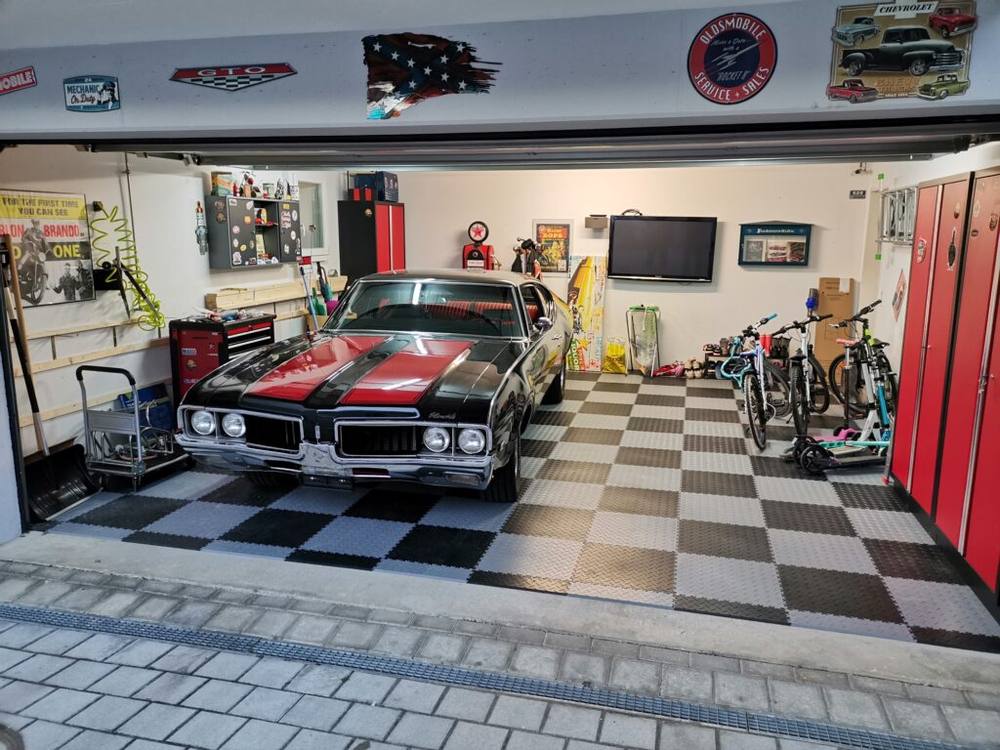
There are in fact three main groups of plastic garage flooring:
- cheap DIY tiles (intended more for a home workshop, often unattractive and not very durable)
- perforated polypropylene tiles (nice-looking, but their resistance to oil, chemicals and car wheels is weaker)
- industrial interlocking PVC tiles (e.g. Fortelock – durable, stable and well designed)
And it is this last option that we are going to talk about.
How plastic flooring can look in a garage
Modern interlocking PVC tiles are no longer merely a technical solution meant to survive a car and oil. Thanks to various surface textures and a wide range of colours, they now let you create a garage that looks surprisingly tidy and attractive.
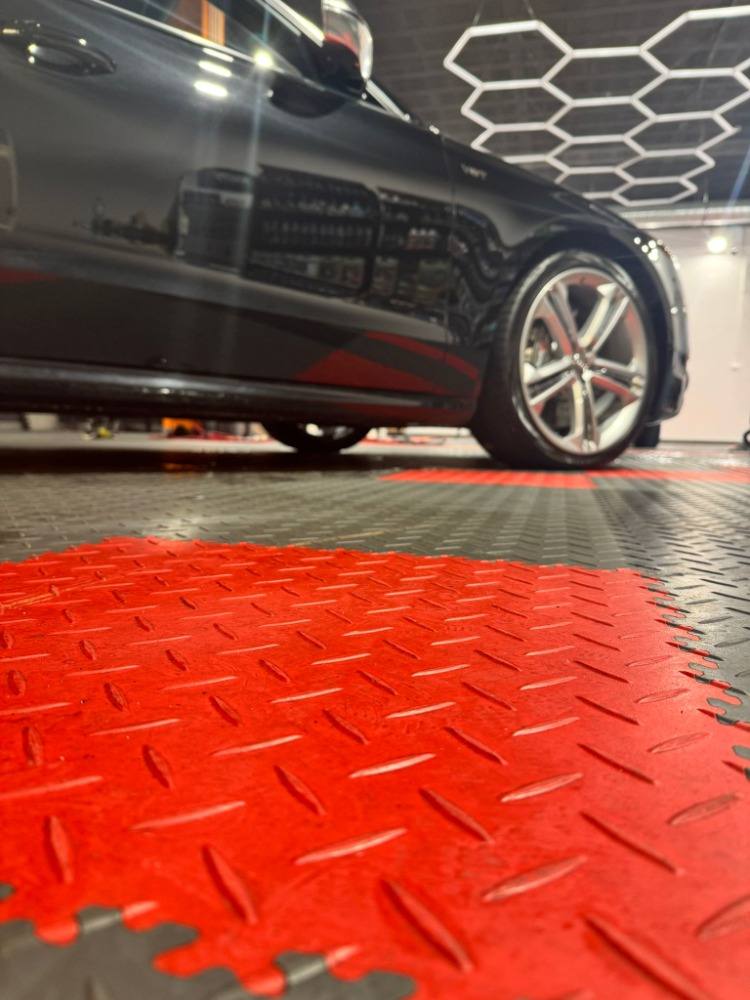
You can go for a single-colour, clean look, or on the contrary play with a colour-zoned space. For example, you can separate the parking bay, a work corner and a storage area. You can equally create a sporty “racetrack” effect or a technical, industrial style that suits garages and workshops. Whatever design you choose, the result is always a floor that changes the character of the whole garage and turns it into a full-fledged part of the house, not just a place to park the car.
Which colours and surfaces are available
Industry, Industry Ultra, Invisible and XL tiles are made in Black, Blue, Graphite, Green, Grey, Rosso Red and Yellow. Industry and Industry Ultra come with three surface patterns: diamond, leather and coin. Invisible and XL have a snakeskin pattern. With Invisible, the joints run in straight lines once laid and the surface looks like a single continuous area without a “jigsaw” effect. Coloured and dividing tiles can be used to mark out parking bays. For a grainy look that visually breaks up a uniform surface, there is GRANIT printing in three patterns. The best way to check the actual shade is with an 8 × 8 cm sample.
The benefits of plastic garage flooring for appearance, maintenance and lifespan
A modern PVC floor is not just about lasting. A large part of its success lies in the fact that it keeps the garage looking clean, cohesive and tidy over the long term. No stains, cracks or faded patches. While concrete goes grey and dusty over time and painted coatings peel off, quality PVC tiles keep their looks to the same standard even after years of everyday use.
Good looks that last
PVC tiles keep their colour and shape. They are not affected by UV radiation the way some coatings are, they don't peel and they don't get dirty the way concrete does. The surface stays compact and the garage doesn't look “tired” even after a whole season of contact with salt, grit and moisture.
Easy maintenance without scrubbing
Plastic flooring has a closed surface that gives it excellent resistance to oils and chemicals. Everyday stains simply wipe off—there's no need for special cleaners or reaching for a brush. As a result the garage doesn't look neglected and its upkeep takes about as long as an ordinary mopping.
A clean look even around the car
During winter, road salt, water and dirt build up under the car. Concrete absorbs it and epoxy can develop stains, but the PVC surface stays the same. The dirt stays on the surface, not in the pores, so no marks are left after cleaning.
No cracks or peeling
Hard floors under car wheels or heavier equipment crack over time. PVC tiles have flexibility, so slight movement of the concrete doesn't matter and the floor keeps a compact appearance even where epoxy or paint would fail.
Repairs with no visible traces
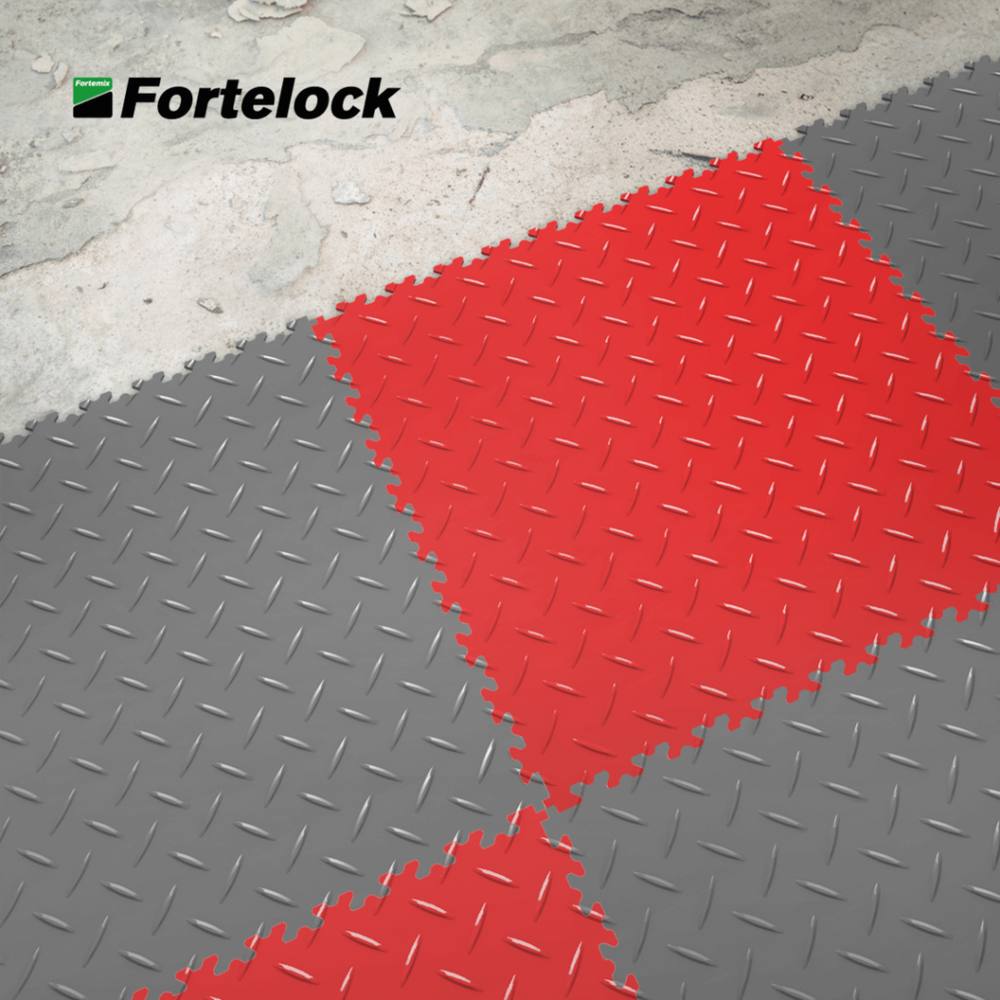
When a stain or crack appears on concrete, it is almost impossible to repair it invisibly. With PVC tiles, by contrast, you simply replace a single piece and the floor looks like new again. That's why garages with Fortelock still look well kept even after many years.
A look that matches
Thanks to the choice of textures and colours, the garage doesn't feel like a utility room but like a full-fledged part of the home. Whether you match the walls, the façade or your workshop equipment, a PVC floor lets you create a space that looks finished rather than makeshift.
PVC vs. epoxy vs. concrete: How do they compare on looks?
The appearance of a garage is often treated as secondary, but in reality the right floor can completely transform the space. Once the stains, cracks and grey patches are gone, the garage looks cleaner, more modern and far more like part of the house than a dumping ground. And this is where the individual materials differ more than you might think.
Concrete: a practical base that ages fast
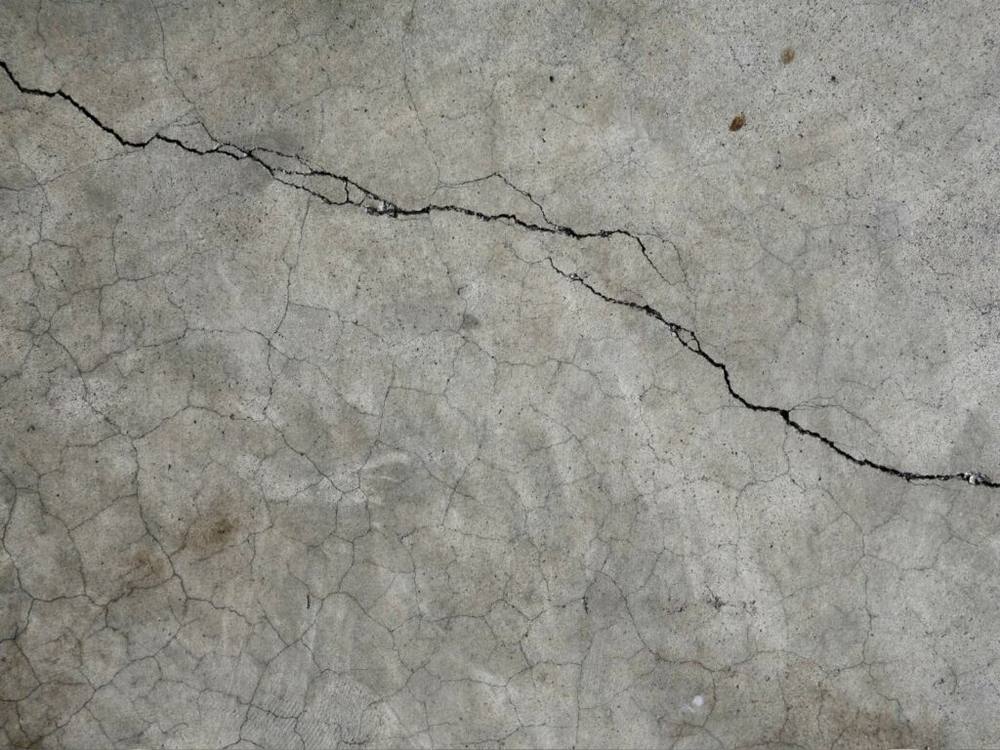
Concrete can look fairly clean at first, but its appearance changes quickly. As soon as oil starts to drip on it, along with frozen water from the wheel arches and salt from the tyres, concrete absorbs it all instantly and creates stains that never fully disappear. The surface quickly turns grey, starts to dust in places, and the garage looks permanently dirty even when you mop it. From an aesthetic point of view concrete is the least attractive option. It works, but visually it's more of a stopgap.
Epoxy: beautiful but sensitive
At first glance an epoxy floor looks very clean and uniform. Many people choose it precisely for its appearance. Its glossy, smooth surface looks modern. But the aesthetics of epoxy tend to be short-lived.
Epoxy is sensitive to moisture in the substrate, so after one or two winters it often develops stains, blisters or peeling patches that can only be repaired by grinding down and recoating the entire surface. The hard surface also quickly picks up scuffs, scratches or hairline cracks, especially where a car stands for long periods.
Every local repair is visible, because different shades and marks appear in that spot. A floor that looked great in its first months gradually becomes a surface with visible signs of use.
Interlocking PVC tiles: looks that last for years
Fortelock PVC tiles have a huge advantage over both concrete and epoxy: they look good from day one and look just as good after several winters. The colour doesn't fade, the surface doesn't get dirty or bleached and, thanks to the closed structure, no marks form from water, oil or chemicals. Dirt stays on the surface, not in the material, so after cleaning the floor looks just as clean again.
The textured surface looks more compact than paint or epoxy and lets you create an elegant, technical or more playful sporty look depending on the colours and textures you choose. As a result the garage feels like a finished, visually unified space.
And the biggest difference?
A PVC floor keeps its looks over the long term. Not just for the first season, but even after many winters, when concrete already looks tired and epoxy shows visible signs of use. And that's exactly why PVC is now the most common choice for garages that are meant not only to function but also to look good.
PVC flooring can surprise you
The right floor can do more for a garage than it might seem at first sight. While concrete quickly turns grey and epoxy gradually loses its beauty, modern Fortelock interlocking PVC tiles keep their colour, shape and clean appearance over the long term – even in demanding conditions.
What's more, you won't have to deal with any cracks or stains, maintenance is easy, and thanks to the range of colours and textures your garage can look elegant, sporty or technical. The result? A space that is functional, durable and at the same time really good-looking. If you want a garage that keeps its looks even after years, modern PVC tiles are one of the best choices today.
Frequently asked questions
Doesn't plastic garage flooring look cheap?


No, quality interlocking PVC tiles look solid, technical and professional, not like cheap plastic. They are made to industrial quality, in seven colours and with several surface patterns. With routine maintenance they keep a uniform appearance even after years, and no worn paths appear on the floor.
What is the difference between polypropylene and PVC garage tiles?
Perforated polypropylene tiles tend to look nice, but their resistance to oil, chemicals and car wheels is weaker. Compact PVC tiles are made to industrial quality and have a closed surface that neither oil nor water can soak into. Fortelock Industry tiles are tested for cars and heavy machinery driving over them.
Will tyres leave marks on a garage floor?
They can, but this is not damage to the material. Some tyres react with the plasticiser in PVC and leave brown stains. For garages where a car stands in the same place for long periods, a PU finish such as Dr. Schutz PU Anticolor is therefore recommended as protection, as it prevents plasticisers from migrating from the tyres.
How do you keep a garage floor looking like new?
Water and ordinary detergent are all you need, as dirt does not soak into the closed surface. Wipe up oil, petrol or diesel as soon as possible. Small amounts of water from snow evaporate thanks to the Air-Flow system; larger amounts need to be wiped up and, if necessary, the tiles lifted out and dried. For a perfect look, ForteClean cleaners are recommended.
Can I see how the garage floor will look before buying?
Yes, the free online visualiser shows how the floor will look: just upload a photo of your garage and change the colour of the tiles. You can then check the actual shade and surface with an 8 × 8 cm tile sample. The process is described in the article Create a visualisation of your room with Fortelock flooring.
Is plastic flooring suitable for cracked concrete in a garage?
Yes, PVC tiles do not bond firmly to the subfloor, and cracks up to 4 mm do not need to be repaired. Wider cracks must be filled and raised areas of more than 7 mm over 2 m ground down. The flexibility of the tiles helps prevent minor movements of the concrete from showing through on the floor surface.