13. 11. 2019
What makes Fortelock stand out in industrial use?
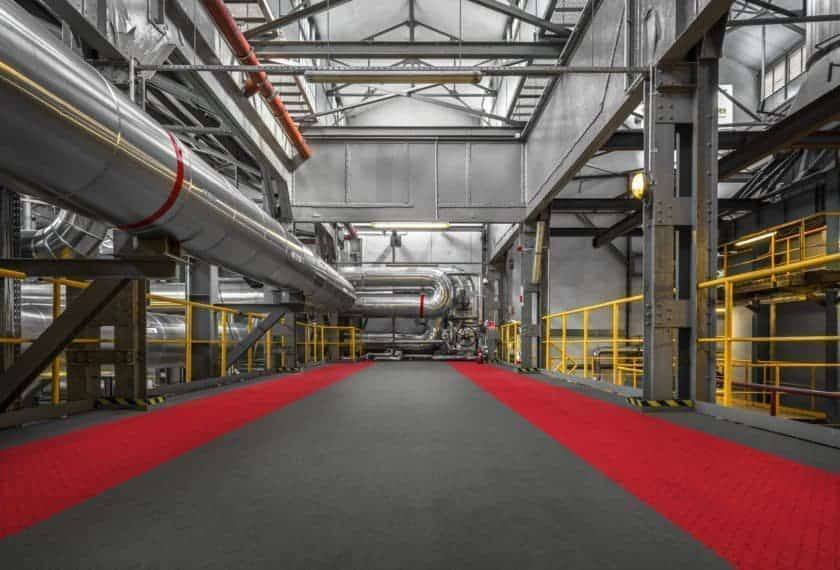
Whether your goal is to renovate and repair damaged floors in industrial use or to build a completely new industrial hall, it really is best to start right from the floor.
In large companies, the choice of flooring is usually the responsibility of designers and architects, while in smaller projects the owner chooses everything themselves. Whichever group you belong to, you have probably come here to learn more about Fortelock PVC flooring. If the mere claim that it is a suitable industrial floor is not enough for you, read on – we will explain why it is well suited to industry.
The sector does not matter at all: PVC flooring holds up as a floor for industries such as engineering or manufacturing, as well as a warehouse floor. It has its place in all of these settings.
Interlocking flooring on any concrete floor
Let us take a brief look, for example, at the options for renovating a concrete floor. There are plenty of them. Cement screeds work well for covering or repairing cracks and levelling the floor. Epoxy coatings are also a frequently used option. Fortelock PVC flooring is another possible choice. It can be applied to power-trowelled concrete slabs or a concrete floor of any quality, and no more thorough preparation of the substrate is required. In the case of larger unevenness, however, it is recommended to level the base concrete. The cement fillers, self-levelling compounds, grouts or coatings you need can be found on the official website of Fortemix.
Properties suited to industry
PVC interlocking flooring withstands all the challenges awaiting it in industrial operations. Its polymer structure is resistant to oils and acids. Water is no problem, because the locks are tight, so only a minimal amount gets underneath the flooring. Moreover, thanks to the AirFlow channel system, this minimal amount evaporates quickly. Thanks to the anti-slip pattern, the floor is not slippery (for people or machines), and it also belongs to the category of flame-retardant floor coverings. It is ready for forklift trucks and can withstand the load – the Fortelock Industry flooring variant is structurally designed to be solid on the underside and therefore more resistant.
Floor marking
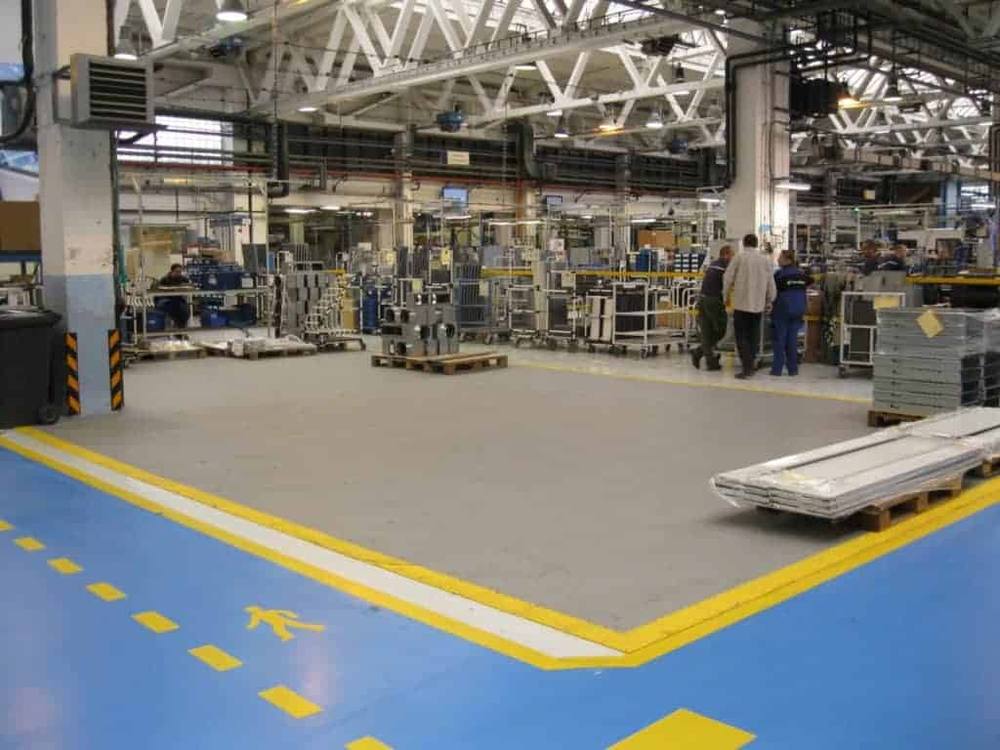
In production plants it is practical to use colour to distinguish work zones, aisles used by forklift trucks and so on. This can of course be done with paint – marking out stripes, outlining the individual areas – but with coloured PVC tiles this concern disappears. Fortelock interlocking flooring is produced in various colour variations, which can be freely combined to create patterns. In many cases the floor can even be created in corporate colours, as there really is a wide range of shades to choose from. Unlike painted stripes, which gradually peel off, the colours of Fortelock tiles are permanent.
Fast installation, even on your own
Price also plays a significant role when choosing the right floor covering. In large production halls and warehouses, the differences between individual types of flooring can amount to thousands or even tens of thousands, so it may be interesting to know that you can save significantly on installing a Fortelock floor. As already mentioned, it can be applied to any base concrete, and usually without adhesive. The tiles can simply be assembled and, thanks to the firm locks, they hold well. One person can lay 30 m2 of this PVC interlocking flooring within an hour.
Cheap replacement in case of damage
No matter how good a floor is, it can always get damaged. It is enough, for example, for a sharp object to fall on the ground. With PVC flooring, help is simple in such a case. The tiles can be replaced even individually, and the cost of repair is absolutely minimal.
Price, quality, durability, experience with the given material. These are the main criteria worth paying attention to when choosing a floor. Fortelock meets all of these requirements, so it is time to take it into account when carrying out industrial projects.