5. 2. 2020
A floor for warehouses and workshops that lasts


In warehouses and workshops, the floor is put under more strain than anywhere else. It has to survive spilled chemicals, water, the movement of forklift trucks and the weight of stored material. Ideally, it should also be easy to maintain. Are you looking for exactly that?
Concrete flooring is commonly used in warehouses and workshops, and it has its advantages. If you are looking for a floor for a small home workshop and don't need anything special, it may well be enough. Companies, however, should also consider the alternatives for their large warehouses. A PVC floor for a workshop or warehouse can offer more benefits than you might expect.
Looking for a floor that lasts?
Long service life is usually the most important criterion for customers. If that is your requirement too, Fortelock Industry PVC flooring could meet your needs. It is designed specifically for industrial operations. It is an excellent solution for warehouses that store heavy goods, as it can handle high loads and won't be troubled by a forklift truck – it easily copes with four-wheeled trucks fitted with rubber tyres up to a load of 1,500 kg. It will suit your warehouse, hangar, factory and even a smaller workshop. It also has excellent chemical resistance, so you needn't worry if something gets spilled on it. Thanks to the wide range of colours, you can create practical patterns on the floor, clearly marking out different zones and improving workplace safety.
A PVC floor is far easier to install
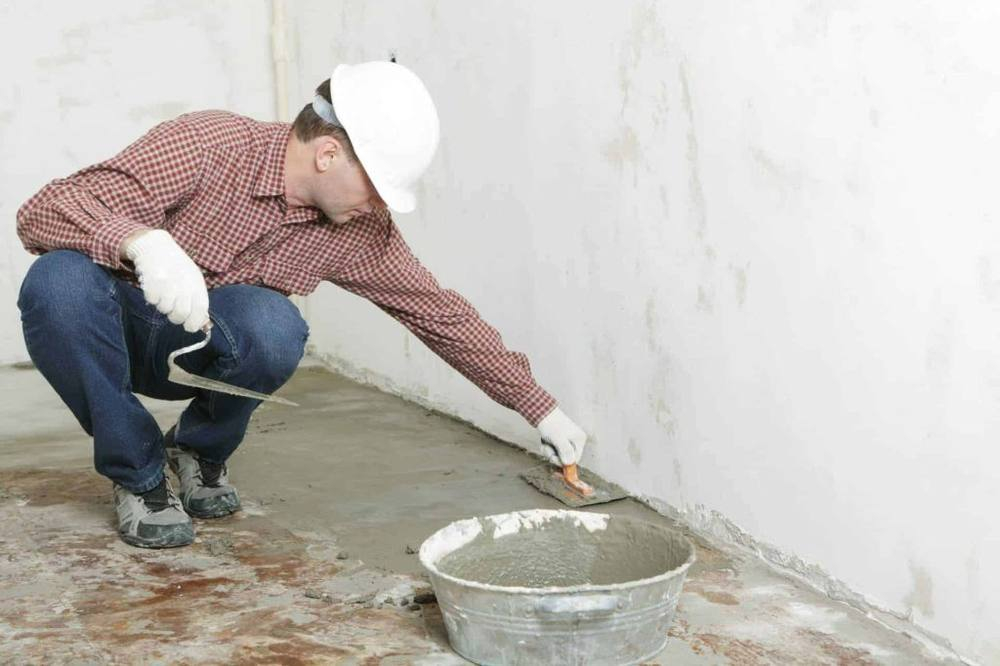
When deciding which floor to choose for a workshop, you should start with the installation. With concrete it is a little more complicated. One common procedure is that, first of all, the substrate has to be prepared. If you are renovating a floor in a workshop or warehouse, you have to make sure the surface is clean and sound. If you are starting from scratch, a gravel base layer has to be prepared. Then a levelling plane is set up using steel pipes or wooden battens. The concrete is mixed, poured onto the floor and levelled off, for example with an aluminium screeding board. Finally, the floor is sprayed with an acrylic resin to reduce its absorbency. All of this, truth be told, requires not only time but also the right equipment.
With PVC tiles almost everything is easier. The first step is the same – the surface must also be smooth and level, which you can achieve, for example, with a self-levelling compound. You mark out lines on the floor with chalk, get a saw and a rubber mallet ready and set to work. First you lay the full tiles – thanks to the interlocking system they fit together beautifully. Then you cut the edge pieces to size. In warehouses and workshops where forklift trucks operate or where there is permanently higher humidity, it is better to glue the tiles down with adhesive.
In a smaller workshop you can therefore manage the installation even without professional help, and in large warehouses you won't hold up operations. Laying a PVC floor is a matter of a few hours, depending on the size of the space. One person can lay 20 m2 of tiles per hour.
What concrete floors can't do
As an industrial floor, concrete is undoubtedly excellent and serves its purpose well. If, however, you long for a change, Fortelock Industry will certainly be a good choice.
Easy cleaning: In a home workshop a cloth or mop and an ordinary floor cleaner are enough. In a larger warehouse the cleaning can be handled, for example, by a scrubbing machine with a PVC rotary brush.
Colour differentiation: In factories and larger operations, different zones are often colour-coded. With Fortelock PVC tiles you can achieve this easily, as they are sold in various colours.
Anti-slip surface: Fortelock tiles feature an anti-slip surface, which is good not only for pedestrians. It is a particularly useful property in warehouses where handling equipment operates. A pallet truck, too, can skid on a wet floor.
Repairability: You can't repair a concrete floor in sections, whereas you can with PVC tiles. Even a single tile can be replaced.
A classic concrete floor, or modern PVC tiles?
Concrete floors have their place in warehouses and workshops. If you use cement hardeners to strengthen the top layer, they will be a little more durable still. In other respects, however, they fall somewhat behind. If you long for a more modern solution with added value, Fortelock Industry is definitely worth considering.