11. 3. 2026
Flooring for a Production Hall: How to Choose a Solution That Lasts 10+ Years
Why is the floor a critical factor in productivity?
You may be thinking it is "just a floor". Yet a poor-quality or badly chosen industrial floor can generate hidden costs that add up every single day. Choosing a solution that will last 10 years or more is therefore not a luxury, but a purely economic decision.
What a badly chosen floor really costs
When choosing a floor, the discussion often revolves around the price per square metre of material. That, however, is just the tip of the iceberg. If you choose a solution that does not match the load of your operation, you will very soon start paying "hidden taxes" in the form of operational complications.
Workplace safety risks and the costs that come with them
An unsuitable or worn surface is a magnet for accidents. A slippery surface in places where operating fluids leak, or unexpected unevenness (crumbling concrete, lifted screed edges), leads to slips, trips and falls.
- Impact: Higher sickness absence, the risk of employee lawsuits and unpleasant inspections by the occupational safety authorities. A stable, anti-slip floor (certified according to DIN 51130) is the best prevention in this respect.
Dust — the invisible enemy of your technology
An old or poorly treated concrete surface starts to crumble under mechanical load. This creates fine cement dust that is highly abrasive.
- Impact: The dust gets into sensitive machine bearings, clogs electronics and the optical sensors of CNC machines. The result? More frequent breakdowns of expensive equipment, more frequent filter changes and, ultimately, a shorter service life for your machines. A clean environment starts with a floor that does not generate dust.
Logistics (in)efficiency and the destruction of your equipment
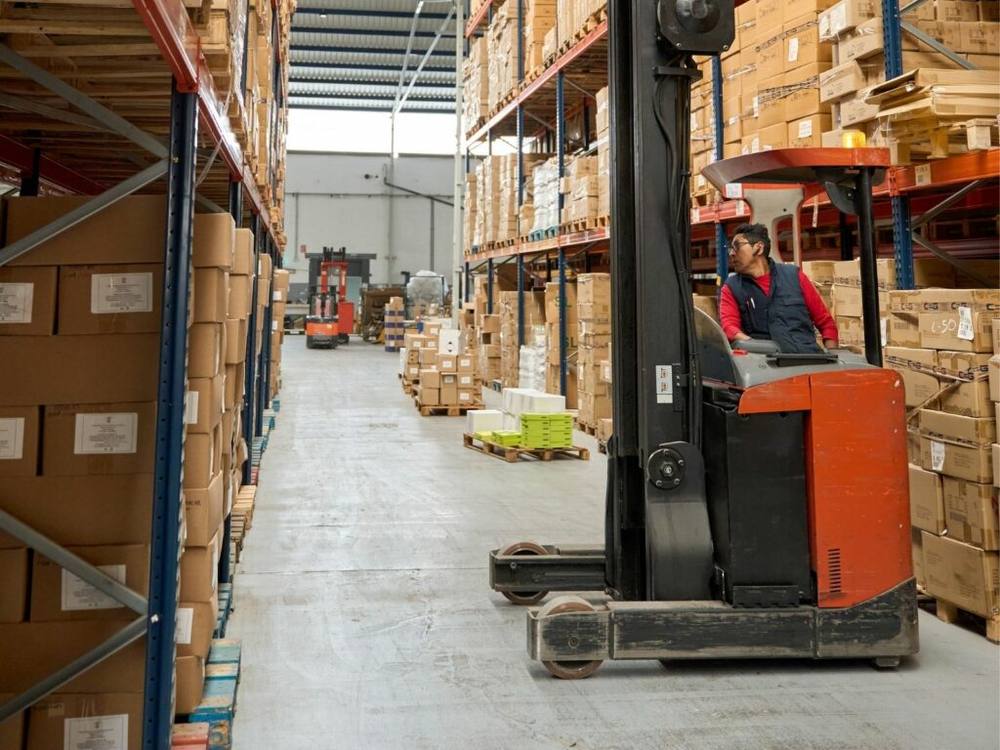
Every crack, pothole or crumbled joint in a concrete floor acts as a speed bump for your handling equipment.
- Impact: Forklift drivers have to slow down at critical points, which reduces the speed of your logistics. Worse still is the impact on the equipment itself. Constant shocks from driving over uneven spots destroy truck wheels, axle bearings and control panel electronics. With a poor-quality floor, forklift servicing costs can easily multiply.
What a production hall floor must be able to handle
Before we look at specific materials, we need to define the technical parameters that are simply non-negotiable. If the solution you are considering falls short on any of these points, you can be almost certain you will have to replace it within ten years.
Static vs. dynamic load
Most people focus on how many tonnes per square metre the floor can bear. That is the static load, which matters so that the floor can handle racking systems, for example, or heavy presses. In industry, load capacities ranging from single units to tens of tonnes per m2 are the standard.
Far trickier, however, is the dynamic load. When a forklift brakes sharply or turns on the spot with a loaded pallet, enormous shear stress is created. If the surface layer (screed or coating) is too brittle, it starts to "peel away" from the substrate. By contrast, our PVC systems such as Fortelock Industry are extremely resistant to precisely these shear forces.
Resistance to chemicals and liquids
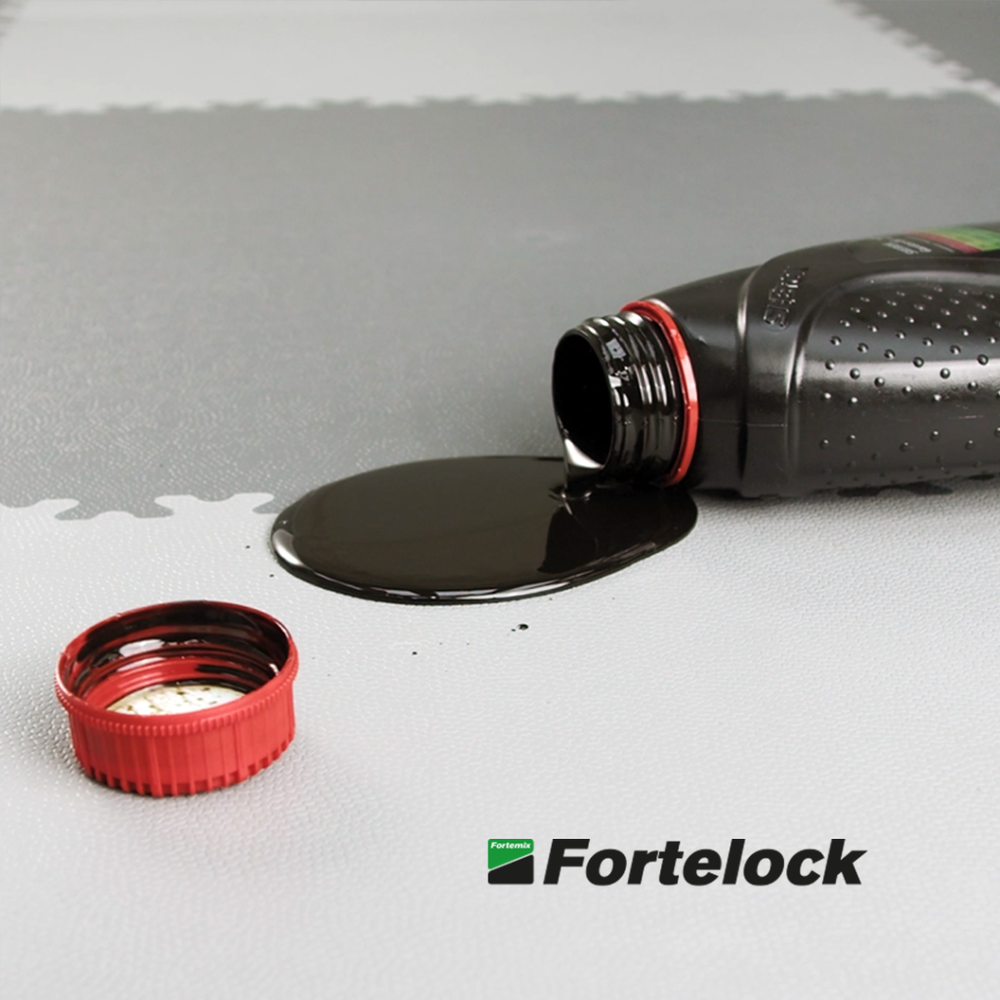
In engineering it is oils and emulsions, in the food industry acids and sugars, in the chemical industry aggressive solvents. In every case, however, a production hall floor must be non-absorbent. Once a substance penetrates the structure of the concrete, it starts to degrade its binder, and the only possible repair is complete demolition. Here too, PVC tiles win: they are inert to most common industrial chemicals and, thanks to their tight interlocking joints, they also protect the substrate beneath them.
Impact resistance
Imagine a 20 kg metal tool falling from a height of one metre (a very common scenario in a production hall, by the way). On an epoxy floor, a "spider" appears — a crack that will keep spreading. On concrete, a crater forms.
And PVC tiles? They absorb the energy of the impact. And even if visible damage does occur, only a single tile is affected, not the integrity of the entire floor — and you can simply replace it in a matter of minutes.
Comparing industrial flooring technologies
When choosing a floor for a production hall, the investor often finds themselves at a crossroads. Every material promises durability and a long service life, but the reality of a demanding industrial operation tends to be unforgiving. To understand why some floors look like a battlefield after five years while others last for decades, we need to look beneath the surface of their technical properties.
Classic concrete with a dry-shake topping: an industrial standard with its limits
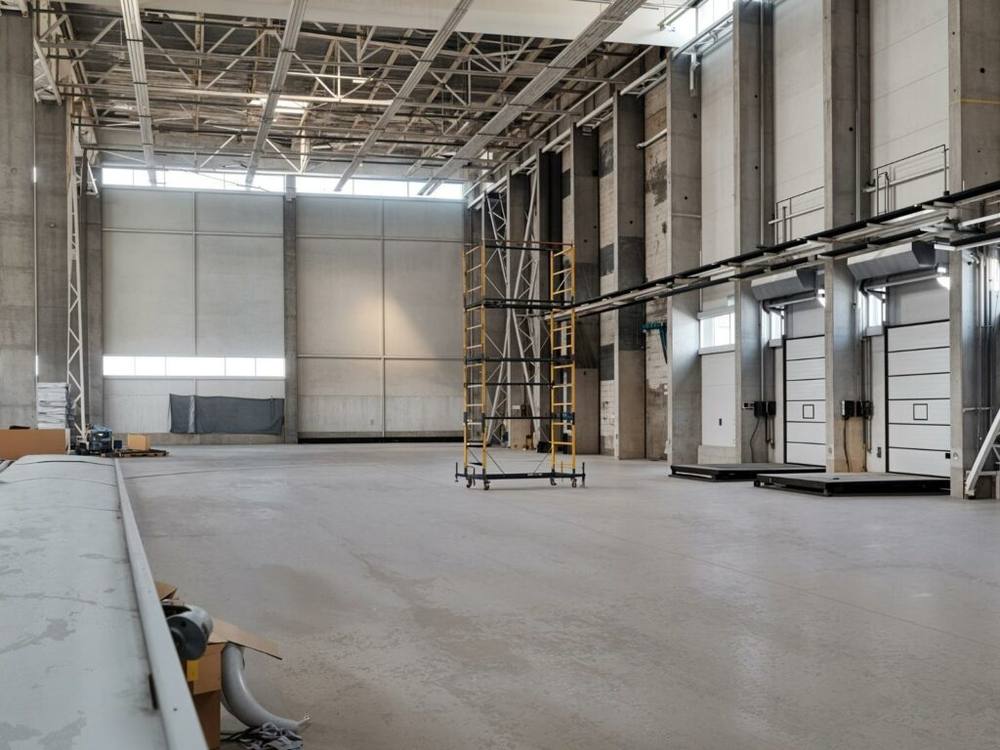
A concrete floor with a so-called dry-shake topping is the most common solution in large warehouses. The process involves machine-working a mixture of hard aggregates and cement into freshly poured concrete, creating a harder, more durable top layer.
Concrete is indeed strong in compression, but its greatest weakness is its brittleness and constant internal stress. Concrete is always "working", shrinking and reacting to temperature changes, which inevitably leads to cracking.
Once the first crack appears in the surface, it starts to crumble under the wheels of forklifts and the degradation process is practically unstoppable. You can try to repair it, but the repair will always be visible and, above all, repaired sections rarely have the same strength as the original monolith.
Advantages of concrete
- Offers the lowest purchase price for large new builds.
- Safely supports even extremely heavy machines and racking systems.
- Withstands very high temperatures and splashes of molten metal.
Disadvantages of concrete
- It is prone to cracking and the formation of shrinkage cracks.
- Sawn expansion joints crumble over time under forklift wheels.
- It requires a full 28 days of curing before it can take full load.
- Any repairs are always visible and often do not hold.
Epoxy screed for operations with high aesthetic demands
Poured screeds are chemical systems that create an impermeable, hard and aesthetically very pleasing layer on the concrete surface. They are popular in clean operations and the food industry.
The service life of screeds, however, is extremely dependent on the quality of the substrate and the precision of the workmanship. Epoxy is a very rigid and brittle material. If the concrete beneath it cracks, the screed cracks with it. Moreover, it requires an absolutely dry substrate (moisture below 4%), which is an almost unattainable ideal in older halls without costly waterproofing.
Advantages of epoxy
- A completely seamless surface ensures maximum hygiene and easy maintenance.
- It creates a colour-unified and highly presentable space.
Disadvantages of epoxy
- Moisture in the substrate causes blistering and subsequent peeling of the surface.
- The high brittleness of the material leads to cracks every time a tool is dropped.
- Installation requires the hall to be completely cleared for several working days.
The need to perfectly grind down the original concrete increases both the cost and the dust.
A modular PVC system for the most demanding operations
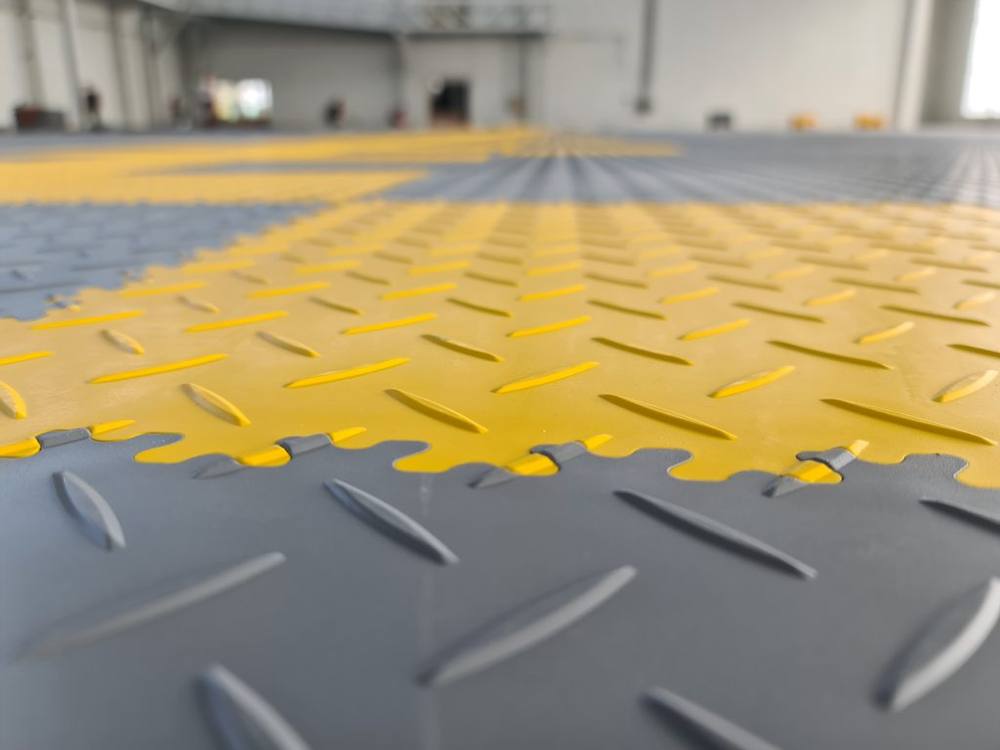
The modular PVC tile system represents a different approach. Instead of creating a single rigid layer, it uses highly durable, homogeneous tiles that connect to each other using unique interlocking joints.
This system was developed specifically for situations where other materials fail. Thanks to its toughness, PVC can absorb impacts that would shatter concrete. Its greatest advantage, however, is its independence from the quality of the substrate. While liquid systems need concrete in perfect condition, Fortelock simply "covers" it and, thanks to the channels on its underside, does not trap moisture beneath it. And if you should happen to decide to relocate your operation in a few years? You simply disassemble the floor and take it with you to your new premises.
Advantages of PVC flooring
- Lightning-fast installation without interrupting production allows the floor to be loaded immediately.
- High impact toughness prevents the material from cracking and chipping on impact.
- The Air Flow channel system actively drains moisture from beneath the floor.
- You can replace a damaged piece with a new tile in just a few minutes.
- You can disassemble the floor at any time and move it to new premises.
Disadvantages of PVC flooring
- The initial investment in the material is higher than for simple coatings.
Why Fortelock Industry is ideal for production halls
In modern manufacturing, the most valuable commodity is time and the ability to respond quickly to change. Fortelock gives halls a flexibility that traditional poured floors, by their very nature, can never offer.
The Air Flow moisture drainage system
Most industrial halls, especially older ones, struggle with rising ground moisture. If you pour an impermeable epoxy onto such concrete, the moisture creates pressure beneath the surface that will sooner or later tear the screed off.
Fortelock tiles have an ingenious system of channels on their underside that allows moisture from the substrate to escape naturally through the interlocking joints. The floor can breathe, no mould forms beneath it and it remains stable throughout its entire service life, regardless of the condition of the waterproofing in the subsoil.
Thermal and sound insulation
Standard industrial halls tend to be noisy and feel cold, which has a direct impact on employees' health and overall wellbeing. A PVC floor acts as an effective insulator and does not transfer cold from the substrate as intensely as concrete. This makes it gentler on joints and muscles and significantly increases comfort when walking and working.
In addition, the material naturally absorbs vibrations and dampens noise, which in a hall with dozens of running machines creates an acoustically more bearable and ergonomically friendlier workplace.
Installation without interrupting operations
With conventional technologies you have to clear the hall and shut down the machines for at least a week — not so with Fortelock. Installation proceeds in stages and the floor can take full load the very second the interlocking joints are tapped into place with a rubber mallet. For company management, this means the floor upgrade takes place without a single production outage, eliminating the biggest indirect costs associated with renovation.
How to care for an industrial floor so it lasts for decades
No industrial floor is completely maintenance-free, but a PVC system comes very close. For your floor to serve you in perfect condition for ten years or more, all it takes is a few basic service routines.
- Regular machine cleaning
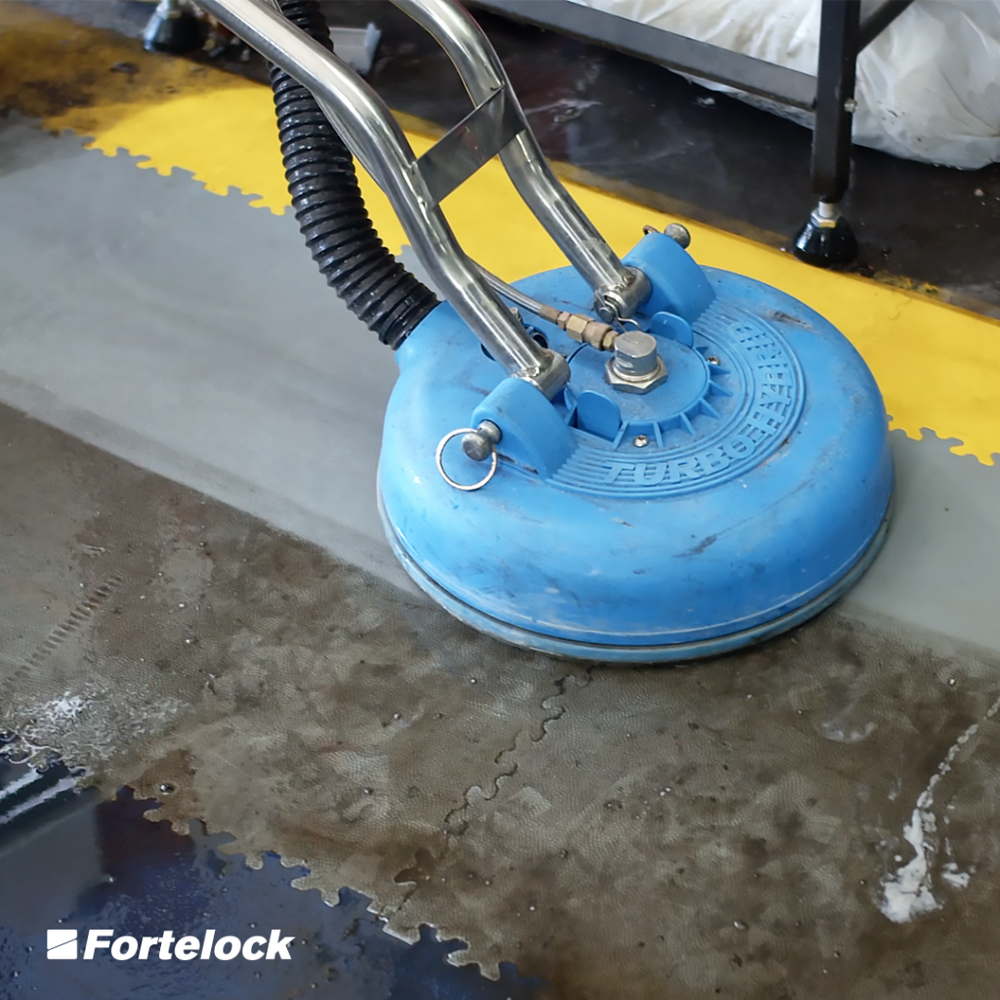
In large halls, rotary scrubber-dryers with suction are your best helpers. Just keep an eye on bristle hardness and choose soft variants with bristles under 0.25 mm thick, which are gentle on the floor. When choosing cleaning products, go for pH-neutral chemistry such as the Forteclean range, which does not deform the material and keeps it clean. - Protecting the surface with special coatings
For operations with an extreme risk of contamination by paints or rubber scuff marks, we recommend applying a polyurethane coating, which seals the micropores and makes cleaning much easier. - Replacing damaged segments
If a tile gets cut through by a falling sharp object, do not resort to an unsightly patch. Remove the one tile and insert a new one. It takes two minutes and the floor will once again look like it did on the day of installation.
Investing in the floor as the key to an efficient operation
Choosing a floor for a production hall is a strategic decision that will influence the smooth running of your production for the entire coming decade (and if you choose well, even longer). The Fortelock Industry system offers a unique combination of mechanical resistance, chemical stability and incredible flexibility that is unrivalled in industry. The option of installation during full operation and easy repairability make it a clear favourite for anyone who calculates efficiency over the long term.
Whether you are renovating an old hall or planning a new build, we will be happy to help you with the technical specification and the calculation of your return on investment. Contact us for samples and test the durability of Fortelock right in your own operation.
Frequently asked questions
What industrial floor can withstand forklift traffic?


The Fortelock Industry and Industry Ultra ranges are the main choice for forklift traffic. When loose-laid, both can handle a forklift or a car with tyres of up to 6,600 kg. The thicker Industry Ultra (10 mm) can also take an electric forklift with PU wheels of up to 2,900 kg and an electric reach truck of up to 5,100 kg. Higher loads require an individual technical assessment.
Can a new floor be laid in a hall without stopping production?
Yes, the tiles are laid gradually in sections and even during operation, so there is no need to clear the whole hall. Installation takes place without glue, drying time or technological breaks. For large areas over 100 m², including subfloor preparation, you can use professional installation by Fortemix.
How long does a PVC floor last in a production hall?
The manufacturer states a service life of up to 25 years. Tiles made from primary PVC come with a 12-year warranty from delivery that, under normal use, they will not wear through, tear or have manufacturing defects. Damaged pieces can be replaced individually during the floor's service life.
Is a PVC hall floor resistant to oils and chemicals?
Yes, the chemical resistance of the tiles is rated as good according to EN ISO 26987, and liquids do not soak into the material. Even so, oils, petrol and petroleum-based substances must be wiped up as soon as possible, otherwise there is a risk of discolouration or deformation. The Fortemix sales department can confirm resistance to specific chemicals.
How are PVC tiles machine-cleaned in an industrial hall?
Rotary scrubbers with soft brushes whose bristles are less than 0.25 mm thick are suitable for large areas. Do not use abrasive pads or solvents. In warehouses, daily cleaning with Forteclean Daily Cleaner and deep cleaning twice a year are recommended; deep cleaning is also available through the professional cleaning service.
Why does a PVC floor in a hall feel less cold than concrete?
PVC acts as a thermal insulator with a conductivity similar to laminate. The thermal conductivity of Fortelock tiles is 0.155 W/(m·K) according to EN 12664, so the floor does not transfer cold from the concrete as intensely. The flexibility of the material also dampens machine noise and vibrations and reduces leg fatigue compared with concrete. Find out more in the article Fortelock tiles provide thermal insulation.