4. 11. 2021
Why is Fortelock the best choice for industrial floors?
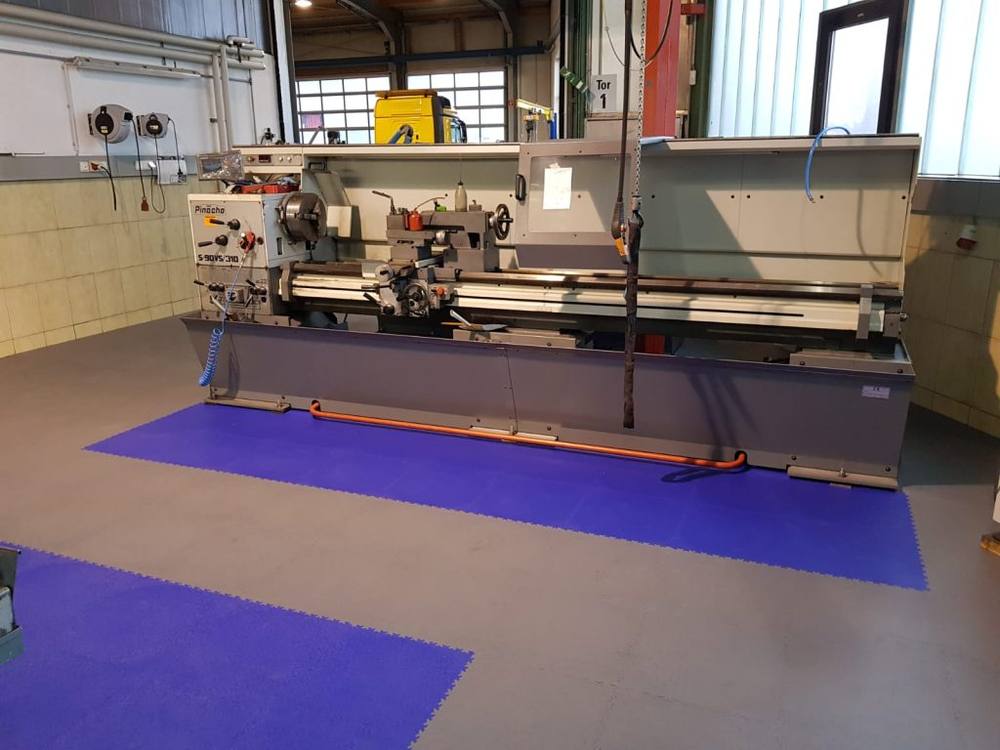
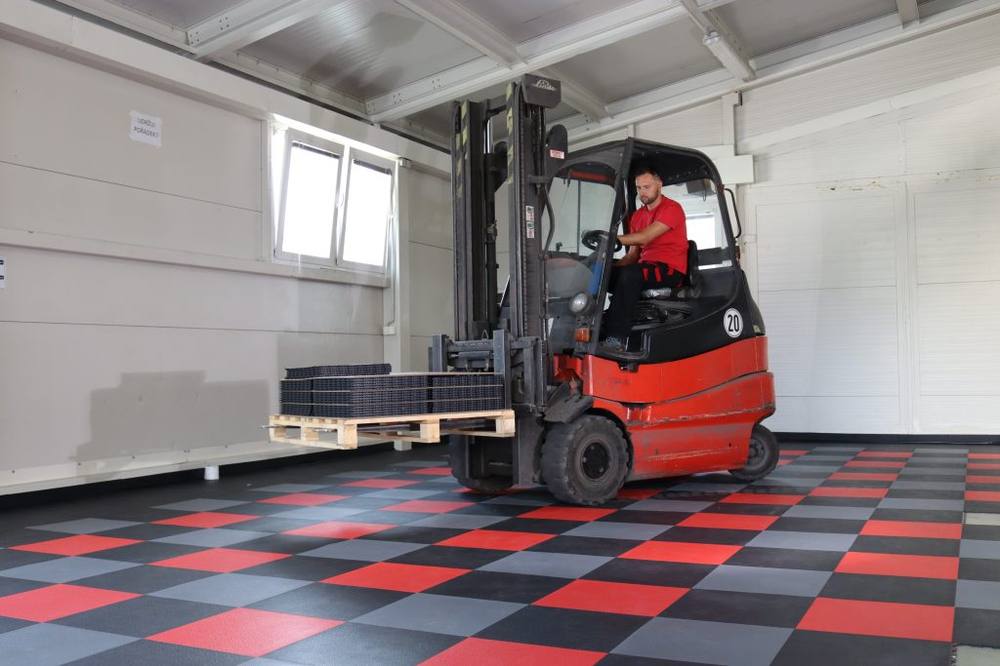
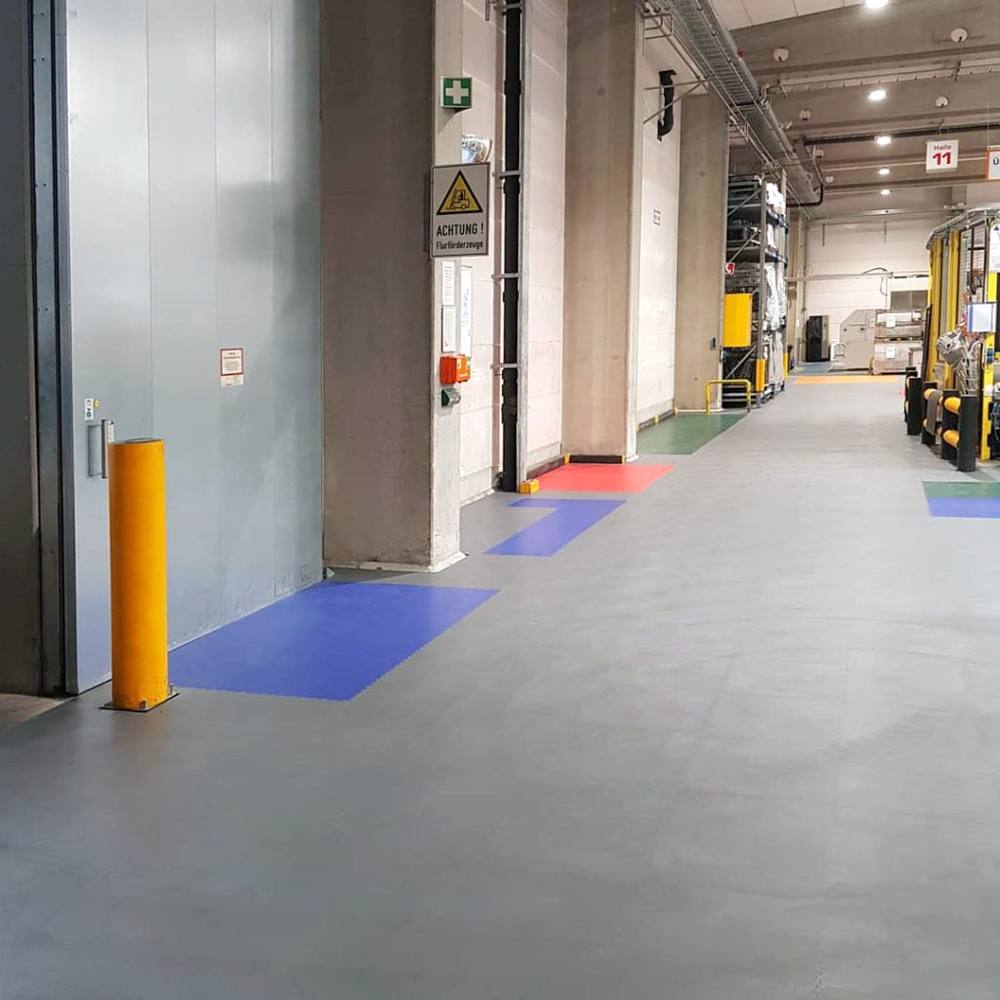
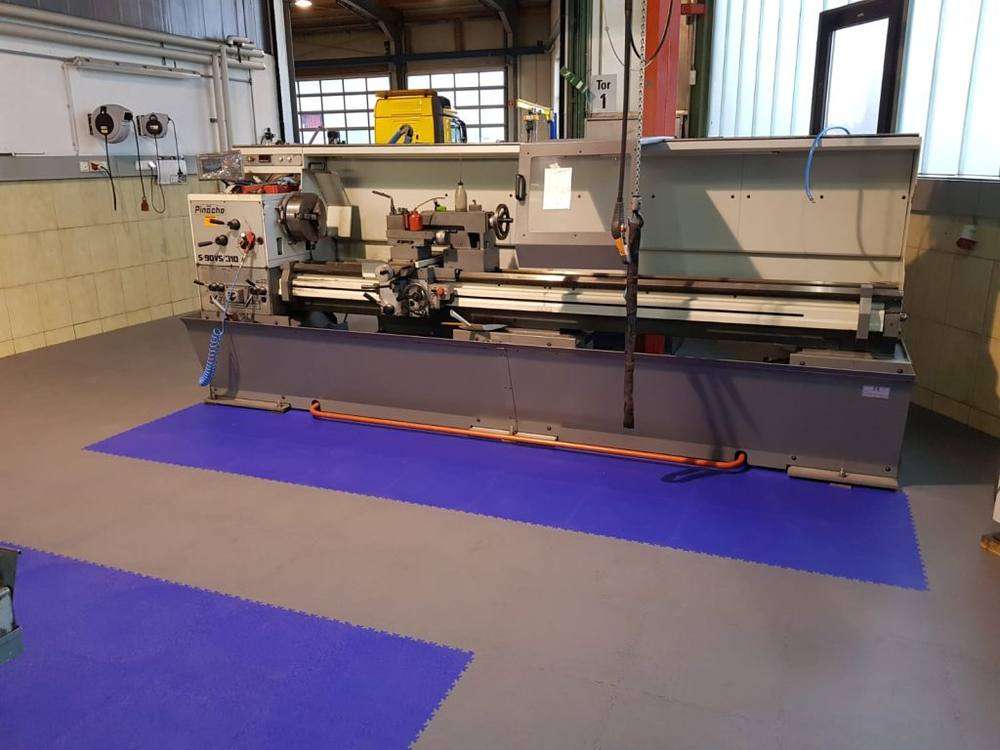
What perfect industrial floors have in common is that they withstand the heavy loads of forklifts and pallet trucks, can be installed without stopping work activities and can easily be repaired in specific damaged spots. Industrial floors are almost always a pain point for every company looking to upgrade its working environment. In this article we will explain why Fortelock is the ideal solution for renovating a working environment, regardless of the load or the needs specific to your business.
First we will look at the main problems of the most common industrial floors on the market (epoxy resin, concrete and ceramic tiles) and why industrial Fortelock PVC tiles are the better choice.
Epoxy resin
Epoxy resin is one of the most widely used industrial floors, because it is applied directly onto new or renovated concrete, makes cleaning easier, eliminates the dust problem typical of concrete and delivers a clean, professional aesthetic result.
The main problems of epoxy resin
An epoxy resin floor needs a perfect, dry, level surface. You have to factor in stopping work activities for roughly 14 days, which can be a problem. To apply the protective coating to the floor correctly, all machinery, industrial shelving and various other installations have to be dismantled. Prolonged exposure to acids and oils can change the colour of the resin and create very obvious, unrepairable stains. This type of floor also suffers from moisture and a vapour barrier is often required. It is not impact-resistant, and a dropped hammer or another tool often causes a crack that gradually grows larger.
Concrete floors
Concrete floors are a classic and have always been the first industrial floor installed after the screed in every new building. In fact, it is the most common starting point for any alternative industrial floors, such as resins and tiles. However, concrete is notorious for being hard to clean, for the dust created as its surface grinds down, and for stains. Oil and acid stains are certainly the main problem of these floors, because being porous they absorb them irreversibly, like a sponge. Any subsequent installation of another industrial floor requires the concrete to be smoothed and cleaned of these infiltrations.
The main problems of concrete
Cleaning a concrete surface is difficult and very dusty. Concrete stains very easily and the marks cannot be removed easily. If you opt for a concrete floor, you have to reckon with completely closing the operation as well as removing all machinery and furniture.
Ceramic tiles
Ceramic tiles are very popular in industrial contexts, but when it comes to repairs they are definitely the worst solution. Ceramic is hard and therefore absorbs any impact or fall of heavy objects, resulting in cracks. Any structural failure in the floor results in the ceramic breaking. On top of that, installation and repair costs are really high.
The main problems of ceramic tiles
Production has to be stopped completely when installing ceramic tiles. Laying them requires a very long installation time and, because of this material, the costs are high. Ceramic tiles offer very little resistance to impact and falling heavy objects.
Fortelock is the ideal floor for any industry
Our floors are designed to solve the main problems of alternative industrial floors. Whether it is an HACCP environment or a warehouse subject to forklifts or pallet trucks, Fortelock always offers the best solution, not only from an economic point of view but also in terms of technology and time. Our floors are equally durable, easy to clean and certified to the highest applicable standards.
The tiles are highly resistant to impacts and falling heavy objects, as well as to acids and oils. They feature the AirFlow system, which allows air to circulate beneath the floor and prevents mould or moisture condensation. Another advantage worth mentioning is the ability to replace a single damaged tile without having to replace the entire floor.