15. 11. 2026
Balcony flooring for flats: a new floor without building work and what you need to know
In a block of flats the balcony is not entirely yours, because the lease usually keeps the structure and the facade with the freeholder. We explain what you can change yourself, what to agree with the managing agent or landlord, when fire rules rule out a plastic floor and how to lay a new floor on a balcony or covered balcony without building work.
The short answer: what to do with a balcony on a flat
If your balcony is in good condition, water does not reach the flat below and your building has no storey 11 m or more above ground, the simplest way to a new floor is to lay interlocking tiles straight onto the existing surface. Nothing is taken up, glued or drilled, so you do not touch the building's tiles or waterproofing, and the floor is done in an afternoon.
If the balcony leaks, the concrete is spalling or the railings are rusting, a new floor will not solve it. That repair is a matter for the freeholder or the management company or, if you rent, the landlord. And if your block has a storey 11 m or more above ground, the fire rules in England expect non-combustible balcony materials, so a plastic floor is not suitable there.
When Tereco is the best choice: You have a balcony on a house or a low rise block (no storey 11 m or more above ground) with a solid base, such as old tiles or concrete, and you want a new floor without building work and without touching the structure. Tereco tiles weigh 4.95 to 7.37 kg per m², raise the floor by only 15 to 17 mm and lift out easily if you move or the building is repaired.
When to choose something else: The balcony leaks or is in poor condition, so the structure and waterproofing need fixing first. Or your building has a storey 11 m or more above ground, where only non-combustible balcony materials are suitable.
Who actually owns the balcony
Many people see the balcony as part of their flat. Legally that is only partly true. If you own a leasehold flat, the lease defines exactly what is demised to you. Very often the balcony slab, the railings, the waterproofing and the facade stay with the freeholder, while you only have the right to use the balcony and to keep its surface in good order.
What applies in your building is set out in the lease. It often also says who pays for balcony repairs and how those costs are shared through the service charge.
Leaseholder, housing association or renting
- Leasehold flat: the freeholder or the management company decides about the structure. Most leases contain an alterations covenant, so you need written consent, often called a licence for alterations, before changing anything that is not purely decorative. Where consent for improvements is required, the Landlord and Tenant Act 1927 says it must not be unreasonably withheld.
- Council or housing association flat: the building belongs to the council or the housing association, so changes to the balcony are agreed with them.
- Rented flat: your landlord decides about any changes. Most tenancy agreements do not allow alterations without the landlord's written consent. A floor laid dry is an advantage, because you take it with you when you leave.
Fire safety: when a plastic floor is not allowed
Since the Grenfell fire, the rules for balconies on residential buildings in England have become much stricter. On buildings with a storey 18 m or more above ground, building regulation 7(2) bans combustible materials in external walls and balconies. Approved Document B goes further and expects balconies on residential buildings with a storey 11 m or more above ground to use materials of class A1 or A2-s1, d0. The top floor layer of a balcony is only exempt if it is class A1fl or A2fl-s1.
Tereco tiles are made of polyethylene and do not reach these classes. So we say it plainly: they are not suitable for balconies on buildings with a storey 11 m or more above ground. Many managing agents also ban combustible decking and floor coverings on balconies in lower blocks, so check your lease and ask before you buy. Scotland, Wales and Northern Ireland have their own rules, which your local building control can explain.
What to agree with the freeholder or managing agent
A lease usually lets you use the balcony as long as you do not damage the structure, change the outside appearance of the building or cause a nuisance to your neighbours. The line is drawn where a change affects the structure, the waterproofing or the look of the facade. Some work, such as enclosing a balcony, may also need planning permission and building regulations approval from the council. Consent under the lease and permission from the council are two different things, and one does not replace the other.
| Change | Affects the structure or the outside appearance? | Recommendation |
|---|---|---|
| Enclosing the balcony | Yes | Licence for alterations plus planning permission and building regulations approval |
| New or altered railings | Yes | Licence for alterations from the freeholder |
| Drilling into the facade, awning, air conditioning | Yes | Check the lease and get written consent |
| New bonded tiles and waterproofing | Yes, it changes the build-up | Consent from the freeholder or managing agent |
| Interlocking tiles laid dry | No, nothing is glued or drilled | Check the lease and the fire rules, tell the managing agent |
| Plants, furniture, outdoor rug | No | No limits unless the lease or house rules say otherwise |
A floor laid dry is the smallest possible change, because it rests on the existing surface without touching it and lifts out without a trace. Even so, check your lease or tenancy agreement, because every building has its own rules. A short email to the managing agent or landlord before you start avoids misunderstandings.
Before you start: check the condition of the balcony
Many balconies on blocks of flats are several decades old. A new floor only makes sense if the structure underneath is sound. Go through these points:
- Does water reach the flat below? Then the waterproofing is damaged and must be repaired first.
- Are pieces of concrete breaking off the edge? That is a job for a surveyor and the freeholder, not for a new floor.
- Are the railing fixings rusting? Report that to the freeholder or managing agent as well.
- Are only the old tiles cracking? This is the most common case, and a new floor solves it.
- Does water stand on the balcony after rain? Check the fall and the outlet, water must run away from the building.
Why old balcony tiles crack and how to tell whether the problem is only on the surface, we explain in the article Why balcony tiles crack and come loose.
Load capacity: why the weight of the floor matters
Balconies are designed with a margin for imposed loads, that is people, furniture and planters. On older balconies, however, nobody can guarantee the condition of the steel reinforcement inside. So it is sensible not to load the balcony with unnecessary weight.
New ceramic tiles in adhesive weigh tens of kilograms per square metre, and even more if the screed to falls is redone. Tereco Wood tiles weigh 4.95 kg per m² and Tereco Slate 7.37 kg per m². On a typical balcony of about 4 m², that adds roughly 20 to 30 kg.
Threshold height: the floor must not rise above the door
A balcony door threshold is often only slightly higher than the balcony floor. Every extra centimetre counts. If you raise the floor too much, rainwater reaches the threshold and the door is harder to open.
Bonded tiles with a levelling layer raise the floor by one to several centimetres. Tereco tiles are 15 mm high in the Wood range and 17 mm in the Slate range. To be safe, measure the gap between the floor and the bottom of the door before you buy.
Water and fall: what happens to drainage
A balcony needs a fall away from the building so water can drain. Interlocking tiles follow the existing surface and keep the fall. Tereco tiles have AirFlow channels on the underside. Water runs freely underneath to the edge and air circulates under the tiles, so no moisture or mould is trapped.
Never cover an outlet or a spout at the edge of the balcony with a whole tile. Cut the tile at that point and leave the outlet open so it can be cleaned.
Covered balcony or open balcony: is there a difference?
A covered or recessed balcony sits within the building and has a ceiling and side walls. It gets less rain, more shade, and the floor suffers less from sun and frost. An open balcony sticks out from the facade and is exposed to the weather on all sides, so its surface ages faster.
Interlocking tiles suit both. On an open balcony a lighter shade is better, because it heats up less in the sun. On a shaded covered balcony you can also go darker.
Why Tereco suits a balcony on a low rise flat
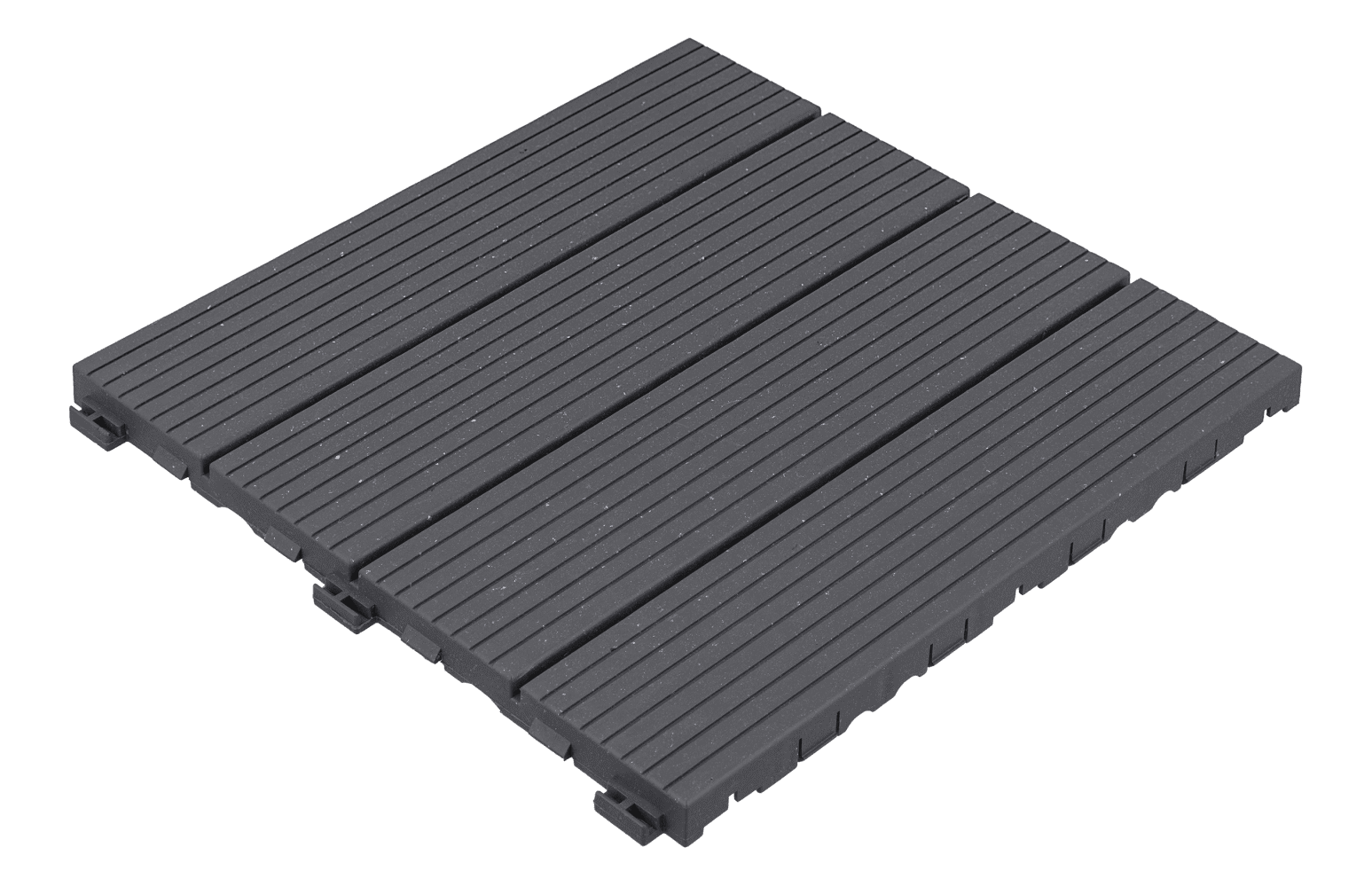
- No work on the building. The tiles click together with 7Locks locks, with no glue or screws.
- Light. 4.95 to 7.37 kg per m², so the balcony carries no unnecessary weight.
- Low. The floor rises by only 15 to 17 mm.
- They drain water. The AirFlow channels under the tile keep the fall and the drainage.
- Weatherproof. They handle temperatures from −20 °C to +70 °C, so you do not have to lift them in winter.
- Made from 100 % recycled polyethylene and can be taken up and reused.
- Easy to look after. Just sweep and rinse with water, no sanding or staining.
- For the right building. Being plastic, they are for houses and low rise blocks, not for balconies on buildings with a storey 11 m or more above ground.
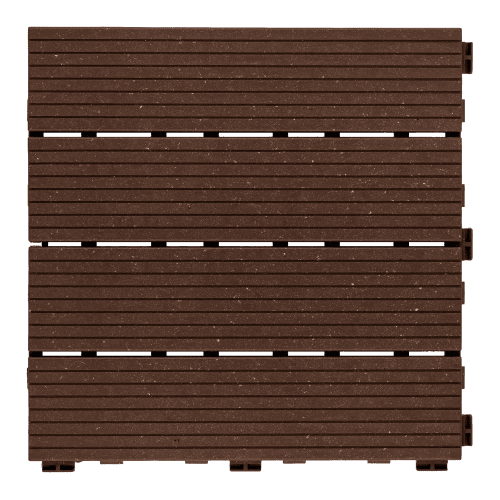
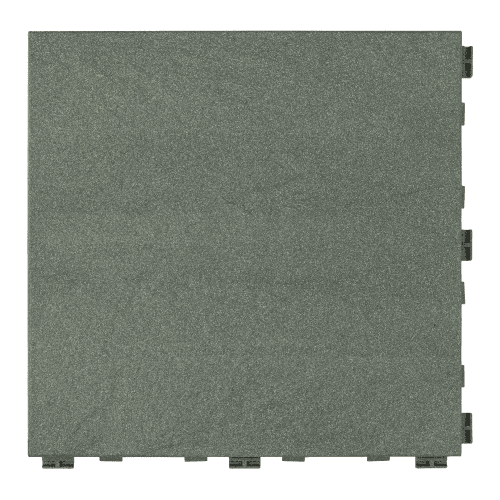
You can choose a wood look in the Wood range or a slate look in the Slate range. The whole range is on the page tiles for patios and balconies.
Tiles for a balcony on a flat
How many tiles you need for the balcony
A Tereco tile measures 310 × 310 mm, you need 11 for 1 m². Work out the area of the balcony and add a few tiles for cuts along the walls and around the outlet.
Example: a covered balcony of 3.6 × 1.2 m is 4.32 m². So you need about 48 tiles, plus two or three for cuts.
Laying the floor on the balcony step by step
- Clear and sweep the balcony. The base must be solid and flat, with no loose pieces of old tile.
- Check the drainage. Make sure water runs away from the building and the outlet is clear.
- Start at the door. Lay from the most visible spot so there are whole tiles in front of the door.
- Click the tiles together. The 7Locks locks join by hand or with a rubber mallet.
- Cut the edges. Tiles along the wall, the railings and the outlet are cut to size with a saw.
- Put the furniture back. Done, the floor can be walked on straight away.
You will find the full guide in the installation instructions.
Video: balcony makeover with Tereco tiles
A balcony renovated in one afternoon
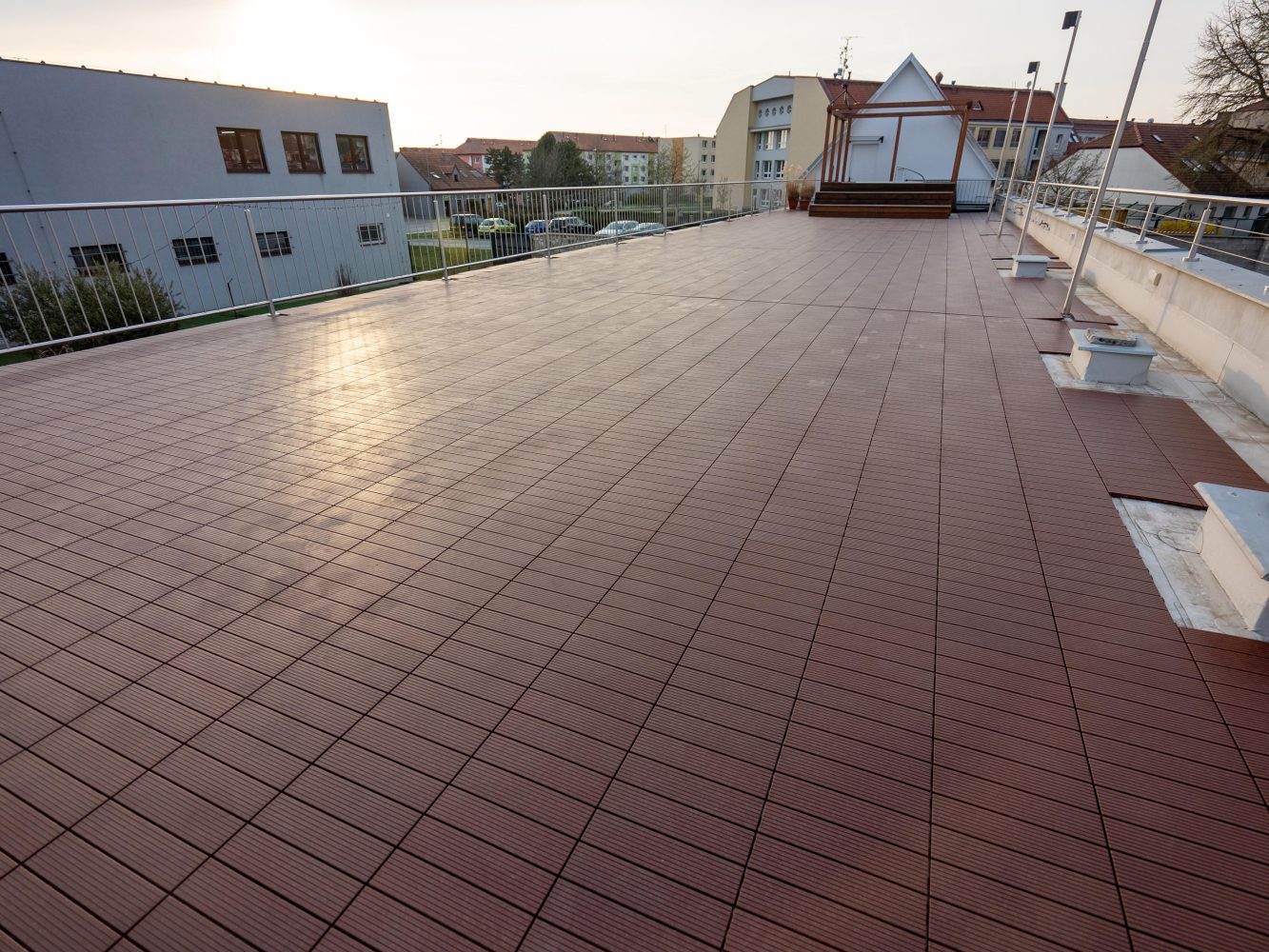
Laying Tereco Wood Brown
What if the building is being repaired?
Many blocks are refurbished, often with work on the facade and balconies. If such work is planned, it is not worth investing in bonded tiles that would be broken during the job. Interlocking tiles can be lifted beforehand, stored and laid again when the work is finished.
Do you rent?
In a rented flat you cannot make alterations without your landlord's consent. A floor laid dry is the ideal compromise. Tell your landlord what you plan to do. When you move out, you take the floor up and take it to your new home, and the balcony is left as it was.
If you are still choosing between materials, you will find them compared in the article Balcony flooring: which option to choose.
Frequently asked questions
Do I need the freeholder's consent to change the balcony floor?


It depends on your lease. The balcony structure usually belongs to the freeholder, and permanently changing the build-up or touching the waterproofing normally needs a licence for alterations. Interlocking tiles rest on the existing floor without touching it, but still check your lease and tell the managing agent.
Can I put plastic tiles on a balcony in a high rise block?

Not in England if the building has a storey 11 m or more above ground. Approved Document B then expects balcony materials of class A1 or A2-s1, d0, and the floor surface must be A1fl or A2fl-s1. Tereco tiles are plastic and do not meet these classes, so they are not suitable there.
Can I change the balcony floor in a rented flat?

Your landlord decides about alterations, so ask first. Interlocking tiles laid dry do not alter the flat and can be removed completely when you move out.
Can an old balcony take a new floor?

A light floor, yes. Tereco tiles weigh 4.95 to 7.37 kg per m², much less than bonded ceramic tiles. But if the concrete is spalling or the fixings are rusting, report it to the freeholder first.
How much does the balcony floor rise?

Tereco Wood tiles are 15 mm high and Tereco Slate tiles 17 mm. Before you buy, measure the height between the floor and the bottom of the balcony door.
What happens to the floor if the balconies are repaired?

Interlocking tiles are lifted before the work and stored. Once the work is done, they go back down with nothing lost.