15. 11. 2026
Composite, timber or plastic decking tiles? An honest comparison for patios and balconies
Timber, composite boards or plastic decking tiles? Each material asks something different of the base, the fitting and the upkeep. We compared them so you can quickly see what is worth it on your patio or balcony.
The short answer: what to choose
- Timber suits you if you want a genuinely natural material and do not mind oiling it regularly.
- Composite decking fits a new, larger deck where you build a frame anyway and want the look of wood without staining.
- Plastic decking tiles are the fastest route if you already have a solid base, such as concrete, old paving or a balcony.
The difference is not just the material. Timber and composite decks need a frame of joists or bearers. Tiles go straight onto the existing surface. So often you are not choosing between materials but between two ways of building.
Timber, composite and plastic tiles compared
| Timber | Composite decking | Plastic decking tiles | |
|---|---|---|---|
| Material | Solid wood, often larch or hardwood | Wood flour, plastic and additives | Plastic, for Tereco 100 % recycled polyethylene |
| Base | Joist frame | Joist frame | Solid, flat base |
| DIY | Medium | Medium | Easy |
| Upkeep | Oil once or twice a year | Wash, no staining | Sweep and rinse |
| Damp and mould | Must be able to dry | Resistant | Resistant, ventilated underneath |
| Taking up and moving | Hard work | Hard work | Easy thanks to the locks |
| When to choose it | Natural look, you enjoy the upkeep | New deck in the garden | Concrete, old paving, balcony |
Timber decking: beautiful, but needs upkeep
Wood is the classic for decks. It is pleasant to touch, usually stays cooler in the sun than dark plastics and can always be sanded back. But outdoors, without protection, it goes grey, splits and eventually rots. So it needs oil regularly, usually once or twice a year, and a frame with air flowing underneath.
Which wood to choose for a deck
The most common is larch, which thanks to its resin lasts better than spruce or pine. Siberian larch grows more slowly, has tighter growth rings and lasts longer outdoors. Tropical hardwoods such as bangkirai, massaranduba or ipe are the hardest and most durable, but also the most expensive. Hardwood is also harder to cut and screw, so fitting takes longer.
What to watch out for
- Wood must not sit in water, air needs to flow between and under the boards.
- Softwood is cheaper but needs more care than tropical hardwood.
- Without upkeep, splinters appear and the surface starts to split.
Composite decking: wood and plastic in one
Composite decking, also called WPC, is made from wood, usually as flour or granules, plastic polymers and additives. Each manufacturer chooses its own mix and type of plastic. Boards can be solid or hollow. With solid boards the fall of the base matters less, hollow boards are lighter and easier to handle.
Quality varies a lot
Cheap composite can expand much more with heat and absorb far more water. Softer plastic components reduce resistance to knocks and to furniture being dragged across it. When choosing, look at certificates and references, not just the price.
How to spot good composite
- The manufacturer states the composition and the wood content, not just a generic composite.
- There are documented tests and certificates, not only marketing claims.
- The boards do not crumble, the material is even, with no visible cellulose fibres.
- Fitting instructions and warranty terms are available.
Scratches and heat
In winter, grit sticks to shoes and scratches composite boards. Dog and cat claws do the same. Dark boards get very hot in full sun, and the effect is even stronger on a patio surrounded by glass.
Boards or tiles?
This is where the most important decision is made. Timber and composite boards are screwed to a frame standing on adjustable pedestals, blocks or concrete. A handy DIYer can manage it, but it takes longer and raises the floor by several centimetres.
Tiles go straight onto a solid, flat base. If you have an old concrete patio, cracked paving or a balcony, you do not have to break anything out or build anything. That is why tiles are the most common choice for renovations.

Tereco plastic tiles: the look of wood with no upkeep
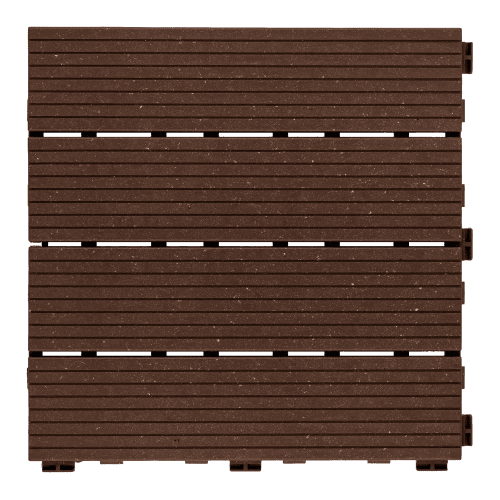
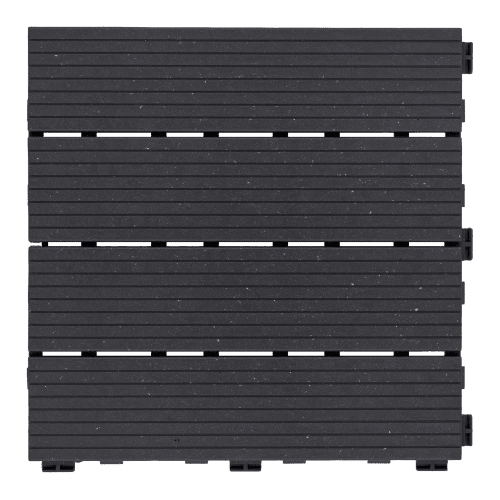
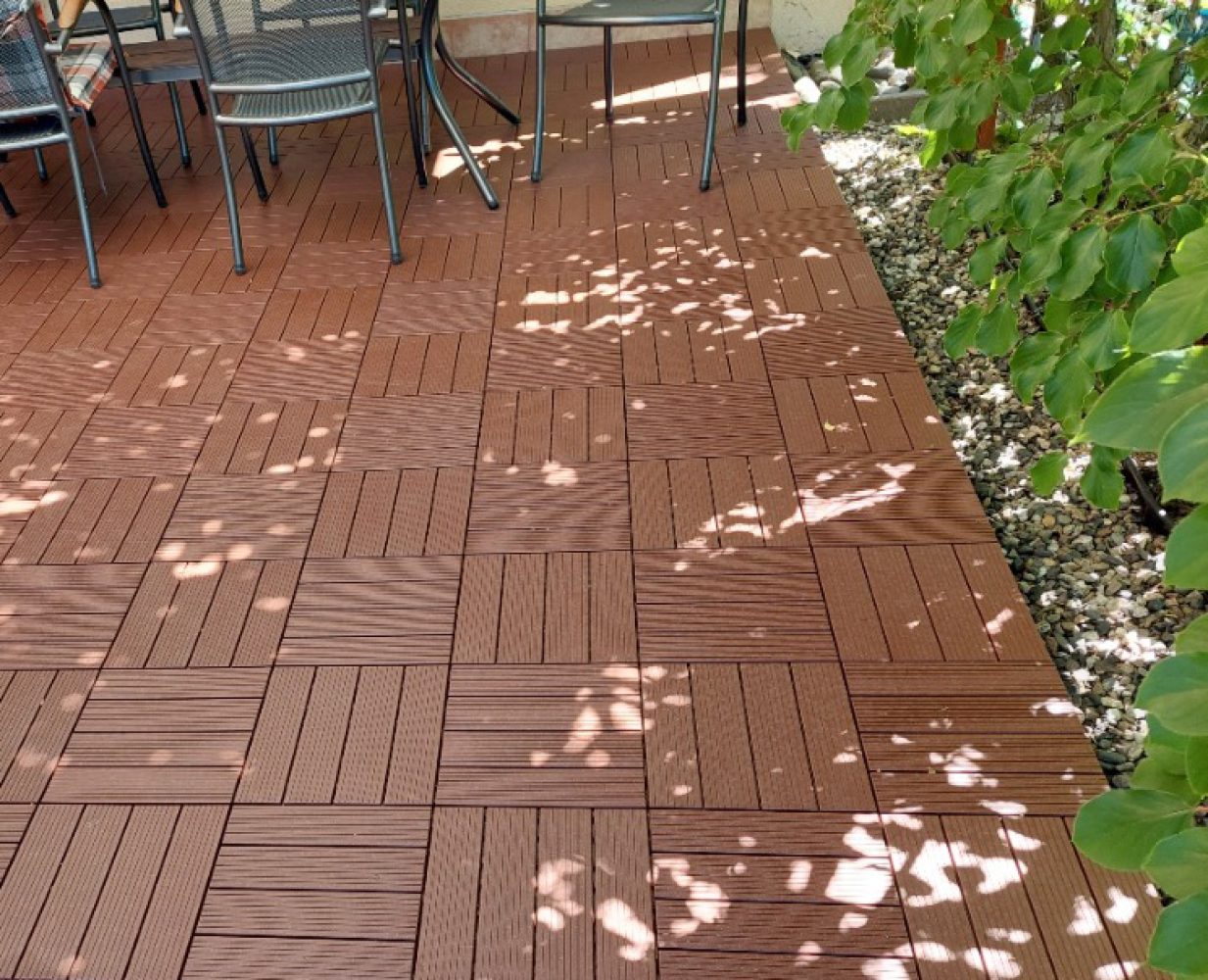
Tereco tiles are made from 100 % recycled polyethylene. The Wood range looks like timber, the Slate range like slate. A tile measures 310 × 310 mm, you need 11 for 1 m², and they connect with the 7Locks system with no glue or screws. On the underside they have AirFlow channels that drain water away and let air circulate, so no moisture is trapped underneath.
They handle temperatures from −20 °C to +70 °C and can go on concrete, paving, asphalt or compacted gravel. Upkeep means sweeping or rinsing with water. A damaged tile can be swapped without lifting the whole floor, and the complete floor can be taken up and laid again somewhere else. Being plastic, they are meant for houses, gardens and low rise buildings, not for balconies on buildings with a storey 11 m or more above ground. More on the page tiles for patios and balconies.
Wood effect decking tiles
Video: a DIY patio with Tereco tiles
Patio tiles you can lay yourself
How easy it is to renovate a patio
How much work a deck is over the years
The price of the material is only part of the cost. With timber and composite decks you also need the frame, that is joists or bearers, pedestals or blocks and fixings. Then there is labour, which takes several days on a large area. With tiles on an existing base, no frame is needed.
The second item is upkeep. A timber deck needs oil every year and time to apply it. On about 20 m² that can mean a whole weekend a year. Composite and plastic tiles only need washing. Over ten years the difference in time and money is bigger than it looks when you buy.
How long it takes to build
- Timber and composite decks: prepare the base, set out the pedestals and frame, screw down the boards. For a deck of about 20 m², allow several days.
- Plastic tiles: sweep the base and click the tiles together. A normal balcony takes an afternoon, a patio a day.
Environment and a second life for the material
Wood is a renewable resource, but tropical hardwoods travel thousands of kilometres and their origin should be checked through FSC or PEFC certification. With composite, recyclability depends on the mix and the manufacturer. Tereco tiles are made from 100 % recycled polyethylene and, thanks to their locks, can be taken up and reused elsewhere, so the deck does not turn into waste over the years.
How to choose for your situation
- You are building a new deck in the garden with no solid surface: timber or composite boards on a frame.
- You have an old concrete or paved patio: plastic tiles straight on the existing surface.
- It is a balcony or a covered terrace on a house or low rise block: tiles, because they are light and raise the floor by only 15 to 17 mm. More in the article Balcony flooring: which option to choose.
- The area is around a pool: grip under bare feet is what counts, we explain it in the article Non-slip pool surround.
Frequently asked questions
Which is better, composite or wood decking?


It depends on how much upkeep you want. Timber looks natural but needs oiling. Composite looks like wood and needs no staining, but quality varies a lot between manufacturers.
How long does composite decking last?

Well fitted, good composite lasts many years and some manufacturers give warranties of up to 25 years on the boards. The condition is usually fitting according to the manufacturer's instructions.
Does composite decking get hot in the sun?

Dark composite boards get very hot in full sun, and even more so on a glazed terrace. If you walk barefoot, choose a lighter shade.
Can I lay plastic decking tiles on grass?

No. The tiles need a solid, flat, load bearing base, ideally concrete, paving, asphalt or compacted gravel. On grass they would sink.
How often should a timber deck be oiled?

Usually once or twice a year, depending on the species and how much sun and rain the deck gets. Without oil, wood goes grey and splits.
Can a deck be taken up and moved?

With boards on a frame it is hard work. Tereco tiles come apart thanks to their locks and can be laid again elsewhere, which is handy in rented homes or for temporary areas.