15. 11. 2026
Balcony flooring: which option to choose? 6 materials compared
Looking for a new balcony floor? We compared the six most common materials by how easy they are to fit, how much upkeep they need, how they cope with frost and how much they weigh. At the end you will find a simple way to work out how much material you need.
The quick recommendation: which floor for which balcony
There is no best floor for every balcony. But there is a best floor for yours. If you do not have time to read the whole article, here is the summary:
- You want a new floor fast and without building work: interlocking plastic tiles over the existing tiles or concrete.
- The balcony leaks and needs refurbishing anyway: new waterproofing and frost resistant ceramic tiles.
- You want real wood and do not mind the upkeep: timber deck tiles or boards in a durable species.
- You want the look of wood without staining: composite decking or wood effect plastic tiles.
- You need a seamless waterproof surface: a resin or liquid applied coating put down by a contractor.
- You want something for one season only: outdoor carpet, but expect moisture to build up underneath.
- Your building has a storey 11 m or more above ground: check the fire rules first, see the section on house rules below.
6 balcony floors compared
| Material | DIY | Old tiles must come up | Upkeep | Frost and water | Weight |
|---|---|---|---|---|---|
| Ceramic tiles | Hard work | Usually yes | Low, check the joints | Very good if laid properly | High |
| Timber | Medium | No | High, oil once or twice a year | Good if the wood can dry | Medium |
| Composite decking | Medium | No | Low | Good | Medium |
| Interlocking plastic tiles | Easy | No | Minimal | Very good | Low |
| Resin and liquid coatings | No, contractor | Depends on the base | Low | Very good | Low |
| Outdoor carpet | Easy | No | High, needs drying | Poor, holds moisture | Low |
Ceramic tiles: the longest lasting, but the most work
Frost resistant porcelain is the classic that lasts for decades if it is laid properly. Everything rests on that word properly. Under the tiles there must be working waterproofing, a fall of 1.5 to 2.5 % away from the building, a drip edge at the front and a full bed of flexible S1 or S2 adhesive. One mistake is enough for the tiles to crack after a few winters. We explain why in the article Why balcony tiles crack.
Pros: long life, huge choice of finishes, easy to clean. Cons: wet trades, laying only above +5 °C, heavy, slippery when wet unless non-slip. Who it suits: anyone refurbishing the whole balcony, waterproofing included.
Timber: beautiful, but needs looking after
A wooden floor makes a balcony feel warm. People use boards or ready made deck tiles in durable wood laid on the base. But outdoors wood goes grey and, without protection, it splits. Expect to oil it once or twice a year, and air must flow underneath, otherwise moisture builds up and mould appears.
Pros: natural look, pleasant underfoot. Cons: regular upkeep, splinters, shorter life without care. Who it suits: people who want real wood and enjoy caring for it.
Composite decking: halfway between wood and plastic
Composite, also called WPC, is a mix of wood flour and plastic. It looks like wood and needs no staining. Dark shades get very hot in the sun and the material expands in the heat, which is why the boards are laid with gaps on joists. In the first few months the colour can lighten a little.
Pros: wood look, low upkeep. Cons: the joists raise the floor, gets hot in full sun. Who it suits: terraces and larger balconies with enough room under the door threshold.
Interlocking plastic tiles: the fastest way to a new floor
Interlocking balcony tiles go straight onto a solid, flat base. That can be concrete, old tiles, asphalt or compacted gravel. They are neither glued nor screwed, so there is no breaking out, no adhesive and no grout, and the balcony is done in an afternoon.
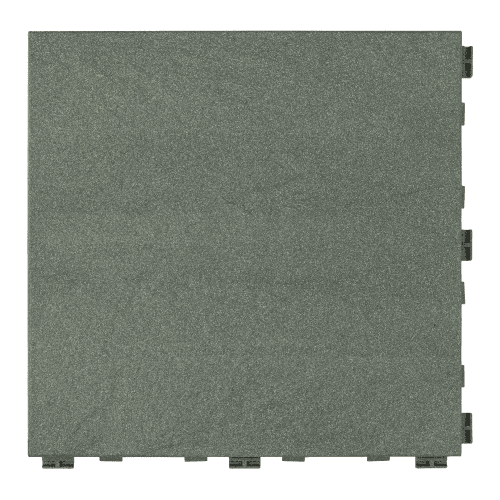
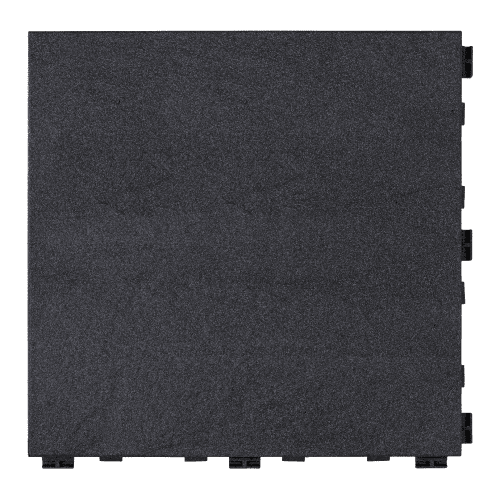
Tereco tiles made from 100 % recycled polyethylene are one example. A tile measures 310 × 310 mm, you need 11 for 1 m², and a square metre weighs only about 5 kg in the Wood range and about 7.4 kg in the Slate range. They connect with the 7Locks system and on the underside have AirFlow channels that drain water away and let air circulate. They handle temperatures from −20 °C to +70 °C and are not affected by chlorine, normal cleaning products or sun cream.
Wood effect balcony tiles
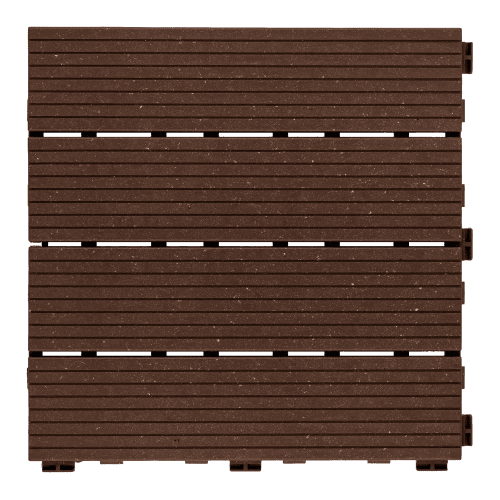
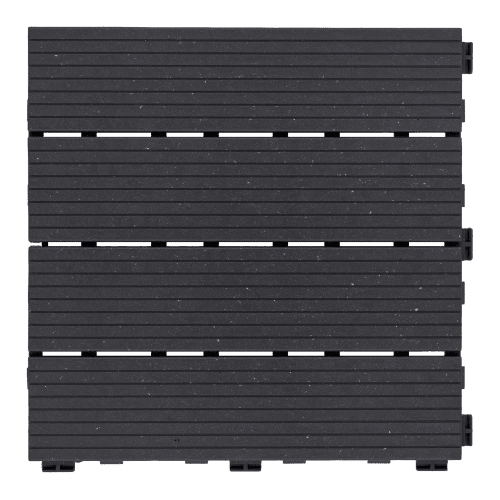
Pros: DIY fitting with no adhesive, no building work, minimal upkeep, easy to swap a single tile. Cons: they do not fix broken waterproofing, the floor rises by 15 to 17 mm, being plastic they are not suitable on buildings with a storey 11 m or more above ground. Who it suits: balconies and terraces on houses and low rise flats, rented homes and anywhere the waterproofing is intact.

Resin and liquid coatings: waterproof and seamless
Polyurethane or cement based coatings form one continuous layer that acts as waterproofing and walking surface at the same time. There are no joints for water to get through. But they need a dry, prepared base, the right temperature and experience, so a contractor usually applies them.
Pros: seamless, light, waterproof. Cons: professional application, curing time, limited looks. Who it suits: balconies that also have a leak to fix.
Outdoor carpet: cheap, but only temporary
Outdoor carpet or artificial grass can be rolled out in minutes. But moisture, dirt and even ice in winter stay underneath. That can damage the tiles or concrete below and encourages mould. It works for a season at most, or on an enclosed balcony.
Video: Tereco tiles with no adhesive
A finished balcony with no glue and no waiting
Laying Tereco Wood Brown
What to check before you choose
Height under the door threshold
Every new layer raises the floor. Measure how much room you have under the threshold. Interlocking tiles need 15 to 17 mm, composite on joists several centimetres and new bonded tiles about 1.5 cm.
Fall and drainage
The new floor must not block the water's path. With ventilated tiles, water runs underneath on the old surface, which therefore needs a fall.
Load and weight
A balcony can only carry so much. The lighter the floor, the less it loads the structure. Bonded ceramic tiles weigh more than 20 kg per m², plastic tiles between about 5 and 7.4 kg per m².
House rules and fire safety
If you own a leasehold flat, the lease decides which parts of the balcony are yours. The slab, railings and waterproofing usually belong to the freeholder, and many leases require a licence for alterations before you change anything. In England, balconies on residential buildings with a storey 11 m or more above ground are expected under Approved Document B to use non-combustible materials, class A1 or A2-s1, d0, and for the floor surface A1fl or A2fl-s1. Many managing agents also ban combustible decking on balconies in any block. Plastic tiles, Tereco included, do not meet these classes, so ask your managing agent or freeholder first. If you rent, ask your landlord. The advantage of floors laid without adhesive is that they can be lifted at any time and the balcony goes back to how it was. We explain more in the article Balcony flooring for flats.
How many tiles you need for the balcony
The sum is simple. Multiply the length of the balcony by its width, then by the number of tiles per m². Add 5 to 10 % for cuts at the edges.
Example: a 3 × 1.2 m balcony is 3.6 m². With 11 Tereco tiles per m² you need 40 tiles, or 42 to 44 with the extra. For a 3 m open edge, 3 edge trims of 1.35 m each are enough.

Non-slip slate effect tiles
Frequently asked questions
What is the cheapest balcony flooring?


Outdoor carpet has the lowest purchase price, but it does not last and can damage the base. Among long lasting options, a floor that needs no building work and no tradesman works out cheapest, because you save on labour.
What flooring is best for a balcony on a flat?

For a flat, weight, the height under the threshold, the lease and the fire rules all matter. On low rise blocks people often lay interlocking tiles over the existing floor, because they are light, raise the floor by only 15 to 17 mm and can be lifted at any time. On buildings with a storey 11 m or more above ground, only non-combustible materials are suitable.
Do I have to remove the old tiles to lay a new floor?

No, if the old tiles are solid and flat and the balcony does not leak. They then act as the base for the new layer.
Which balcony flooring is non-slip?

Smooth tiles and varnished surfaces are the most slippery when wet. Choose tiles with a non-slip or textured surface, for example the Tereco Slate range with its slate effect.
Is plastic balcony flooring eco friendly?

It depends on the material. Tereco tiles are made from 100 % recycled polyethylene and, thanks to their locks, can be taken up and reused elsewhere. More in Why Tereco.
How long does fitting take?

Ceramic tiles with waterproofing take several days including curing. Interlocking tiles go down on a normal balcony in an afternoon, every step is in the installation instructions.