15. 11. 2026
Why balcony tiles crack and come loose: causes and fixes without building work
Balcony tiles that crack and come loose almost always have the same cause: water freezing under the floor in winter. We explain how to tell whether the problem is only on the surface or in the waterproofing too, and the three ways to fix the balcony, including one with no building work at all.
Why balcony tiles crack: the short answer
Balcony tiles crack and come loose almost always because of water. It gets under the tiles through the joints and hairline cracks, freezes in winter and expands by around 9 %. The pressure of the ice slowly pushes the tiles off the adhesive and the adhesive off the base. After a few winters the tiles sound hollow, crack and finally come away completely.
On a well built balcony, water should never get under the tiles. If it does, the reason is usually one of these five:
- not enough fall, so water stands on the balcony,
- missing or damaged waterproofing under the tiles,
- the wrong adhesive or tiles stuck on dabs instead of full bed,
- no movement joints, so the floor has no room to move with heat and cold,
- porous tiles that are not made for outdoor use.
How water and frost destroy balcony tiles
A balcony is one of the most exposed parts of a building. In summer the surface heats up in the sun, in winter it freezes, and in a single day the temperature can cross zero several times. Every freeze and thaw cycle is a small stress test for the floor.
The joints are the water's way in
Grout ages faster than tiles. As soon as a hairline crack appears in a joint, water gets under the tile. If an indoor or rigid grout was used, new cracks appear every winter. That is why manufacturers recommend only flexible, frost resistant grout for balconies.
Voids under the tile hold water
A common mistake is laying tiles on a few dabs of adhesive. Voids stay under the tile, water collects in them and, when it freezes, pushes the tile up from below. You can find these spots easily by tapping, because the tile sounds hollow. Balconies need deformable adhesives of class S1 or S2, which follow the movement of the base, spread over the whole back of the tile.
The five most common causes of cracked balcony tiles
| Cause | How to spot it | What to do |
|---|---|---|
| Not enough fall | Puddles stay after rain and water runs towards the wall | The recommended fall is 1.5 to 2.5 %, that is 1.5 to 2.5 cm per metre away from the building |
| Damaged waterproofing | Damp patches under the balcony or at the neighbour below, flaking render | Have the waterproofing repaired by a contractor, everything else only hides the problem |
| Wrong adhesive or voids under the tile | Tiles sound hollow and move | Re-fix or replace, balconies need S1 or S2 adhesives |
| No movement joints | Cracks in a line across several tiles, skirting coming away | Split the area into bays, usually no larger than 3 × 3 m |
| Unsuitable tiles | Flaking surface, crumbling edges | Use frost resistant outdoor tiles with low water absorption |
How to tell whether only the tiles or also the waterproofing is damaged
Before you choose a fix, you need to know where the problem is. That decides whether a new surface is enough or proper building work is needed. Follow these steps:
- Tap the tiles. Go over the whole balcony and gently tap each tile with the handle of a screwdriver. A hollow sound means the tile is no longer bonded.
- Check after rain. Look where the water stays. Puddles along the wall or at the door threshold point to a lack of fall.
- Look under the balcony. Check the underside of the balcony or ask the neighbour below. Damp patches, white salt marks or falling render show that water is getting through the structure.
- Check the edge of the balcony. Look at the drip edge. If it is missing or rusty, water runs into the edge of the slab.
- Check the joints. Cracked or crumbling joints are the first place water gets in.
Important: if water reaches the flat below or the facade, the waterproofing must be redone. No new floor solves that, it only hides it for a while. In that case call a contractor. In a block of flats also tell the managing agent or the freeholder, because the structure of the balcony and the facade are usually not part of your flat.

Which fixes you can choose from
Depending on what the checks show, you have three options. They differ in cost, time and how much dust and mess they make on the balcony.
1. Replace individual tiles
This works if only a few tiles have come loose and the waterproofing is intact. You lift the loose tile, clean the base, bed a new one in full adhesive and grout it. The catch: years later you often cannot get the same tile any more and the repair shows. If the joints are cracking across the whole balcony, replacing one tile only moves the problem.
2. Full refurbishment with new waterproofing
This is the longest lasting fix, but also the most work. The old tiles come up, the screed to falls is corrected, a new waterproofing layer goes down, a drip edge is fitted and new frost resistant tiles are laid in flexible adhesive. The work needs dry weather and temperatures above +5 °C, so it does not happen in winter. Expect several days of work during which you cannot use the balcony.
3. A new floor over the old tiles, with no building work
If the waterproofing is intact and the old tiles are solid and flat, you do not have to break anything out. You can lay a new layer on top. The classic way is to bond new tiles over the old ones after a primer, but that again means adhesive, grout and waiting for the right weather.
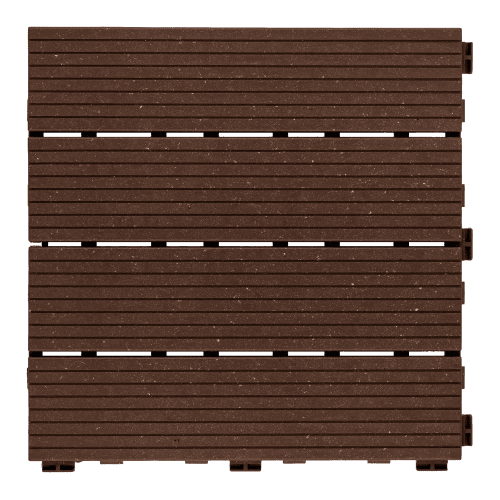
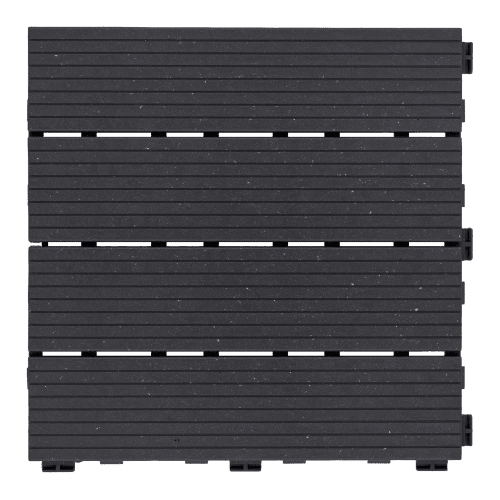
The second way is interlocking balcony tiles, which are neither glued nor screwed. Tereco tiles, for example, connect to each other with the 7Locks system. On the underside they have AirFlow channels that drain water away and let air circulate, so no moisture is trapped underneath. They handle temperatures from −20 °C to +70 °C and can go on concrete, old tiles, asphalt or compacted gravel, as long as the base is solid and flat.
Wood effect balcony tiles
The fixes compared
| Replace tiles | Full refurbishment | Interlocking tiles over the old ones | |
|---|---|---|---|
| Breaking out | Only damaged spots | Whole balcony | None |
| Fixes the waterproofing | No | Yes | No |
| Wet trades | Adhesive and grout | Yes, several layers | None |
| DIY | Yes | Better a contractor | Yes |
| Extra height | None | Depends on the new build-up | 15 to 17 mm |
| When to choose it | A few loose tiles | Water gets into the structure | Waterproofing intact, surface damaged or ugly |
Video: balcony makeover with Tereco tiles
A balcony renovated in one afternoon
New balcony terrace with Tereco
When plastic tiles are not enough
We want to be honest. Interlocking tiles are a quick and clean way to a new floor, but they do not solve everything. Do not rely on them if:
- water reaches the flat below or the facade, because the waterproofing must be fixed first,
- the old tiles are loose over large areas and move underfoot, in which case they have to come up and the base must be levelled,
- the balcony has no fall and the water has nowhere to go, because the AirFlow channels only carry water to where it can run off,
- you do not have at least 15 to 17 mm of room under the balcony door threshold for the thickness of the tiles,
- your building has a storey 11 m or more above ground, because English building regulations then expect non-combustible balcony materials, and plastic tiles are not suitable.
If none of this applies to you, a new floor over the old tiles is often the fastest route. You will find every step in the installation instructions. All you need is a tape measure, a rubber mallet and a jigsaw for the edge pieces.
How to stop balcony tiles cracking
Whether you have tiles or a new floor, a few simple habits make it last much longer:
- No standing water. In autumn clear leaves from the outlet, the drip edge and the gutter.
- Keep an eye on the joints. Repair a cracked joint straight away, do not wait for the end of winter.
- Clear snow gently. A plastic shovel will not damage the surface or the joints.
- Put pots on saucers. Otherwise water sits under them for months.
- Tap the tiles once a year. That way you find voids before a tile comes loose.

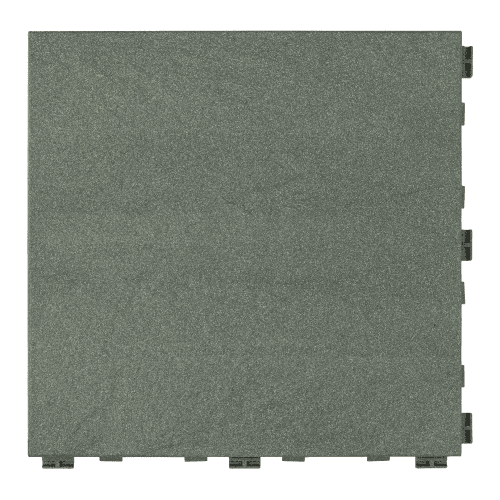
Non-slip slate effect tiles

Frequently asked questions
Why do my balcony tiles sound hollow?


A hollow sound means there is a void under the tile. Either the tile was laid on dabs of adhesive or freezing water has pushed it off the adhesive. The spot needs re-fixing, otherwise the tile will eventually come loose.
How much fall does a balcony need?

Manufacturers of waterproofing systems recommend a fall of 1.5 to 2.5 %, that is 1.5 to 2.5 cm per metre away from the building. With less fall, water stands on the balcony.
Can I lay a new floor over the old balcony tiles?

Yes, if the old tiles are solid and flat and the waterproofing underneath works. You can bond new tiles after a primer or lay interlocking tiles, which are not glued and use the old tiles as their base.
Can I refurbish a balcony in winter?

Adhesives and waterproofing need temperatures above +5 °C and dry weather, so the work does not happen in winter. Use the winter to find the cause, choose the fix and order the materials, then start as soon as spring comes.
What can I put on a balcony instead of tiles?

The most common choices are timber, composite decking, interlocking plastic tiles or a liquid applied coating. You will find all the options compared in the article Balcony flooring: which option to choose.
Are plastic balcony tiles frost proof?

Tereco tiles are made for outdoor use and handle temperatures from −20 °C to +70 °C. They do not absorb water and, thanks to the AirFlow channels, no water stands underneath. More answers in the Tereco FAQ.