27. 1. 2023
Boost your protection against electrostatic discharge

In environments where sensitive electronics are handled, protecting them against electrostatic discharge (ESD – ElectroStatic Discharge) is extremely important. It is created by friction between two materials, when positive charges build up on human skin or hair while negative charges accumulate on plastic or other materials. When two such differently charged materials come into contact, an electrostatic discharge occurs between them.
A typical example of electrostatic discharge is walking across a carpet and then touching a door handle or another metal part of furniture.
Did you know that walking on a carpet can charge the body to as much as 35,000 volts?
On the other hand, just 100 volts is enough to erase data from delicate electronics such as computer memory drives. The insidious nature of electrostatic discharge lies in the fact that it damages devices, but the damage may only become apparent after some time. Subsequent repairs are often lengthy, time-consuming and costly. That is why preventing ESD and protecting all electronic equipment is extremely important.
For effective protection, electrostatic discharge must be eliminated, especially in industries such as:
- the automotive industry,
- the electrical engineering industry,
- computing technology,
- telecommunications technology,
- healthcare,
- laboratories,
- data centres,
- electrical substations,
- explosive environments, etc.
Protection against ESD is provided mainly by:
- gloves,
- footwear,
- coats,
- wrist straps,
- furniture,
- flooring.
All of the above must be certified for use in an ESD environment in accordance with the international standard EN 61340-5-1. At the same time, they must always be used together to ensure complete protection.
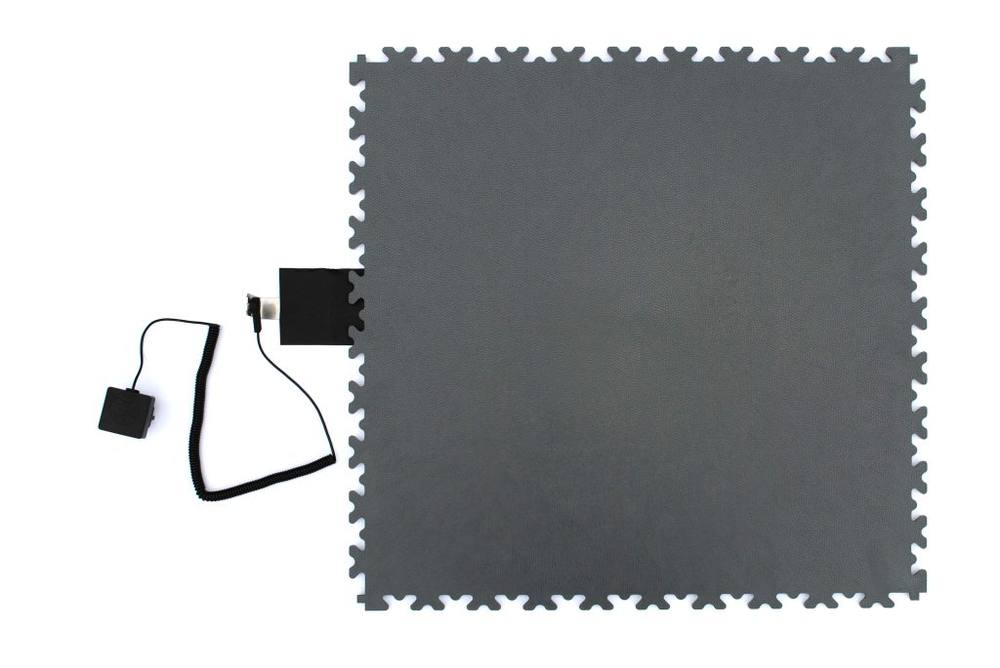
Fortelock delivers a solution for ESD floors in the form of ESD tiles. All Fortelock tiles marked ESD are certified and recommended for environments where ESD may occur. The tiles contain millions of tiny stainless steel fibres that safely conduct electrostatic charge away. In addition, they offer high mechanical resistance that prevents surface damage caused by handling equipment. The tiles can be installed quickly and easily while operations continue uninterrupted, so you incur no additional costs associated with downtime.
The tiles are available in the 510.5 x 510.5 format or the XL format of 653 x 653 mm, and you can choose from 5 colours. You can also opt for ECO tiles, which help protect the environment. The benefits of these tiles have already proven themselves in many European facilities, where they have been in use for several years.
If you have any further questions about ESD tiles, do not hesitate to contact us.
ESD or XL ESD?
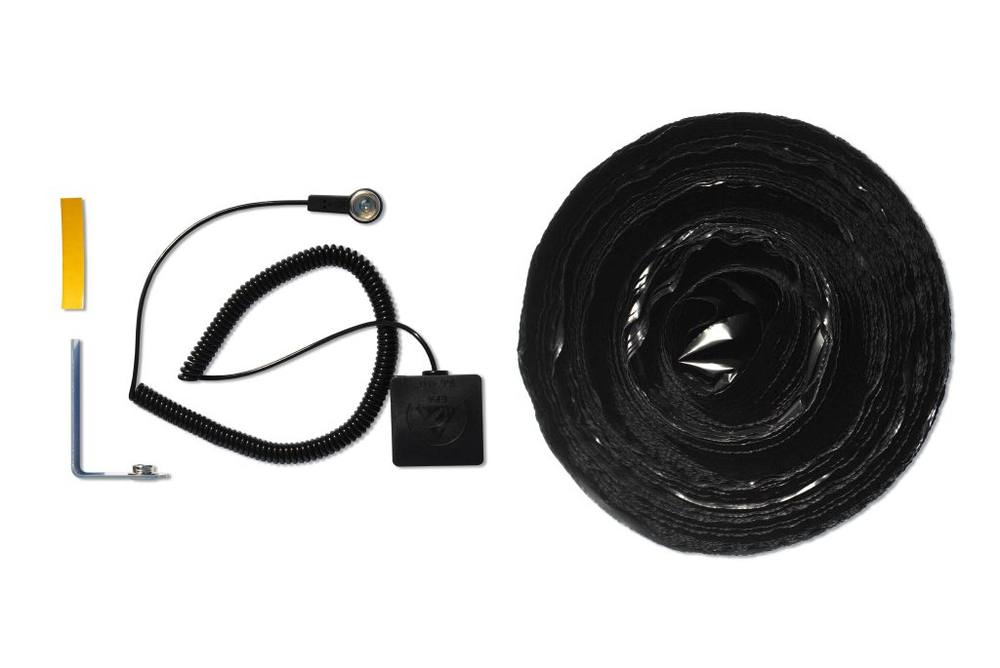
Fortelock offers two ESD ranges. ESD measures 510.5 × 510.5 mm (4 tiles/m²) and is 7 mm thick; it is homogeneous and conductive throughout its full thickness. XL ESD is a large-format tile, 653 × 653 mm (2.5 tiles/m²) and 4 mm thick, designed for areas with medium loads and a level substrate. Both have a vertical resistance below 10⁶ Ω and a body voltage below 100 V. ECO versions made from recycled material are not available for the ESD and XL ESD ranges. For the system to work, conductive tapes and a connection to the building's earthing must always be added.
Frequently asked questions
Why is electrostatic damage to electronics so insidious?


Because it may not show up straight away. An electrostatic discharge can damage a device in such a way that it continues to work and the fault only appears after some time. Just 100 V is enough to erase data from sensitive electronics, while walking on a carpet can charge the body up to 35,000 V. Dealing with the consequences tends to be lengthy and costly.
What protective equipment against ESD is needed?
The basics are ESD gloves, footwear, coats, wrist straps, furniture and flooring. All of them must be certified for ESD environments according to EN 61340-5-1 and must be used together, otherwise the protection is not complete. The floor dissipates the charge from everyone who walks on it in ESD footwear.
How do Fortelock ESD tiles dissipate electrostatic charge?
The tiles contain millions of tiny stainless steel fibres that form a conductive path throughout the material. They pick up the charge from the body via ESD footwear and conduct it to the building's earthing via conductive tapes. The vertical resistance of the tiles is below 10⁶ Ω and the body voltage below 100 V.
Can an ESD floor be installed without interrupting production?
Yes. Fortelock ESD tiles click together and can be installed gradually during operation, so there are no downtime costs. You can even lay them yourself, but conductive tapes and a connection to the building's earthing must be added, and the connection must be made by a qualified electrician.
In which industries is ESD flooring used?
Mainly in the automotive and electrical engineering industries, computing and telecommunications technology, healthcare, laboratories, data centres, electrical substations and explosive environments. According to the manufacturer, companies such as Mercedes, Tesla and Hyundai also rely on Fortelock ESD tiles. You can find examples in our references.
Are Fortelock ESD tiles available in recycled material?
No. ECO versions made from recycled PVC are offered for the standard ranges, such as Industry, Industry Ultra, Invisible and XL, but not for ESD and XL ESD. The conductive tiles are made from 100% PVC, and their conductivity is provided by stainless steel fibres throughout the full thickness of the material.