5. 10. 2019
Flooring for caravans and mobile homes
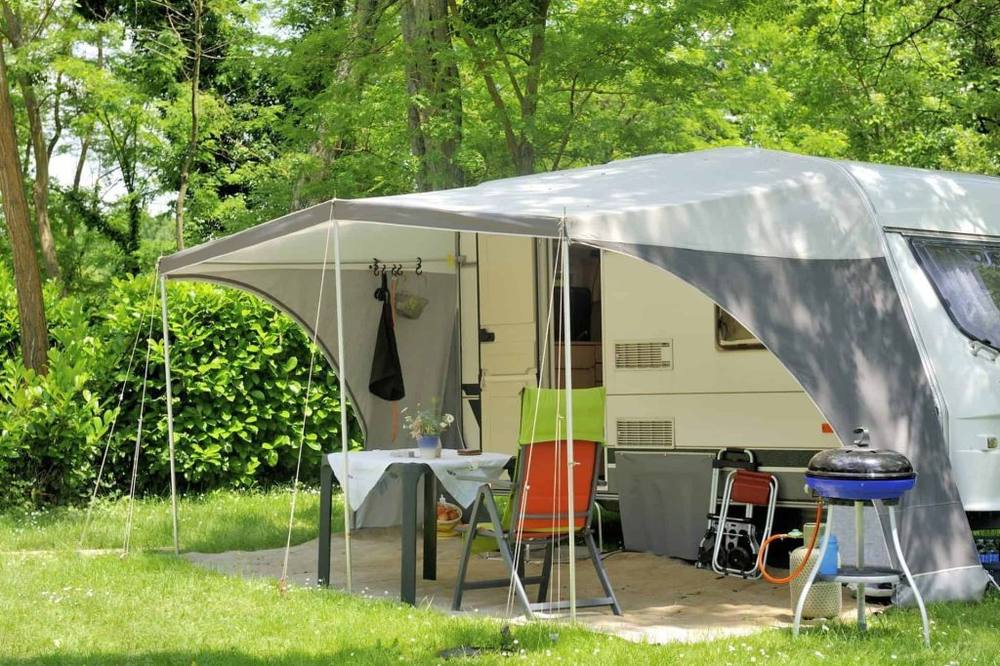
The floor of a caravan is one of the most important insulation elements, and it deserves attention under all circumstances. That is why most owners of caravans and mobile homes give it the highest priority during a renovation. But which flooring option is best? Is it worth insulating with polystyrene, is linoleum a good fit, and what about carpets?
One thing is protecting the underside from the outside. Manufacturers usually fit it with a protective layer against moisture, salt and flying stones, but that layer needs to be renewed from time to time. The other matter is maintaining the floor from the inside. This overview shows the options for cases where you do not need to tear out the entire floor, for example due to rot, but simply want to upgrade its top surface so it lasts longer.
A bare wooden floor is impractical
One option is to keep the classic wooden floor in your caravan. It requires careful care, because moisture could cause it to start rotting. You have to use a breathable coating so the wood can breathe. The problem is that a wooden floor is hard and uncomfortable for prolonged walking, and completely unsuitable if you have children who are used to playing on the ground. A plus is that it is easy to clean, for instance pet hair can simply be swept away. It is a good choice if you are building a retro caravan; in other cases a more modern solution will be better.
If you are facing the repair of an old caravan, reach for a material such as PVC, linoleum or modular flooring.
Carpet is pleasantly soft
If your floor is free of defects that would call for reconstruction and it merely feels cold underfoot, lay area rugs in front of the bed or in other spots. The other option is to cover the entire floor. In any case it is worth paying a little more for the carpet and buying a thicker one with a higher weight, ideally a heavy-duty type. Be prepared, though, that you should not walk on a carpet in shoes. It is not suitable if you have pets, as it would trap too much hair that a vacuum cleaner often cannot cope with. Pine needles brought in from outside are also hard to remove. The advantage is warmth underfoot and a pleasantly soft surface.
Linoleum is easy to maintain
Linoleum is also often used as caravan flooring. Its huge advantage is easy maintenance; you just wipe or sweep it and it is clean. The problem is that it feels cold underfoot. On trips to the summer tropics this does not matter much, but people who take their caravan out in winter too end up buying a carpet anyway. On linoleum you have to walk either in shoes or in slippers so it does not feel cold, and in summer, if you stay barefoot, all the dirt will stick to your feet.
The coldness of linoleum can be improved by insulating the floor. In any case, forget ordinary polystyrene, which soaks up water. You need to get a non-absorbent type, or a classic Mirelon foam underlay. Specialist caravan shops will advise you on what does not absorb moisture.
Fortelock PVC flooring insulates for you
PVC flooring can also be used in caravans and mobile homes. It is ideal for repairing an old caravan, especially for DIY enthusiasts who want to do everything themselves. Installing Fortelock PVC tiles is easy; all you need is a rubber mallet. The pieces can be cut easily so they fit into every nook and cranny. Maintenance is just as simple as with linoleum, but unlike linoleum it offers good insulating properties. Thanks to this, this caravan floor is suitable if you travel with your caravan all year round.
What to watch out for with a wooden subfloor and temperatures
A caravan floor is usually made of wood. The technical data sheet allows installation on OSB, plywood or parquet, provided the subfloor is stable, its moisture content does not exceed 10% and the height difference between boards is no more than 1 mm. Carpet may only be left in place if it is a low-pile, heavy-duty type firmly glued down; for the XL and Invisible ranges it must be removed. A loose-laid floor can be used at air temperatures of +15 to +27 °C; with greater fluctuations, the tiles are glued with PU adhesive. Installation takes place at 18–26 °C after 48 hours of acclimatisation, and a 10 mm expansion gap is left at the walls. The tiles are not intended for outdoor use or for places where the relative humidity is above 75% for long periods.
What flooring for the area in front of the caravan?
The options there are similar. You will not use linoleum here, but carpets and modular flooring will work. With carpets, cleaning is trickier. From time to time you have to take it out and clean it with a jet of water and a cleaning agent. In this case we do not recommend Fortelock tiles outdoors; like all PVC, they do not like the sun and high temperatures. Modular floors such as Fortelock just need to be washed with water and detergent and store away neatly. Folding grids or polyethylene tiles are also a suitable choice.
Everything has its solution and all the options mentioned are viable. Linoleum can be insulated, and with carpet you can place a doormat by the door so that dirt is not carried inside. Everyone simply prefers something different.
Frequently asked questions
What flooring should I choose for a caravan or mobile home?


It depends on how you use the caravan. Wood is hard and sensitive to moisture, carpet is warm but harder to clean, and linoleum is easy to maintain but feels cold. Interlocking PVC tiles combine easy maintenance with thermal insulation and you can lay them yourself, which makes them particularly suitable for year-round use.
Do PVC tiles insulate a caravan better than linoleum?
According to the article, yes: unlike linoleum, Fortelock PVC tiles have good insulating properties. Their thermal conductivity according to EN 12664 is 0.155 W/(m·K), and in this respect PVC is similar to laminate, so the floor does not feel cold. They also dampen noise and vibration.
Can I lay Fortelock tiles outside in front of the caravan as well?
This is not recommended. Fortelock tiles are not intended for outdoor use and their colours are not UV-stable; direct sunlight causes gradual discolouration. The warranty does not cover outdoor use. According to the article, folding grids or polyethylene tiles are better suited for the area in front of a caravan.
How do I cut tiles to fit the nooks of a caravan?
Straight cuts can be made with a snap-off knife, or alternatively a guillotine or jigsaw. A heat gun makes complex cut-outs easier, for example around furniture and wheel arches; always heat the hidden side of the tile. At doors and in corners, a cut tile should have more than half the area of a full tile.
How do you maintain PVC flooring in a caravan?
Just as easily as linoleum, with no waxing or special care. Dirt does not soak into the material; simply sweep and wipe with water and an ordinary detergent. ForteClean cleaners are designed for regular maintenance; do not use solvents or abrasive products, as they damage resilient floor coverings.