14. 12. 2025
Gym flooring: PVC, rubber, or vinyl? How to choose the right one
An underestimated floor means rapid wear, a safety risk and, in the end, unnecessary repair costs. A good choice, on the other hand, will last for years and significantly improve your comfort during training.
In this article we compare the three most commonly used options:
- PVC gym flooring (e.g. Fortelock)
- rubber flooring
- vinyl flooring
We will also look at which one belongs where. There is no single universal solution, but some materials are simply more practical and more durable.
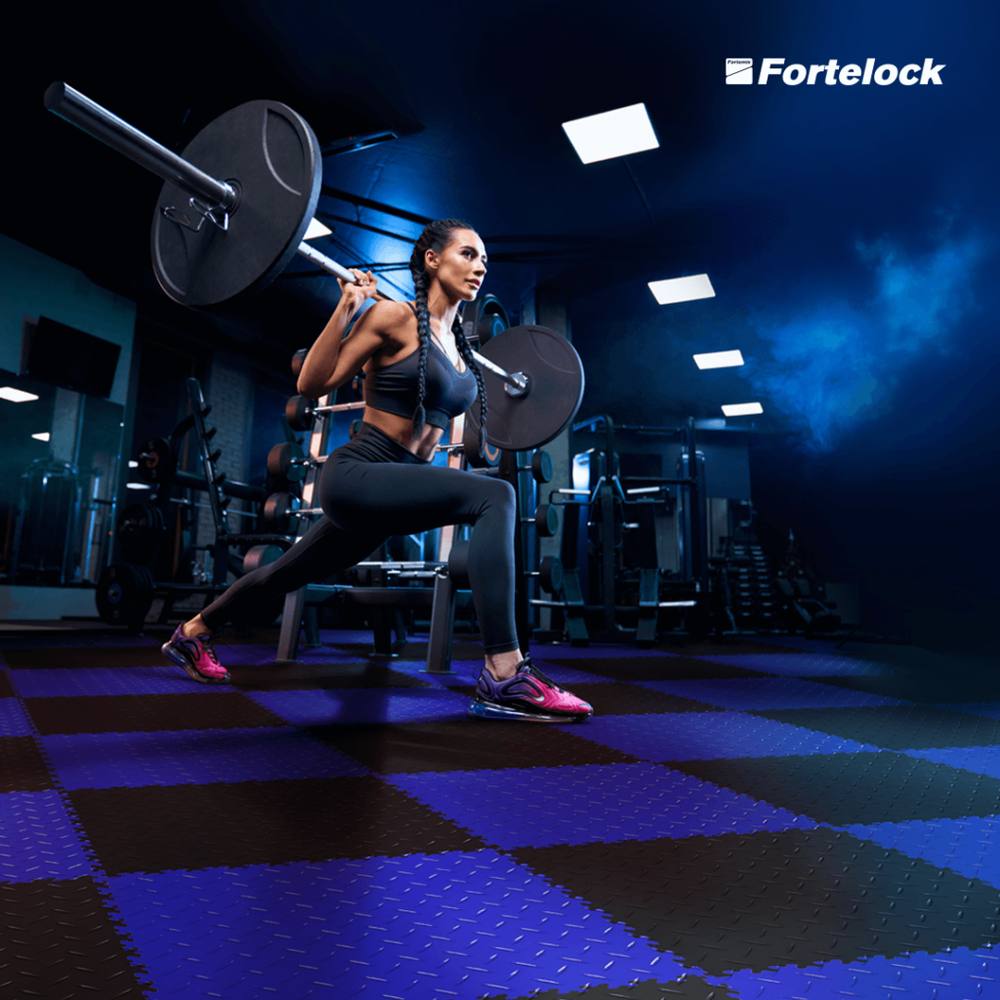
What matters most in gym flooring
Before we compare the materials, it helps to know what to base your choice on. The floor in a gym takes a beating every single day, and an unsuitable material will quickly start to deform, stain, crack or become slippery. The following factors are essential for every type of training and every size of space.
Resistance to impacts and point loads
No fitness space can avoid heavy objects hitting the floor. Kettlebells or dumbbells slip out of your hands before you know it, and strength machines concentrate dozens of kilograms into a few small points. If the material cannot absorb such loads, it will start to deform, crack or develop dents.
Gym flooring therefore needs:
- high compressive strength
- flexibility that prevents cracking
- impact damping to protect the subfloor
Slip resistance: essential for dynamic training
The floor in a gym is rarely completely dry. People touch the floor with sweaty hands, water drips from bottles, chalk is used everywhere, and people train in sneakers that often bring in moisture from outside.
Slip resistance is essential in a gym because the surface has to keep you stable even during dynamic movements. Whether it is quick changes of direction during HIIT training, jumps and landings, bodyweight exercises or barbell work, your foot must not slip on the floor even when there is sweat or spilled water on it. A slippery material poses an unnecessary risk to clients and trainers alike and often leads to injuries that could have been prevented simply by choosing the right surface.
Hygiene and easy maintenance
Fitness zones are among the spaces with the highest concentration of sweat, dust, rubber from shoe soles and disinfectant. If the material is not 100% non-absorbent, it will eventually start to smell, stain and harbour bacteria.
The ideal gym floor:
- does not absorb liquids
- is not damaged by common cleaning products
- has no pores where dirt could accumulate
- can be mopped and dried quickly
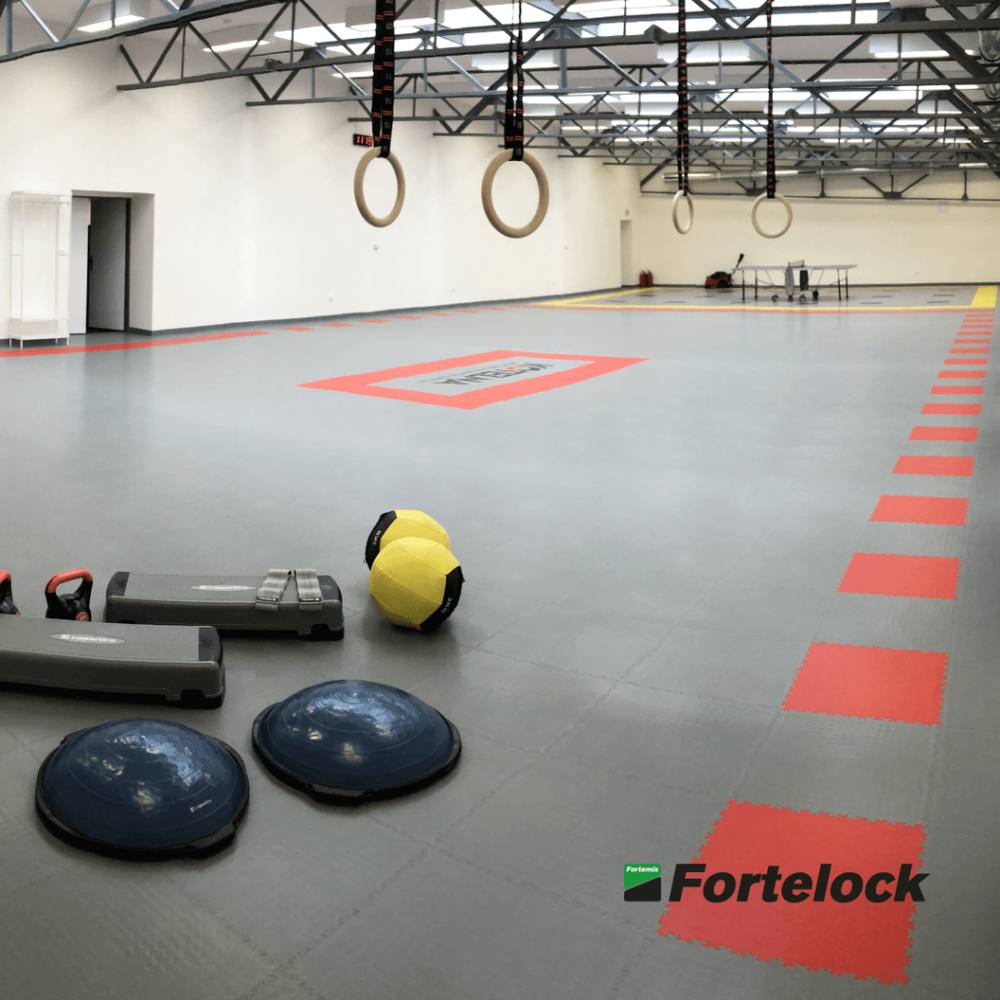
Noise and vibration damping
In home gyms it is a necessity so you do not disturb the neighbours, and in commercial gyms it helps keep the acoustics comfortable. It matters most where training is intense: during CrossFit, weightlifting and rack work, but also in cardio zones where treadmills and elliptical trainers create continuous vibrations.
If the floor cannot handle damping, the noise travels through the whole building, equipment wears out faster and training is less comfortable. A quality gym floor therefore absorbs most of the impacts and vibrations and significantly improves the environment for both training and the surroundings.
PVC, rubber, or vinyl? How they perform in practice
Choosing gym flooring may seem simple at first glance, but each material behaves completely differently. One handles impacts brilliantly, another feels pleasant underfoot or is easy to clean. And one type may be perfect for a deadlift zone while another only suits studio classes. To make it easier to find your way around, let’s take a closer look at the three most commonly used materials and how they perform in real-world operation.
Fortelock interlocking PVC floor tiles: a versatile and durable solution
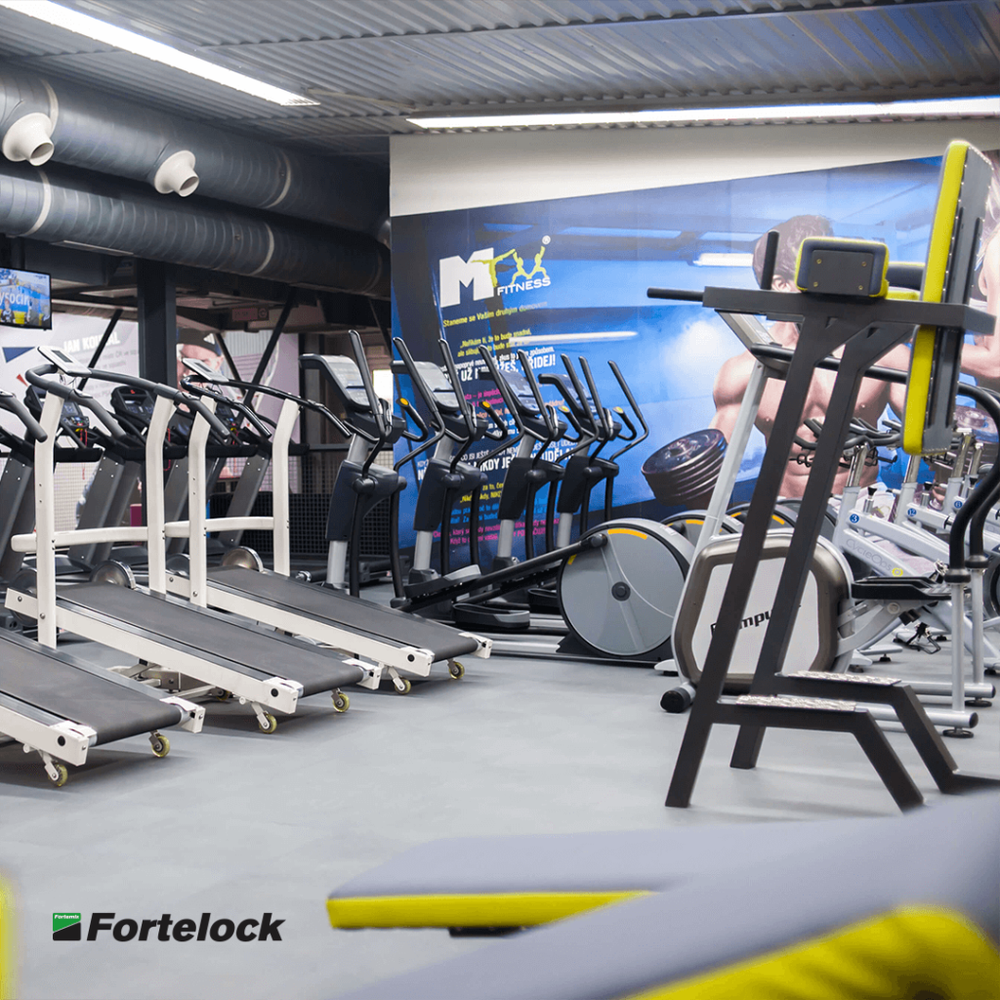
PVC tiles such as Fortelock are one of the most versatile choices today. They withstand long-term point loads from machines, dampen footsteps and lighter impacts well, are non-absorbent and, above all, allow quick installation without gluing. Just click them together and the floor is ready to use immediately.
What makes them so practical?
PVC is flexible, so it does not crack. At the same time it is strong, so it does not deform under machines. The closed surface lets in no water or sweat, so it does not get dirty as quickly as vinyl. And the interlocking system allows individual tiles to be replaced without tearing up the whole floor.
Advantages of PVC for gyms
- Handles the heavy load of machines as well as everyday traffic.
- Withstands even repeated impacts from dumbbells.
- Does not absorb sweat, water or disinfectant.
- The textured surface ensures stability even during dynamic training.
- Installation is quick, dry and can be done zone by zone.
- Local repairs take just a few minutes.
- Dampens footsteps and significantly reduces noise.
Disadvantages of PVC
- For extreme weightlifting zones, it is advisable to add rubber mats.
Where PVC makes the most sense
- commercial fitness centres
- strength and functional zones
- home gyms
- cardio areas
- high-traffic spaces
Rubber flooring: impact-resistant but less versatile
Rubber flooring is excellent where heavy weights are used regularly. Its main advantages are impact damping and noise reduction, which makes it the ideal choice for weightlifting zones or CrossFit boxes.
It does have limitations, though: it is not as visually versatile, it sometimes smells, and its installation can be more demanding due to the weight of the material.
Advantages of rubber flooring
- Excellent damping of both impacts and noise.
- Slip-resistant even at high humidity or when you sweat.
- Lasts extremely long even under intensive use.
Disadvantages of rubber
- It is heavy and difficult to handle.
- Its porous structure makes it harder to keep really clean.
- It does not always look aesthetically uniform.
- It can give off a typical rubbery smell.
Where rubber makes the most sense
- deadlift zones, weightlifting
- CrossFit
- dedicated strength corners
- areas with extremely heavy weights
Vinyl flooring: comfortable and attractive, but not for the gym
Vinyl is pleasant underfoot, can be matched to the interior and is easy to maintain. It is ideal for recreational exercise or studio classes. However, it does not belong under heavy machines, let alone where weights are dropped. It can tear on impact and dent under point loads. And repairing it often means replacing a large part of the floor.
Advantages of vinyl
- A pleasantly soft surface suitable for barefoot exercise.
- A wide choice of designs (wood, stone, solid colours).
- Easy routine maintenance and quiet movement.
Disadvantages of vinyl
- Cannot withstand dropped weights or extreme loads.
- Point loads from machines can leave permanent dents.
- Local repairs are difficult or impossible.
- It often requires gluing, which means downtime.
Where vinyl works best
- yoga or Pilates
- studio classes
- light home workouts
Why PVC flooring is the ideal solution for fitness
Each material has its strengths: rubber is unbeatable at damping impacts, while vinyl offers attractive designs. But when you take into account safety, durability, hygiene, easy maintenance and quick installation, PVC clearly comes out on top for most fitness spaces.
PVC handles heavy loads as well as everyday impacts
Rubber protects best against extreme impacts but is not practical for covering the entire area, and vinyl can only handle lighter exercise.
PVC combines the advantages of both: it withstands heavy machines, racks, repeated impacts of lighter dumbbells and intense movement without permanent dents or cracks. Thanks to its natural flexibility it adapts to the load and keeps its shape over the long term.
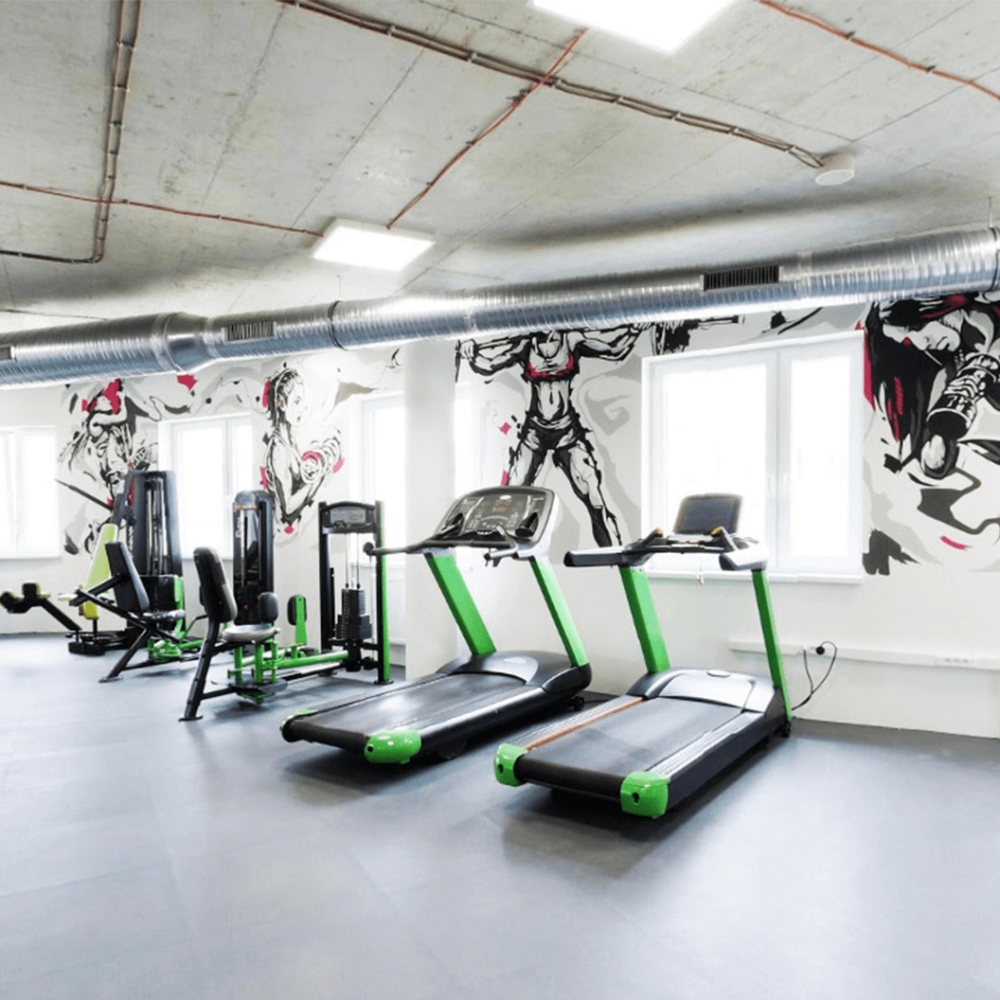
It is hygienic and easy to clean
Compared to rubber, PVC is far less porous. It does not absorb sweat, water or disinfectant, so it:
- does not smell
- does not harbour bacteria
- looks clean again after mopping
Vinyl is easy to maintain, but it cannot handle heavy equipment. Here PVC offers the best balance between hygiene and durability.
It is slip-resistant even when damp
PVC gym tiles have a surface texture that grips your foot even when the floor is damp with sweat or water from a bottle. Rubber flooring is also non-slip, but PVC has the advantage that its slip resistance remains stable even with frequent cleaning and the use of disinfectant. Vinyl, on the other hand, can become slippery at higher humidity.
Installation is quick and without downtime
With rubber and vinyl floors you usually cannot avoid gluing, heavy handling or completely emptying the space. That means downtime and restricted operation, which is almost unrealistic in many gyms or company premises.
PVC tiles work completely differently. They are laid dry, simply click together and can be fully loaded immediately. You do not have to close the whole room, mill the subfloor or wait for anything to cure. If you do not have time to lay the entire floor in one day, you can easily do just a section and continue the next day.
The option of local repairs saves money and nerves
When something gets damaged on a vinyl floor, it usually means peeling up a large part of the floor and laying it again. With rubber tiles, a visible transition often remains after replacement, because the new piece has a slightly different shade or “settles” a little differently.
With PVC tiles it is much simpler. If one tile gets scratched or damaged, you simply click it out and put a new one in its place. Done in a few minutes, with no demolition, no downtime and no unexpected costs. And in day-to-day operation that is a huge relief.
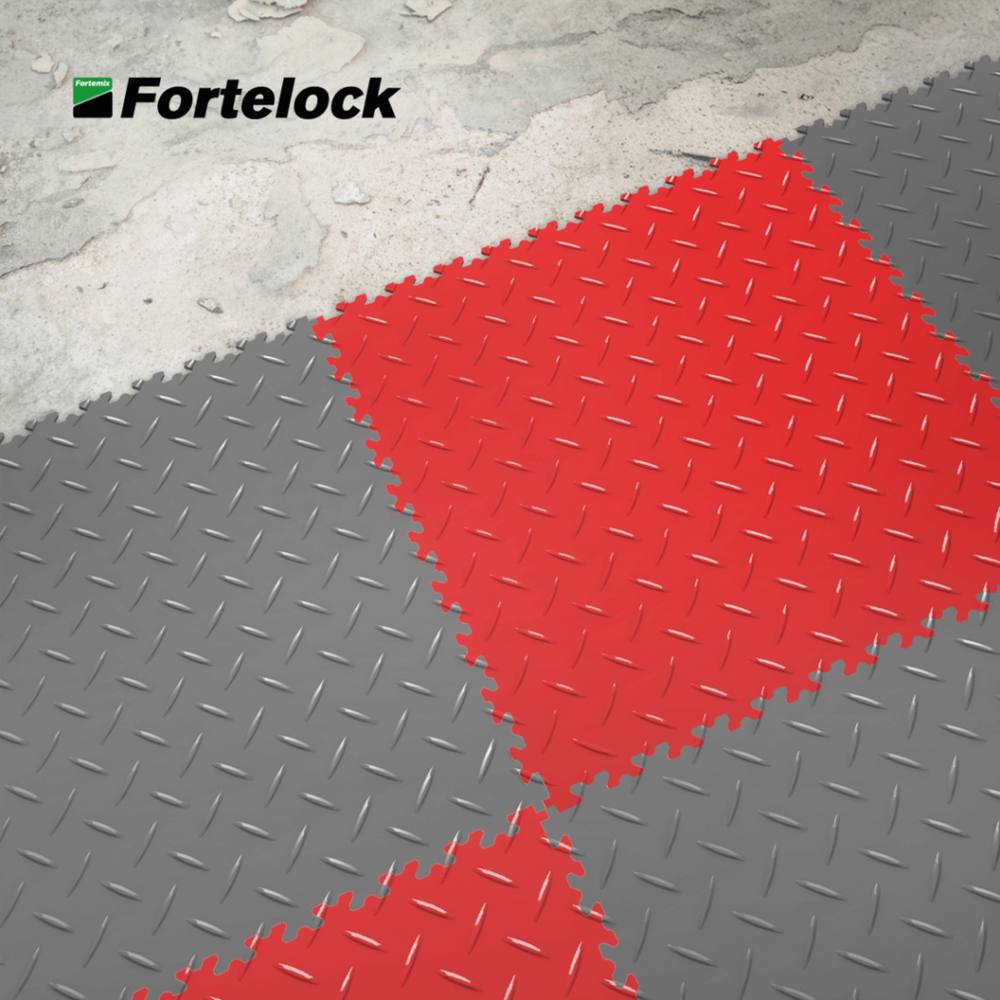
The best types of Fortelock tiles for the gym
Fortelock offers several ranges of interlocking PVC tiles that differ in load capacity, format and appearance. The basic construction is always the same (that is, durable, hygienic, non-absorbent and stable), but the individual types are better suited to different fitness zones. This means you can choose exactly the solution that matches the intensity of training and the character of the space.
Fortelock Industry: maximum durability for heavy machines
The Industry range is the most common choice for heavy-duty fitness spaces. It has a massive construction that easily withstands long-term point loads from racks, strength towers or cardio machines. Thanks to its stable locks it does not deform even under treadmill vibrations, and the closed surface prevents sweat or spilled drinks from soaking in.
Where it fits:
- strength zones with heavy machines
- areas with barbell racks
- cardio sections with treadmills and elliptical trainers
- functional training with frequent impacts of heavy equipment
- home gyms with above-average loads
Fortelock Invisible: Industry properties with an elegant look
Invisible offers high durability, just like the Industry range, so it copes with heavy machines and intensive use. The difference is in the appearance: the special hidden-lock construction creates a compact, almost seamless surface once laid. That makes it ideal wherever sporting function meets a representative look.
Where it fits:
- premium fitness centres
- group studios and functional zones with higher traffic
- fitness equipment showrooms
- spaces where appearance matters as much as technical parameters
Fortelock XL: covering large areas quickly with a minimum of joints
Fortelock XL has a larger tile format, so it is laid faster and creates a floor with fewer joints. Technically it behaves much like Industry (resistance to loads, moisture and everyday impacts), but thanks to the larger surface the whole floor looks visually more compact and cleaning is even easier.
Where it fits:
- sports halls and large training rooms
- spacious functional zones
- group classes (aerobics, circuit training, HIIT)
- large home gyms where quick installation is an advantage
Fortelock ranges for gyms: key specifications at a glance
All three recommended ranges are made of 100% PVC with R10 slip resistance according to DIN 51130. Industry is 7 mm thick and measures 510.5 × 510.5 mm including the lock, with 4 tiles per square metre. Invisible is 6.7 mm thick and measures 468 × 468 mm; once laid, the joints run in straight lines and the surface looks like a single continuous area. XL is 4 mm thick and measures 653 × 653 mm, so 2.5 tiles per square metre are enough. For areas where heavy dumbbells are dropped, the manufacturer recommends adding mats. A tile sample will show you the colour and surface, and the online visualiser how the floor will look in your room.
Frequently asked questions
Is PVC, rubber or vinyl better for a gym?


For most fitness spaces, interlocking PVC tiles are the most versatile option. They handle the load of machines, do not absorb sweat and are laid without gluing. Rubber is better at damping extreme impacts, which makes it a good addition for weightlifting zones. Vinyl is only suitable for lighter exercise and studio classes.
Which Fortelock floor is suitable for a home gym?
For a home gym with loads from dumbbells and racks, Fortelock Industry is the most common choice, as it withstands long-term point loads from machines. For a larger home gym where quick installation is an advantage, the large-format XL is a good fit. You will find more tips in the article What to consider when setting up a home gym.
Can a PVC gym floor be disinfected?
Yes, the closed surface of PVC tiles does not absorb disinfectant, and slip resistance remains stable even with frequent cleaning. For routine cleaning, water with detergent or Forteclean Daily Cleaner is sufficient; do not use solvents or abrasive pads. The floor can be protected against discolouration from disinfectants with the Dr. Schutz PU Anticolor finish.
Does PVC flooring reduce noise in a gym?
Yes, PVC tiles dampen footsteps, noise and machine vibrations, which is particularly valued by gyms in buildings with neighbours. For the heaviest dumbbell drops, which generate the most noise, adding rubber mats is recommended. They also protect the tile surface from scratches.
Can gym flooring be laid in stages without closing the gym?
Yes, the tiles are laid dry, click together and the floor can be used straight away. You can lay it zone by zone, for example part of the room one day and the rest the next, with no gluing, grinding or waiting for anything to cure. The manufacturer states an installation rate of up to 30 m² per hour.