18. 4. 2026
Flooring for a Multipurpose Hall: How to Choose a Universal Solution
What the floor in a multipurpose hall must deliver
Unlike specialised sports facilities or fitness centres, there is no single clear brief here. A multipurpose hall is, by definition, a space that constantly adapts to different activities. The floor therefore cannot be “ideal” for just one type of use and has to work across all the scenarios that alternate in the space.
Different types of movement
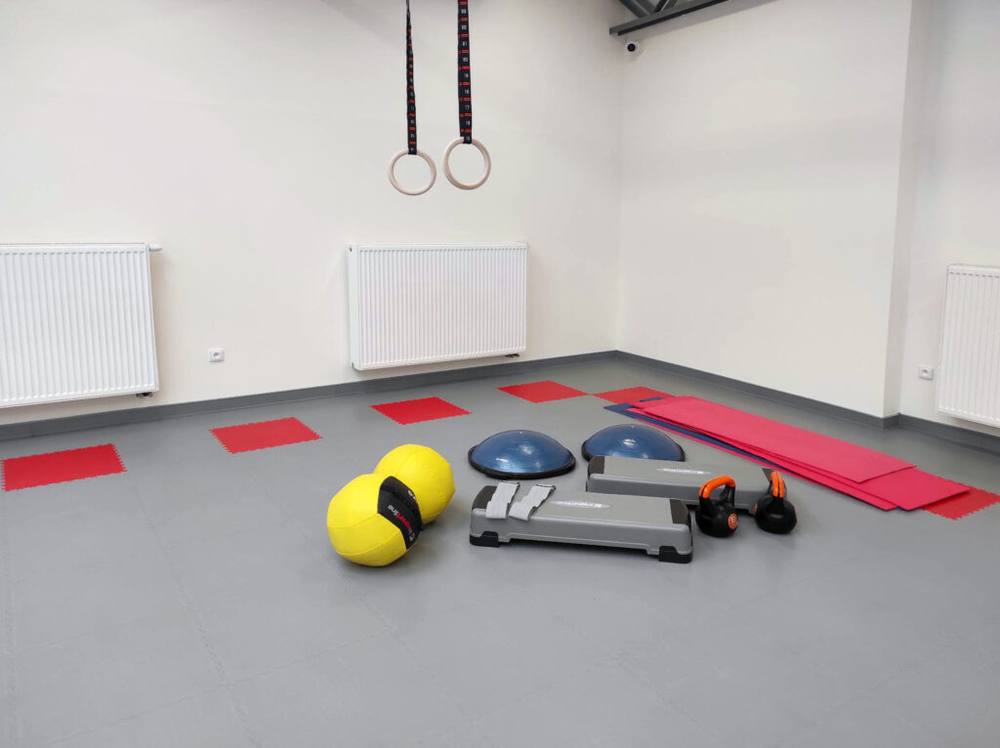
Completely different activities take turns in a single hall over the course of a day or a week. A dynamic workout may take place in the morning, a yoga class in the afternoon and a lecture or a social event in the evening. Each of these types of use places different demands on the surface.
The floor must handle:
- quick changes of direction and dynamic movements during HIIT or dance
- calmer barefoot exercise, where comfort and stability matter
- the everyday movement of large numbers of people without the risk of slipping
Balance is key. The surface must not be too hard and unpleasant underfoot, nor soft and unstable. And at the same time, it must provide sure footing both in sports shoes and barefoot.
Loads from equipment and furniture
A multipurpose hall is often rearranged according to current needs. One moment the space is empty for a group class, the next it fills up with chairs, tables or technical equipment. Constantly moving equipment around is therefore a normal part of everyday operation.
This means the floor faces:
- point loads from the legs of tables, stands or structures
- the risk of scratching when furniture is moved
- repeated stress in different places
The floor must therefore withstand not only sports loads, but also everyday operational handling. A material that is suitable for exercise but cannot cope with chairs or technical equipment being moved around will not hold up in such a space in the long run.
Easy maintenance and hygiene
Large numbers of people pass through a multipurpose hall. With them come sweat, dust, dirt from outside and minor mishaps such as spilled water, drinks or leftovers from equipment. The floor should be designed so that its maintenance is neither complicated nor time-consuming. The ideal surface is one that:
- does not absorb dirt and does not develop permanent stains
- can be quickly mopped and dried
- still looks good even after frequent cleaning
Aesthetics and a representative look
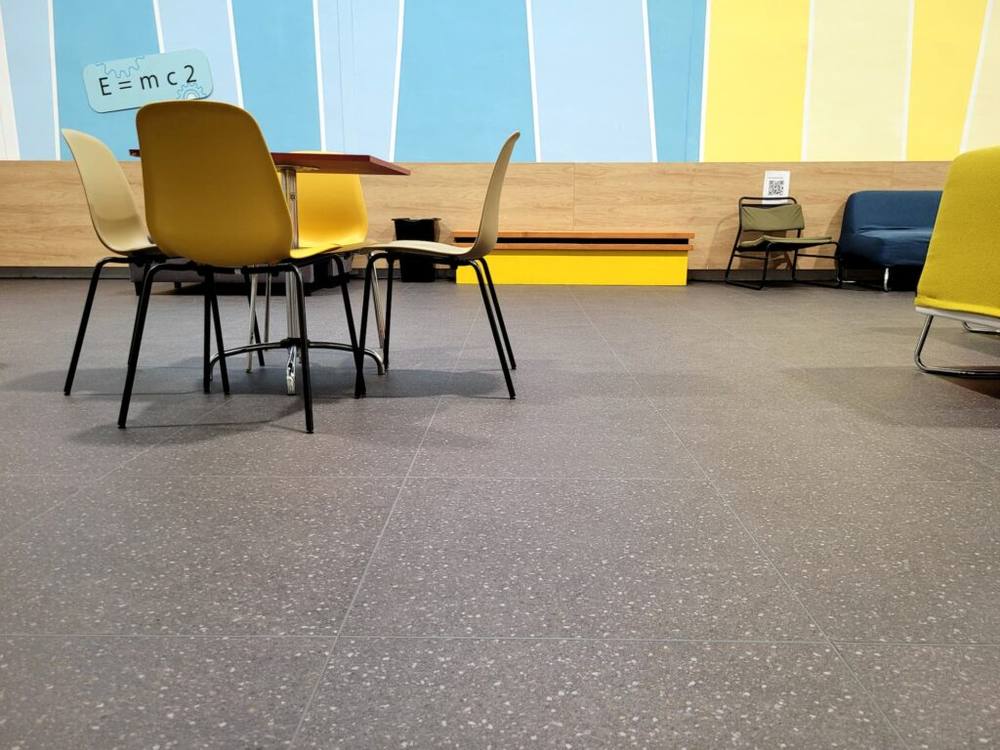
A multipurpose hall is not just a technical space. It often serves the public as well, hosting courses, workshops, lectures or corporate events.
The floor should therefore:
- look clean and well kept even during everyday operation
- not develop streaks, stains or visually distracting patches
- fit into the overall design of the space
It also matters a great deal that the floor does not look too “technical” or industrial. The ideal solution combines functionality with visual lightness and allows the space to feel pleasant both during sports and at social events.
What floors are used in multipurpose halls
There are several types of flooring on the market that are most commonly used in multipurpose halls. Each of them has its strengths, but also limits that quickly become apparent in such a variable space.
Wooden sports floors
Wooden floors are a classic you know from sports halls. They are pleasant to move on, absorb impacts well and provide comfort both during sports and barefoot exercise. That is exactly why they are often used in gyms or halls focused primarily on sport.
In multipurpose use, however, they run into several limitations. They are more expensive, require regular maintenance and are sensitive to moisture. Frequent moving of furniture or technical equipment can lead to scratches and surface wear. In the long term, they therefore demand more care than is always realistic in everyday operation.
Vinyl floors
Vinyl is among the most common choices thanks to its appearance and pleasant feel underfoot. It offers a wide range of decors, so it easily adapts to the design of the space. For calmer activities such as yoga, Pilates or smaller group classes, it works very well.
The problem arises the moment the space starts to be loaded more heavily. When chairs, tables or heavier equipment are moved, indentations or permanent deformations can form on the surface. It reacts similarly to point loads under furniture legs or stands. Vinyl also usually requires a quality subfloor and gluing, which complicates both installation and any repairs.
Rubber floors
Rubber is known for its durability and excellent slip resistance. It works great in sports spaces with intense movement, impacts or weight training. It is resistant to mechanical damage and absorbs impacts well.
In multipurpose halls, however, it often runs into a different problem – aesthetics. Rubber floors tend to look technical and heavy-handed, which is not ideal in a space that is also meant to serve the public, workshops or social events. That is exactly why a more universal alternative is often sought for these spaces – one that offers similar durability but a more understated and aesthetically pleasing look.
Why choose PVC tiles for a multipurpose hall
Finding a floor for a space that has no single fixed use is always a bit of a strategic game. Classic materials often hit their limits in such a regime – wood is prone to moisture and scratching, rubber does not exactly look representative, and vinyl and poured floors are difficult to repair when damaged. More and more owners of multipurpose halls are therefore opting for modular PVC tiles.
Their main magic does not lie in beating everything else in one specific discipline, but in how brilliantly they manage to combine all of these roles. They are durable enough to handle heavy tables and chairs being moved, flexible enough to protect joints during movement, and at the same time they look representative. In short, they are the ideal choice for anyone who wants a floor they do not have to worry about every time someone walks into the hall in sharp-heeled shoes.
Durability in everyday operation and during moves
A major advantage is their resistance to loads and equipment moves. In a multipurpose hall, furniture and equipment are frequently moved, stacked and rearranged. The floor must therefore be ready for point loads from the legs of tables, chairs, stands or technical equipment, and at the same time must not be prone to scratches and indentations. PVC tiles cope with this type of operation far better than softer surfaces, which deform under pressure or quickly show visible signs of use.
An anti-slip, stable surface for different types of activities
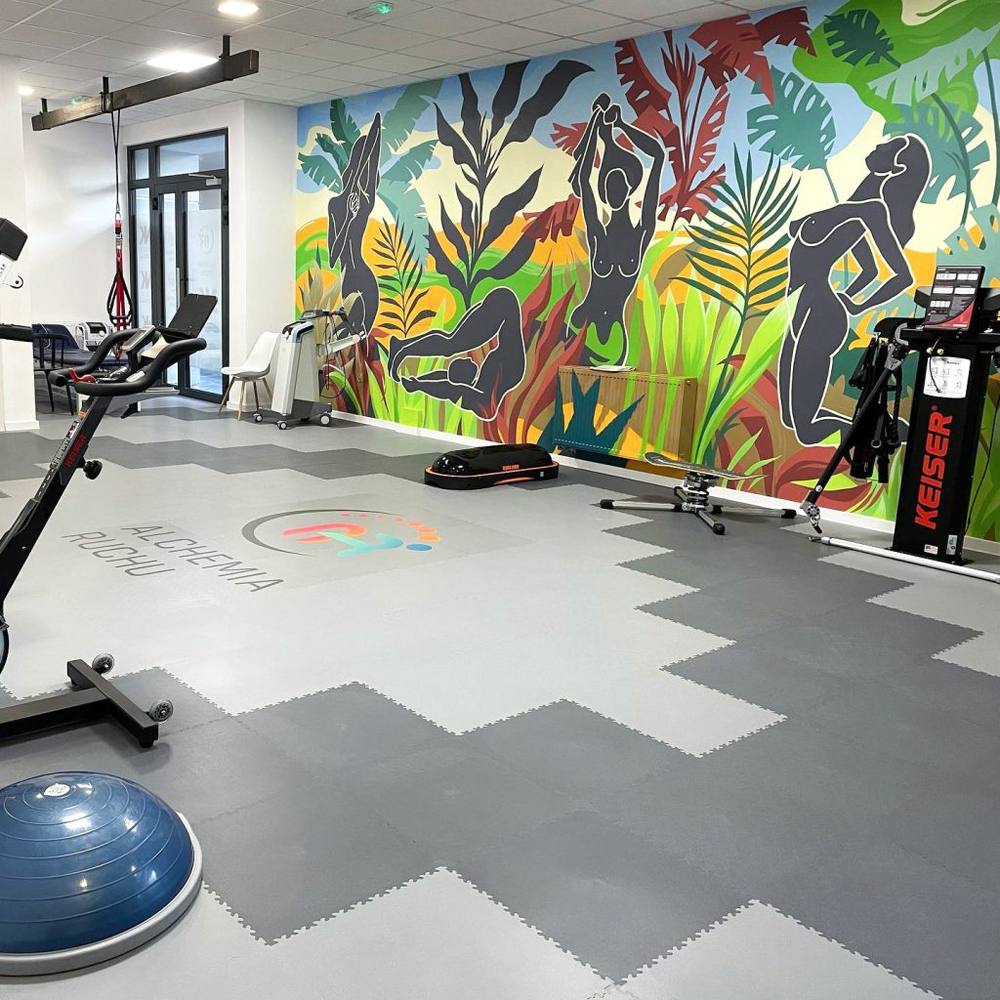
Stability and slip resistance are also important. In a hall where dynamic classes take place one day and a calmer programme or a social event the next, the floor must provide sure footing in a variety of situations.
PVC tiles offer a stable surface that does not slip during quick changes of direction, yet is comfortable enough for calmer activities as well. That is exactly the kind of versatility that makes sense in a multipurpose hall.
Easy maintenance
Easy maintenance is another big benefit. In a space where several groups of people take turns, it is important that the floor can be cleaned quickly and keeps looking good over the long term. PVC has a closed surface, so it does not absorb dirt, does not stain as easily as other materials, and looks clean again after routine cleaning. That is practical not only from a hygiene perspective, but also for the overall impression of the space.
Fast installation and simple repairs
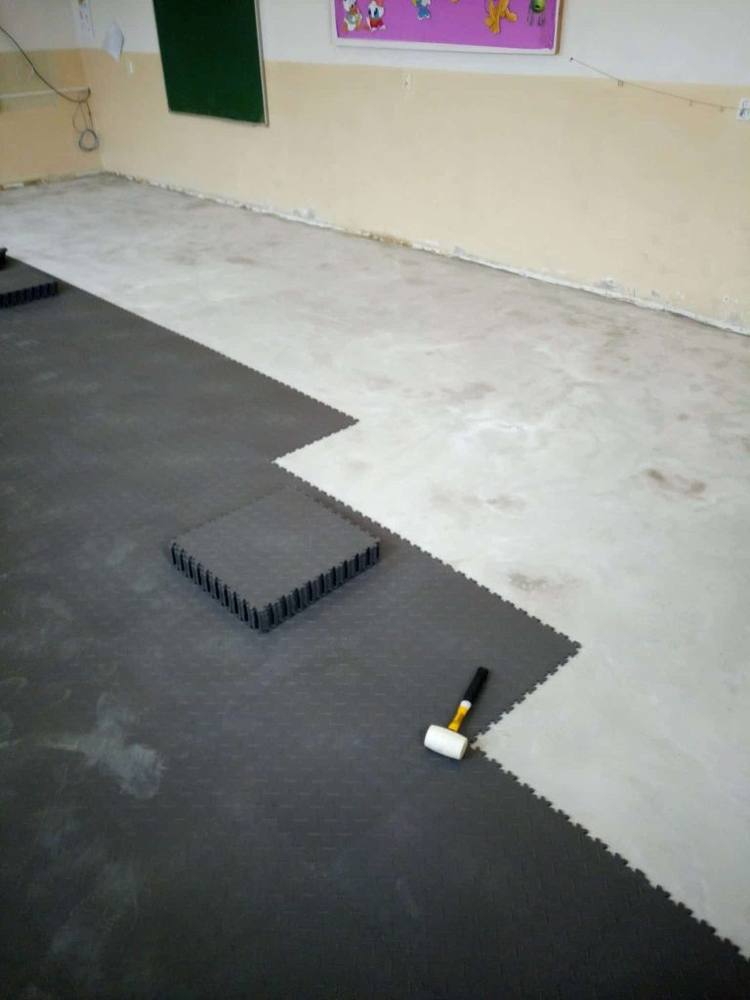
The installation itself and subsequent repairs are practical too. The modular system allows fast installation without complicated work, and in the event of damage there is no need to deal with the entire area. If only one part gets damaged over time, the specific tile can be replaced without having to take the whole hall apart. In operations that cannot afford long downtimes, that is a very strong advantage.
A universal look for sports and social events
And finally, there is the look. A multipurpose hall often serves not only as a sports space, but also as a venue for the public, community events or corporate use. The floor must therefore look clean, well kept and sufficiently neutral to suit different types of programme.
PVC tiles offer a variable appearance and make it possible to create a space that looks neither too sporty nor too technical. That is precisely where their strength lies – they are not the best for just one specific activity, but perform reliably across the entire spectrum of uses.
Which Fortelock tile types to choose for a multipurpose hall?
If the choice falls on PVC tiles, it is good to know that Fortelock offers several variants that differ both in technical parameters and in appearance. For multipurpose halls, the decision usually comes down to these three paths:
Fortelock Invisible
For halls that serve representative purposes, conferences or social events, the Invisible range is the clear choice. Its main advantage is its hidden joints. Once assembled, the tiles form a compact surface where the joints are almost invisible. As a result, the hall does not look like a gym, but like a modern interior. And yet it retains all the durability of an industrial floor.
Fortelock Industry
If the hall is dominated by demanding training, work with heavy equipment, or heavy staging and technical gear is frequently moved around, go for the Industry range. These tiles are designed for the highest loads. They have extremely strong locks that ensure the floor does not move even during the most dynamic movements.
Fortelock Business for a premium look
If you want the hall to look luxurious (for example in hotel spaces), there are variants with wood or stone decors that combine a durable PVC core with a visually attractive surface. It is the path for those who do not want to give up the aesthetic impression, but need the practicality and durability of PVC tiles.
Frequently asked questions
What flooring should I choose for a multipurpose hall or function room?


Modular PVC tiles are a versatile choice. They can handle point loads from furniture as well as dynamic movement, do not absorb dirt, and a damaged piece can be replaced without taking the whole floor apart. Invisible with its hidden lock suits representative events, Industry is for demanding exercise and heavy equipment, and Business offers a premium wood or stone look.
Is a PVC floor in a hall slip-resistant during exercise too?
Yes. Industry, Industry Ultra, Invisible and XL tiles have a slip resistance of R10 according to DIN 51130, and Business R10 in the heterogeneous version and R9 in the homogeneous one. According to the manufacturer, the surface provides grip even with dynamic movement, sweat and increased humidity. A comparison with rubber and vinyl is offered in the article Gym flooring: PVC, rubber or vinyl?
Will a dropped barbell damage PVC tiles in a hall?
A heavy barbell dropped from a greater height can leave minor scratches, so mats are recommended for such heavily stressed areas. If a tile is nevertheless damaged, it is taken out and replaced with a new one without dismantling the floor. How to handle a free-weights zone is described in the article A CrossFit gym floor that can withstand barbell drops.
How can I protect a hall floor when rearranging chairs and tables?
Put PVC or PE protectors on furniture legs rather than rubber caps, and lift heavy equipment instead of dragging it. Sharp objects, small stones and sand can scratch the surface, so it pays to keep the floor clean. Chairs on castors should have type W castors. Resistance to heels and castors is covered in the article A floor that withstands heels and office chair castors.
Can a hall floor be laid without a long shutdown?
Yes. Fortelock tiles are laid without glue or drying time, gradually and in sections, so the whole space does not need to be cleared. For large areas over 100 m², Fortemix can handle the installation, including fitting skirting boards and deep cleaning after completion. You will find details on the installation service page.
How can I choose between Invisible, Industry and Business before buying?
The surest way is to try the tiles directly in the hall. Fortemix lends up to 5 m² of tiles for one month, so you can check movement, furniture rearrangements and the look in real operation. Colour and surface can also be compared on a free 8 × 8 cm sample. The conditions are described on the tile loan page.