21. 10. 2021
Flooring for tyre shops
Do you own a tyre shop? Are you thinking about renovating it? Wondering which flooring to choose? If so, we'll help you decide! We make floors tailored to the demanding conditions of a tyre shop. Heavy loads, easy maintenance, resistance to chemicals – these are the requirements such a floor should meet.
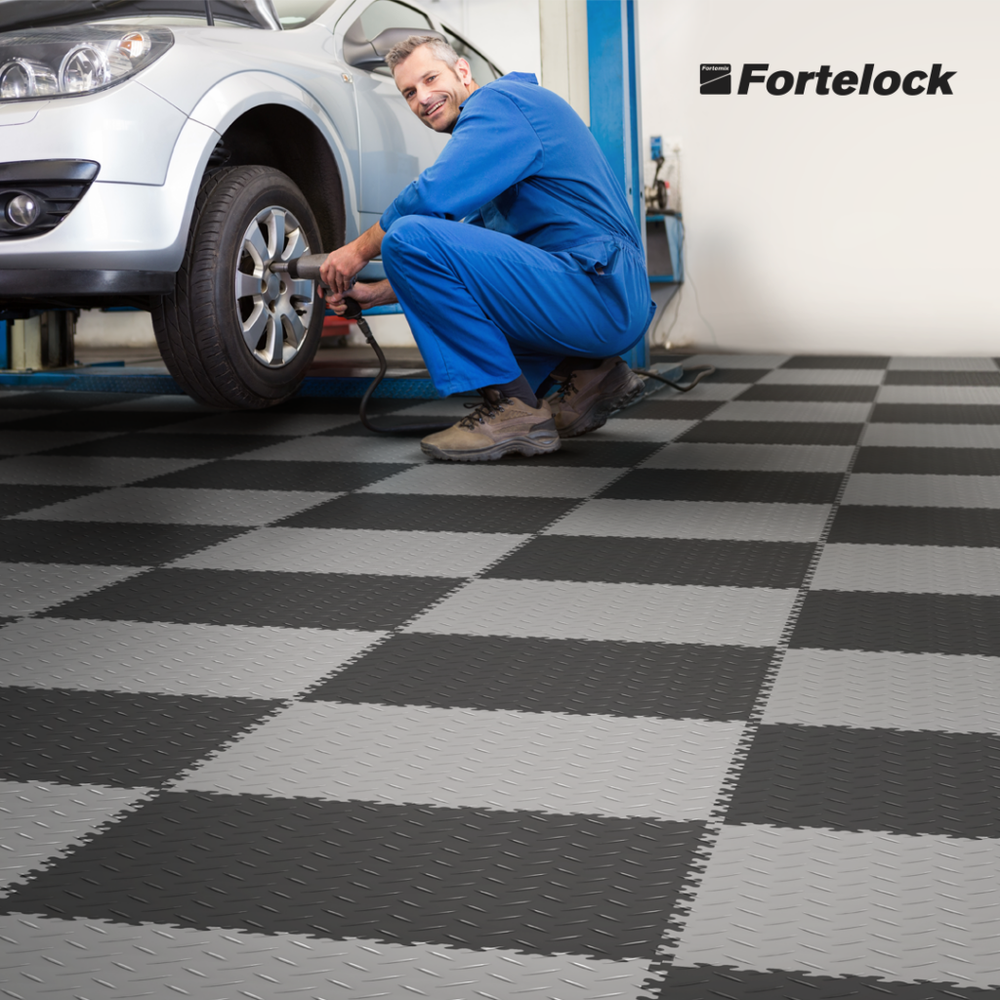
Let's take a look at the options available to tyre shop owners
In most tyre shops we see concrete flooring. People are often convinced that concrete can withstand anything. In some operations that may be true, but under the heavy, frequent loads of a tyre shop, cracks appear in a concrete floor over time. These cracks keep growing and, apart from looking unsightly, cause problems with maintenance and cleaning. The floor is also ruined by spilled chemicals, oils or fuels, and a dropped hammer can chip off a piece of concrete.
Another option is conventional tiling. However, compared with concrete flooring it does not fare much better. Maintenance, durability and the installation itself are rather drawbacks. The tiles crack and, over time, crumble and come loose.
Fortelock Industry tiles differ from the previous types of flooring above all thanks to their easy and quick installation, which anyone can manage on their own. There is therefore no need to interrupt operations, which saves money and also removes the cost of external installation contractors. You don't have to laboriously remove or modify the original subfloor. If the floor is level, it is enough to sweep it and clear away dirt before installation.
The material used and the special manufacturing technology ensure that the tiles are not damaged by the regular loads of vehicles or the specialist equipment of tyre shops. The floor also withstands short-term exposure to chemicals, which do not soak into the material. The anti-slip patterns and insulating function of the tiles make work more pleasant than other types of flooring and also reduce noise.
You will also be pleased by the modern design. You can choose from several patterns and colours. You combine the tiles to suit your own taste and can thus create colour-coded work areas or safety zones.
We stand behind the quality and durability of our floor and provide a warranty of up to 12 years on it.
I WANT A FLOORING SAMPLETyre marks and how to prevent them
Tyres can leave marks on the floor. According to the manufacturer, this is not damage to the material; the floor is neither degraded nor deformed. The technical data sheet explains that some tyres and wheels create brown stains through a reaction between the antioxidant 6PPD and the PVC plasticiser, and dark rubber behaves in a similar way after prolonged contact. A two-component PU sealing coat, such as Dr. Schutz PU Anticolor, is recommended as protection. Fortemix offers this treatment as a protective coating service. It also helps to avoid spinning the wheels on the spot and not to leave cars standing on the tiles for longer than necessary.
Frequently asked questions
What is the best flooring for a tyre shop?


For tyre shops, the manufacturer recommends the Fortelock Industry range. It is tested for traffic from cars and handling equipment with tyres up to 6,600 kg, resists engine oil and brake fluid, and has an R10 slip resistance rating. A damaged tile can be replaced in a few minutes without taking the floor apart.
Can a tyre shop floor be laid without closing the business?
Yes. The tiles are laid in sections, so the workshop can keep running and only individual bays are cleared one at a time. Installation involves no gluing, no drying and no downtime, and the finished section can be used straight away. So there is no need to clear the whole space at once.
Does the subfloor in a tyre shop need to be prepared before installation?
Only if it does not meet the basic requirements. The subfloor must be firm and level: high spots of more than 7 mm over 2 m need to be ground down, and cracks wider than 4 mm must be filled. Concrete should not have a moisture content above 3.5%. Subfloor preparation is also included in professional installation by the manufacturer.
What does the warranty of up to 12 years on Fortelock flooring cover?
It covers the tiles not wearing through, tearing or having manufacturing defects under normal use for 12 years from the date of supply. The warranty does not cover mechanical damage, sharp wheels, wheel spin or discolouration caused by rubber and tyres. It applies only to the original purchaser.
How do you clean a tyre shop floor?
Water with detergent is usually enough, and in commercial facilities the floor can also be cleaned by machine. ForteClean cleaners are designed to keep the floor looking perfect, and Forteclean Intense Cleaner is intended for deep cleaning, which is recommended twice a year in commercial facilities. Oils and fuels should be wiped up as soon as possible.